Notes · Tim Derrington
The Window Problem
July 28, 2026
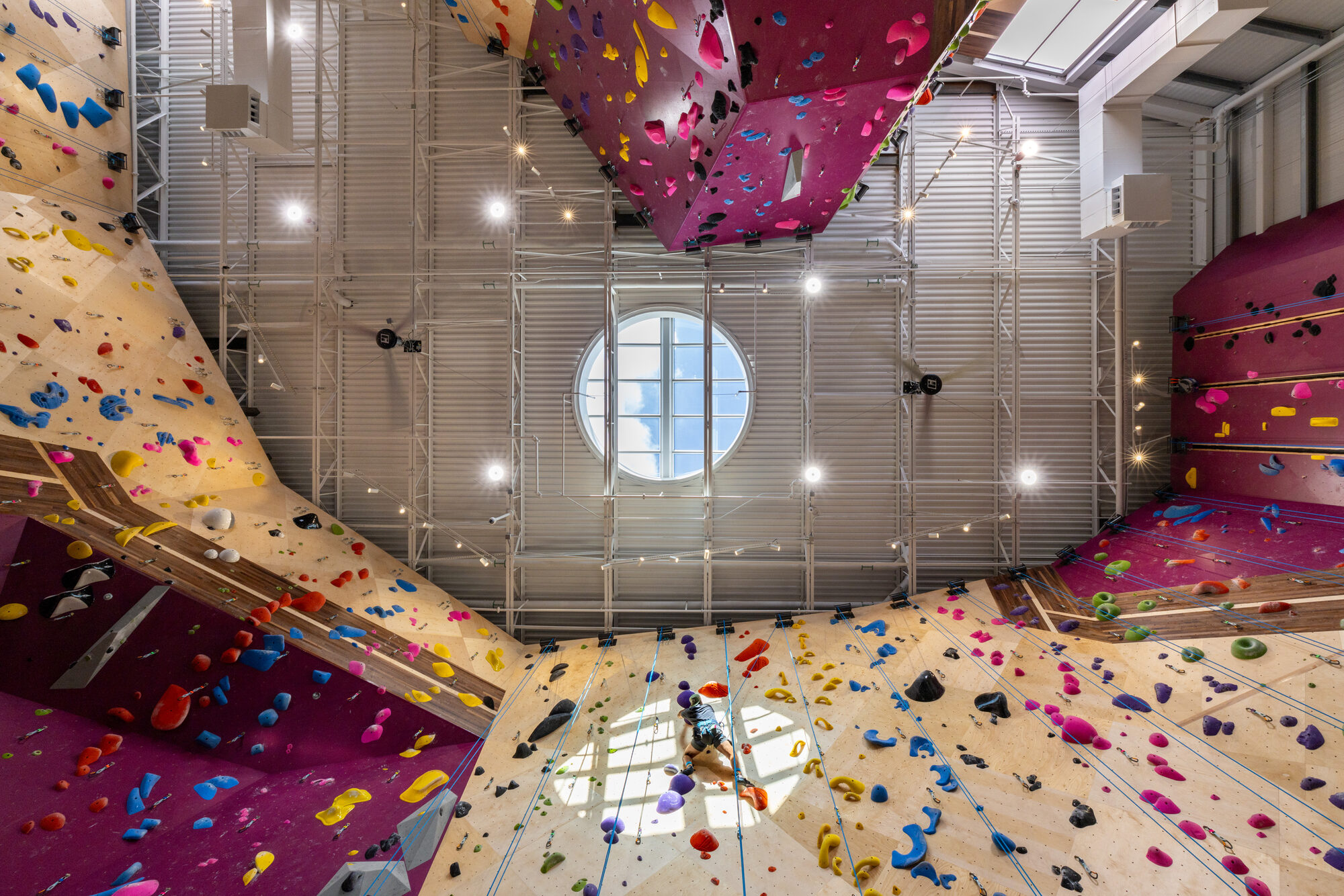
Crux’s South Austin location was built on a site that needed redemption: a flat gravel lot, formerly a junkyard, ringed by neighborhoods with legitimate concerns about scale and privacy. The building would be large, active, and nearly fifty feet tall. As a condition of approval, the neighborhood stipulated that it have no windows facing the homes next door — nothing that would let the gym look into the yards behind it.
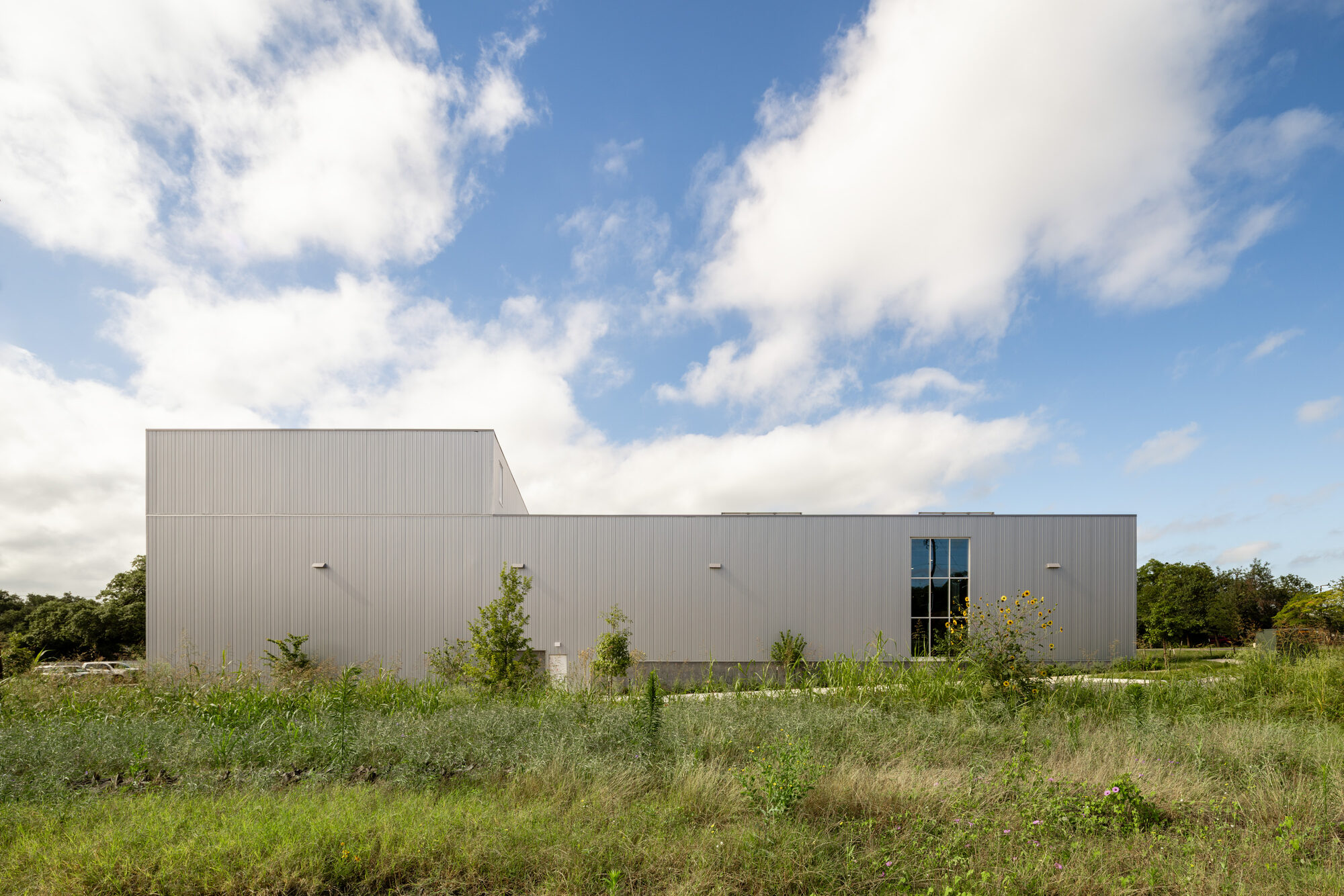 The windowless face toward the neighborhood, a reclaimed lot returned to meadow. Photo: Leonid Furmansky
That condition is a real problem for a climbing gym. The program has its own spatial logic: it needs not just area but height, which is why gyms so often end up boxed inside warehouses. But a windowless box is a strange home for a sport rooted in the outdoors. If the walls could not open, the light had to come from the roof.
The predictable answer is many small skylights, spread across a big ceiling — you get the light while spreading the cost and the risk. We tested it first, and the result was overwhelming in the worst way: dozens of small punctures, light dropping through each one, but no composition, no order, no intention. It read as exactly the industrial void that climbing gyms so often are, and that Crux did not want to be.
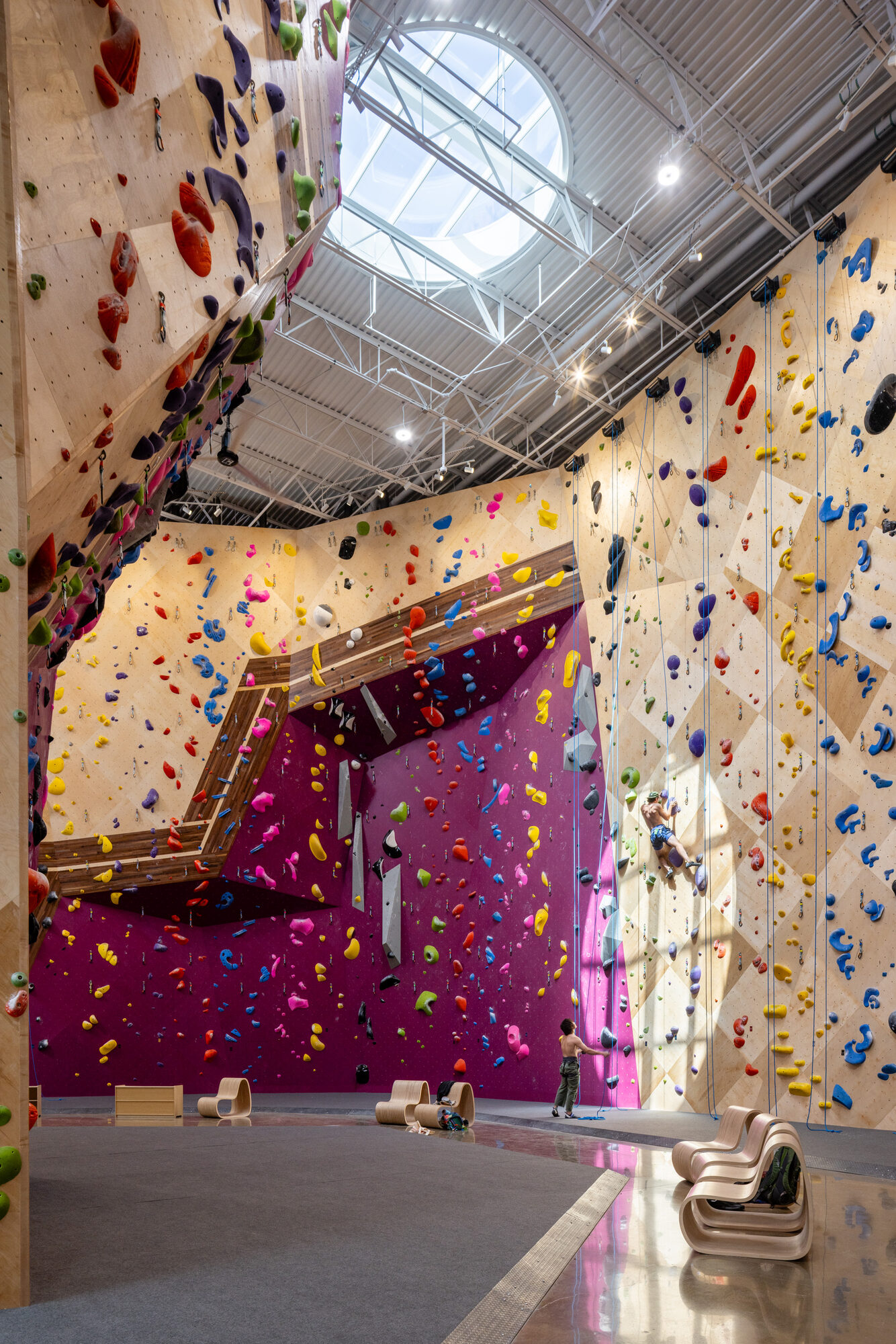 Daylight arriving as something deliberate on the tall walls. Photo: Leonid Furmansky
So we kept working, and the answer was a reversal. Instead of scattering many small openings, we consolidated them into a few large, deliberate ones — wide circles of Texas sky. Fewer penetrations meant a lower risk of leaks and fewer openings to maintain. Fewer holes meant the roof could hold its integrity instead of dissolving into a grid of punctures. And larger apertures at strategic points meant each one could carry real compositional weight.
The move answered everything at once. The neighbors’ privacy was preserved, with not a single window facing their houses. The roof was more durable and simpler to maintain. The climbing walls did not have to compete with the architecture for surface. And the light arrived as something deliberate: walk into Crux South on a clear afternoon and you do what every climber does on the way in — you stop, and you look up, while the sun tracks slowly across the wall through a session. (Where the neighbors’ sightlines did not reach, on the east and west façades, we were also able to slip in a translucent wall system.)
The condition that began as a restriction against windows is the reason the building has its best light. The typical answer and the right answer were, for once, plainly at odds — and the imposed limit turned out to be the most generous thing about the brief.
Crux South, South Austin. 40,000 SF, completed 2022. Photography by Leonid Furmansky. See the project archive.
All notes