Client and program
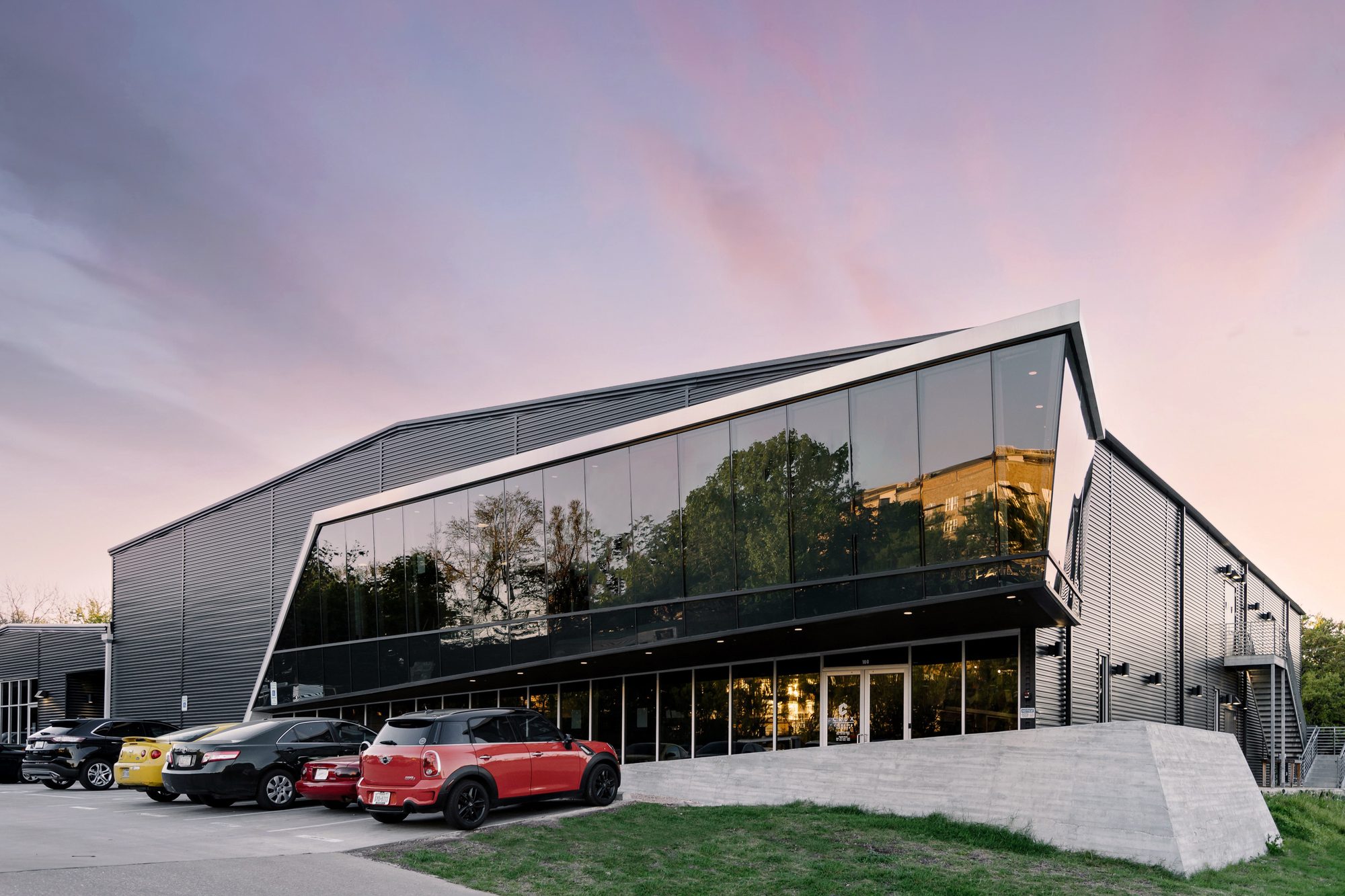
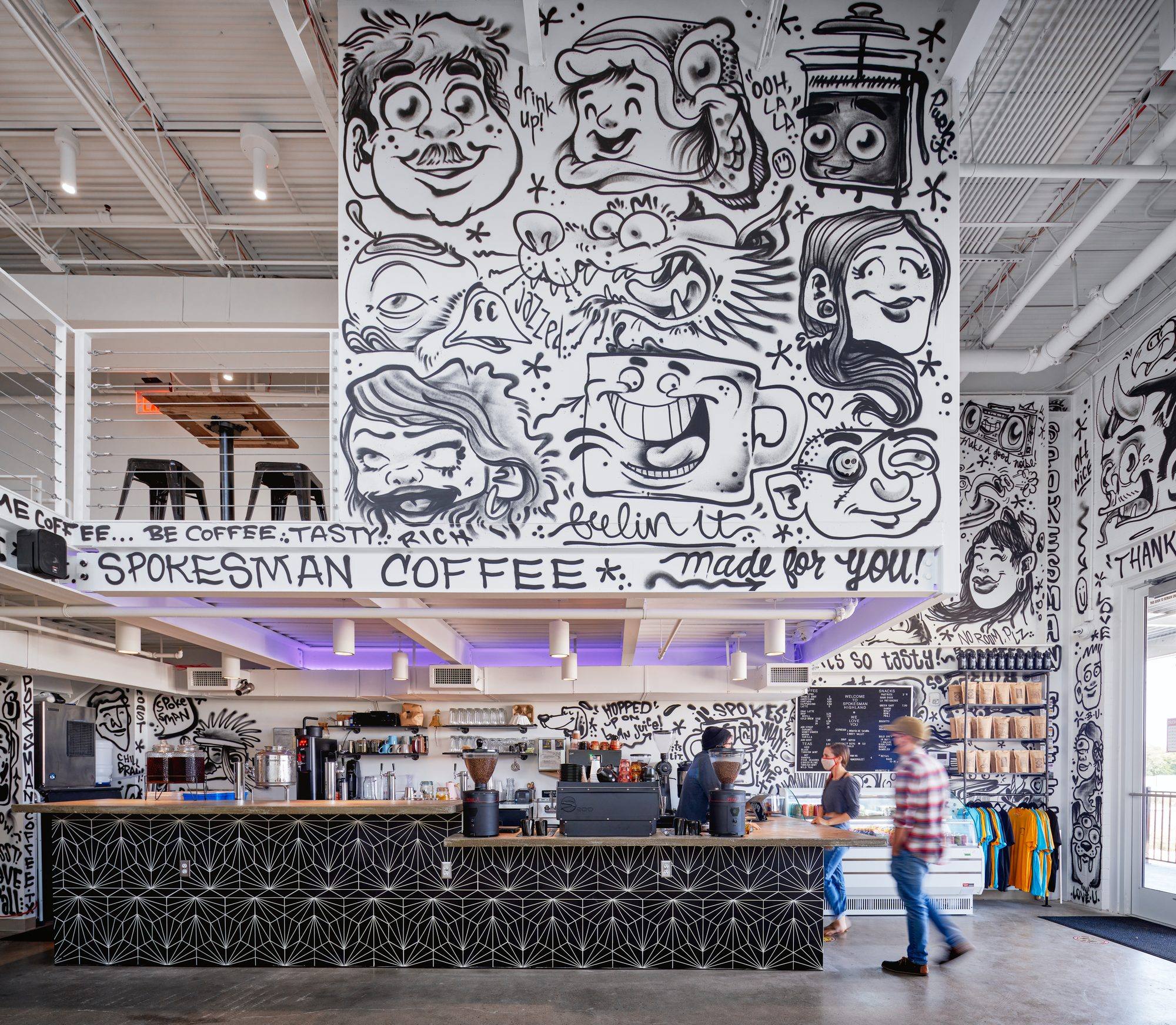
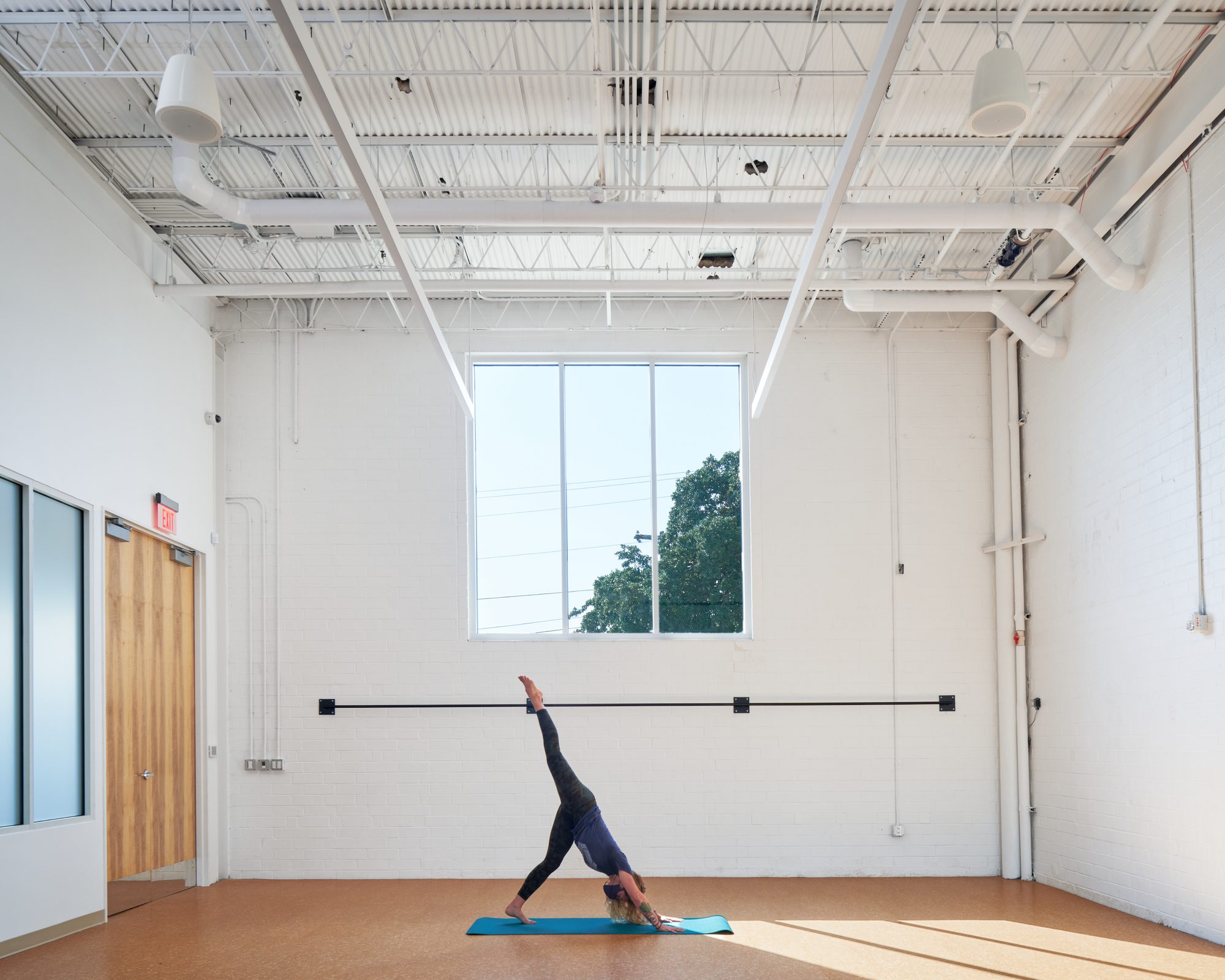
Crux Central is the network’s second gym and its second adaptive reuse, following the original South Congress location. Crux engaged the studio to convert an existing Central Austin building into a full climbing gym — bouldering, yoga, and fitness — with Spokesman Coffee occupying the adjoining space as a public-facing anchor.
Site and constraint
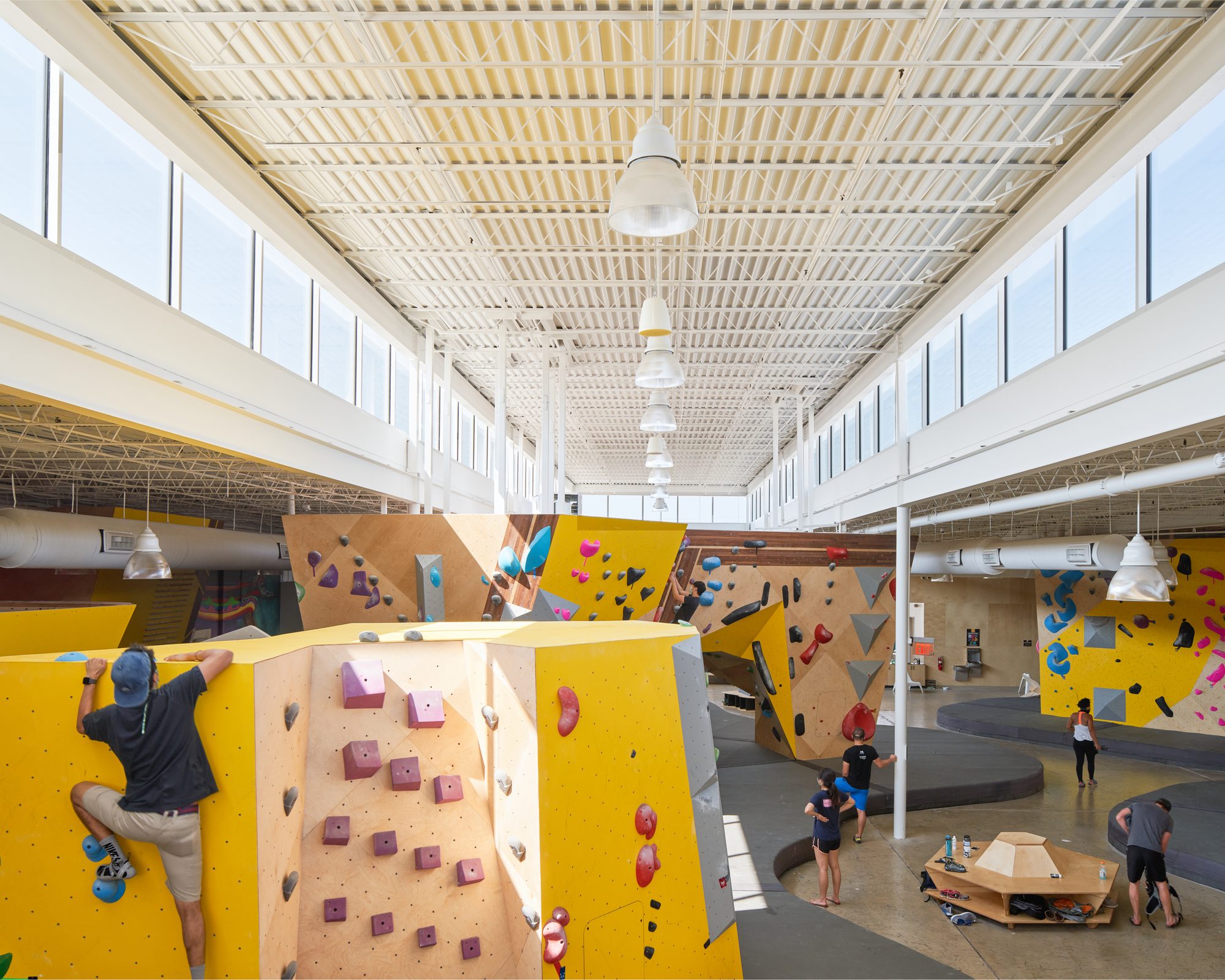
The existing building had the floor area the program needed but not the height or the daylight. Fitting bouldering, fitness, and a mezzanine inside the existing footprint meant finding volume the building did not yet have, and bringing light into a deep plan that had almost none.
Design move
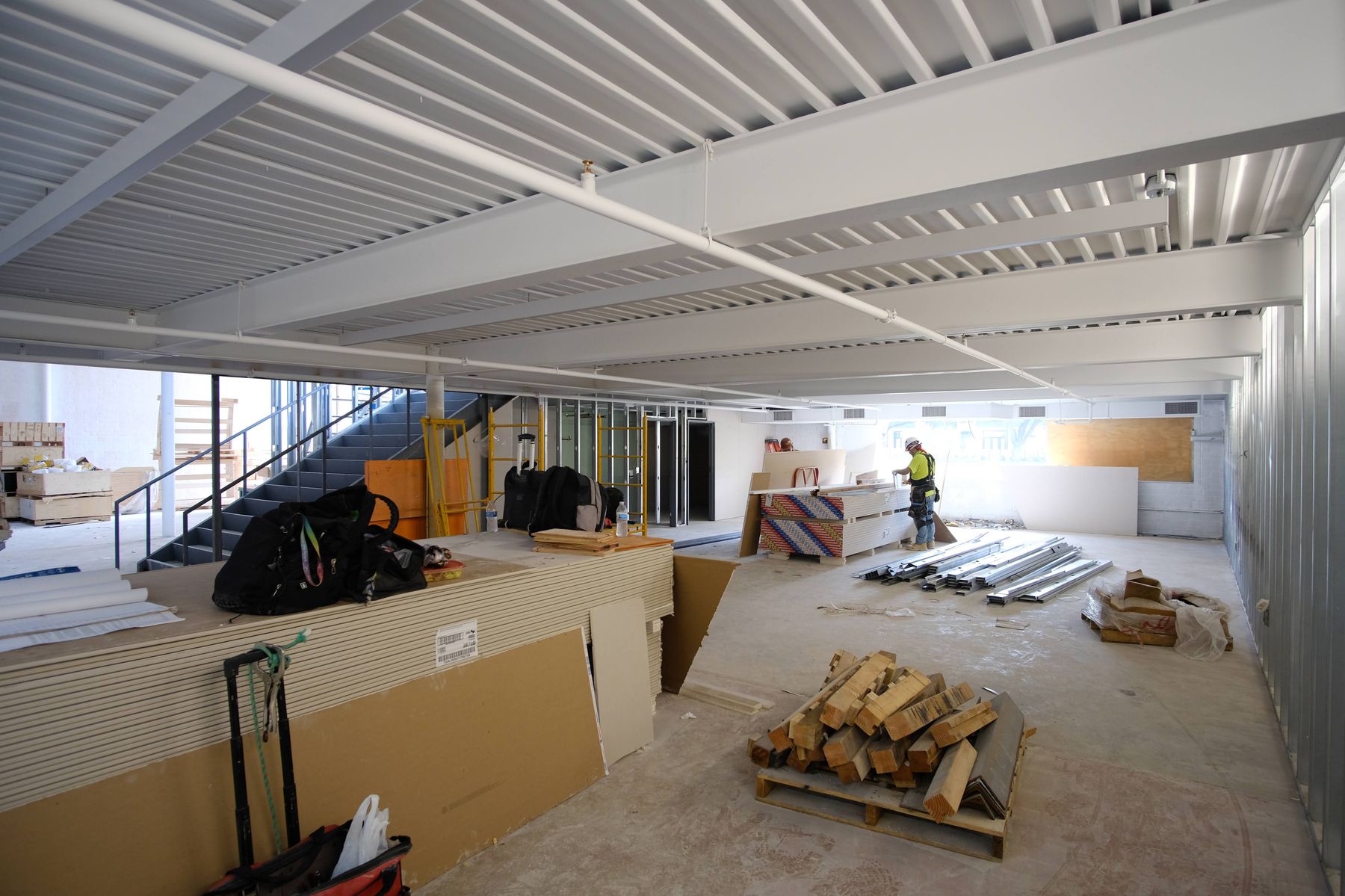
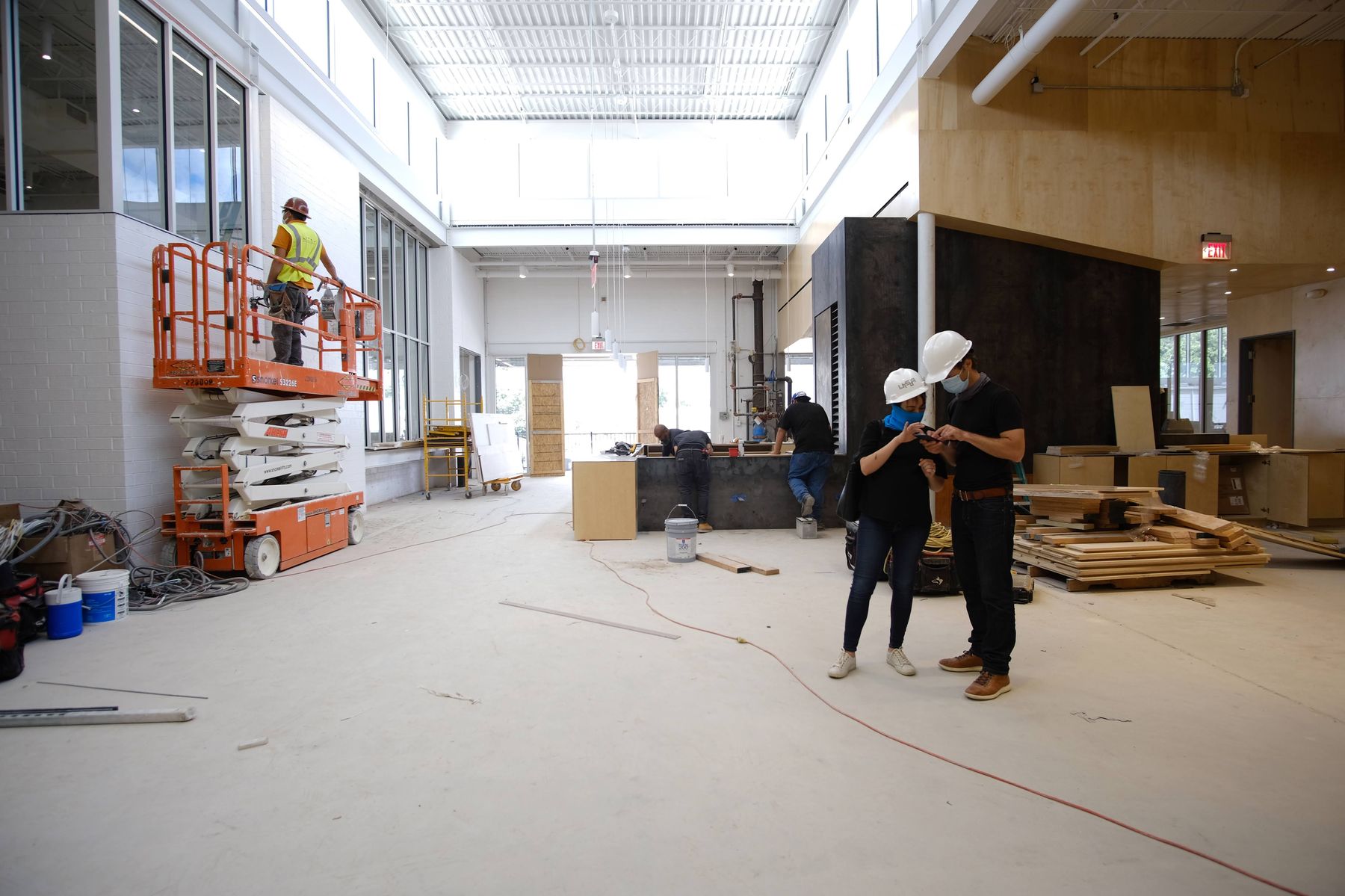
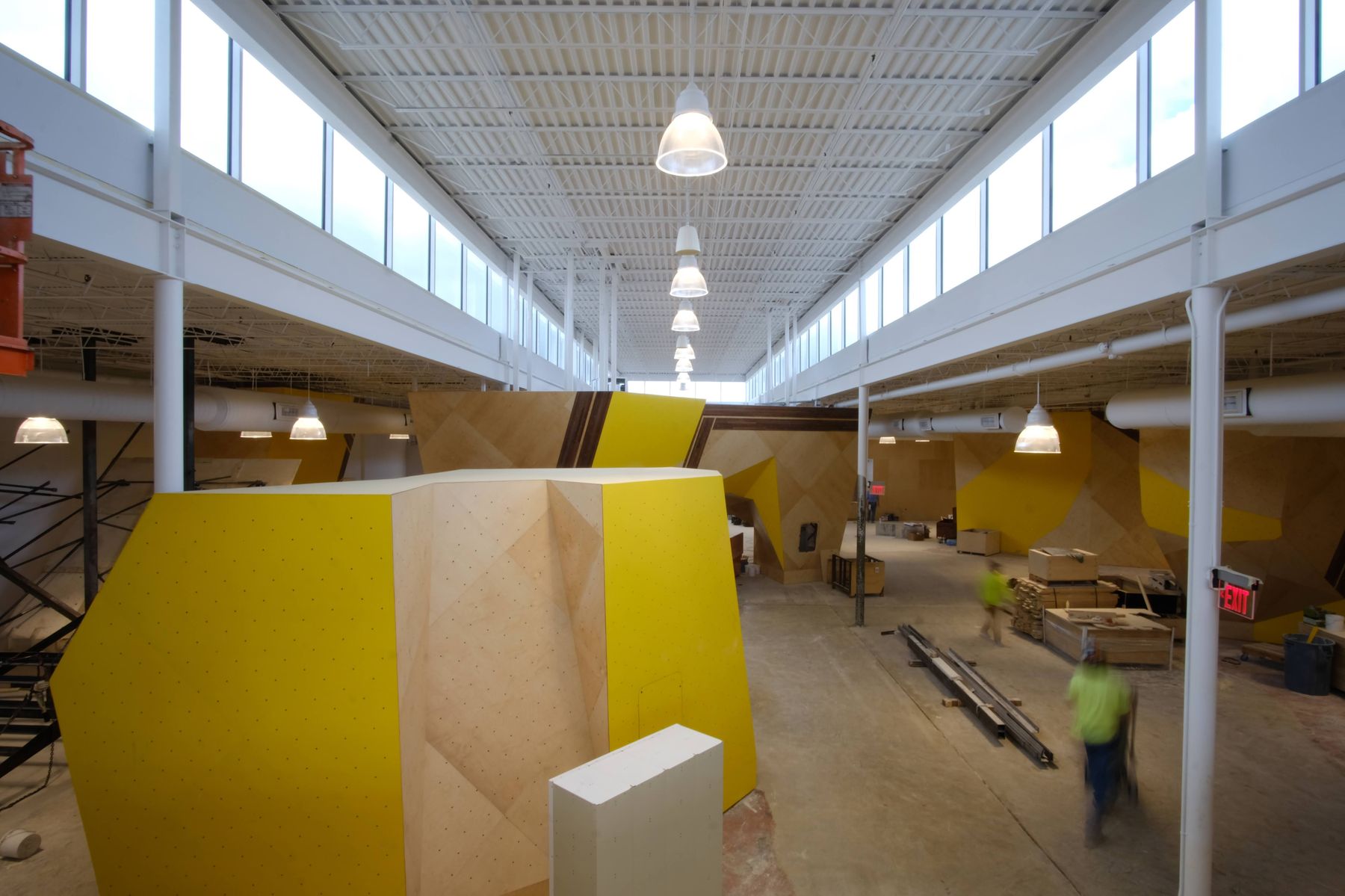
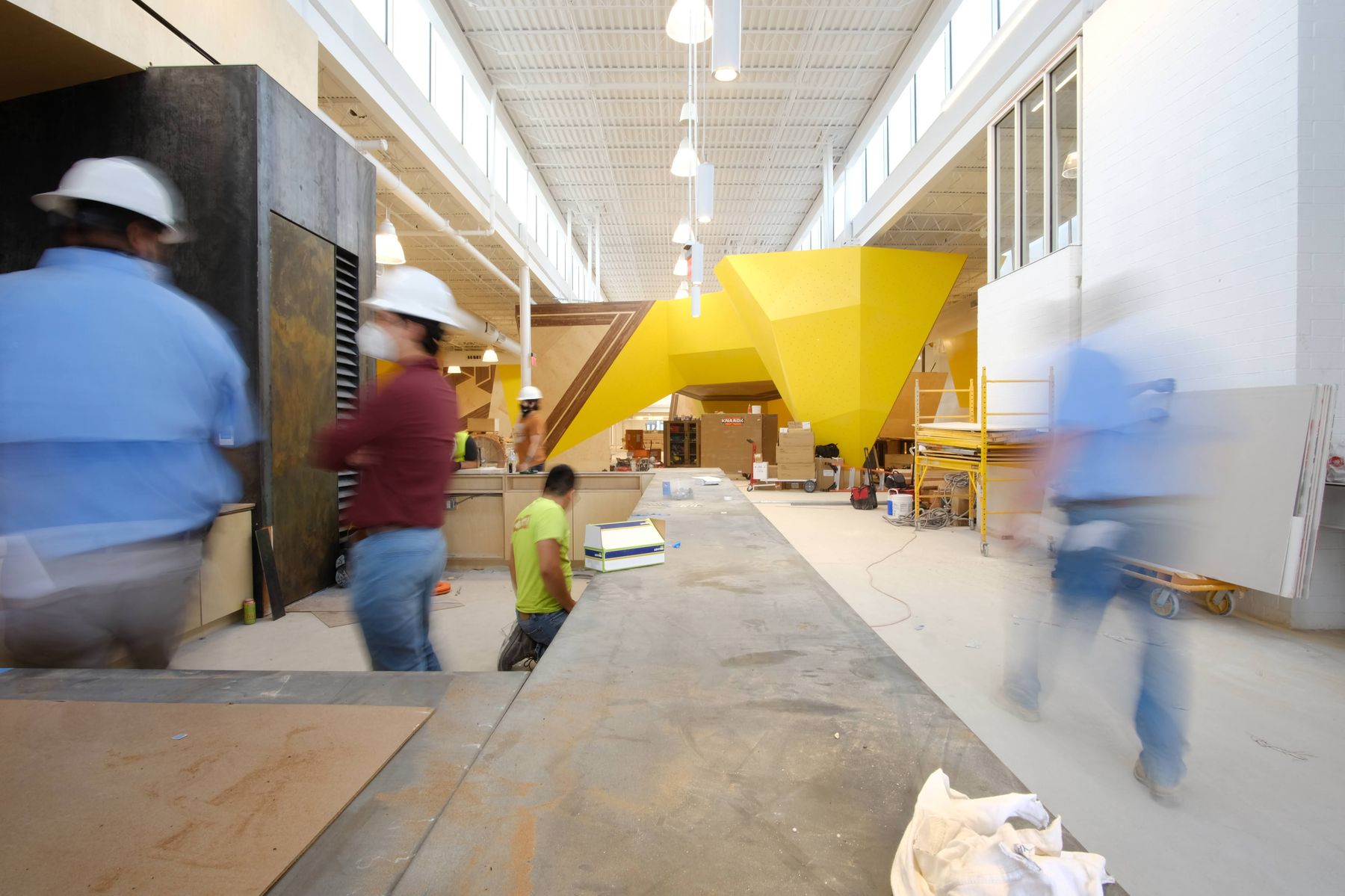
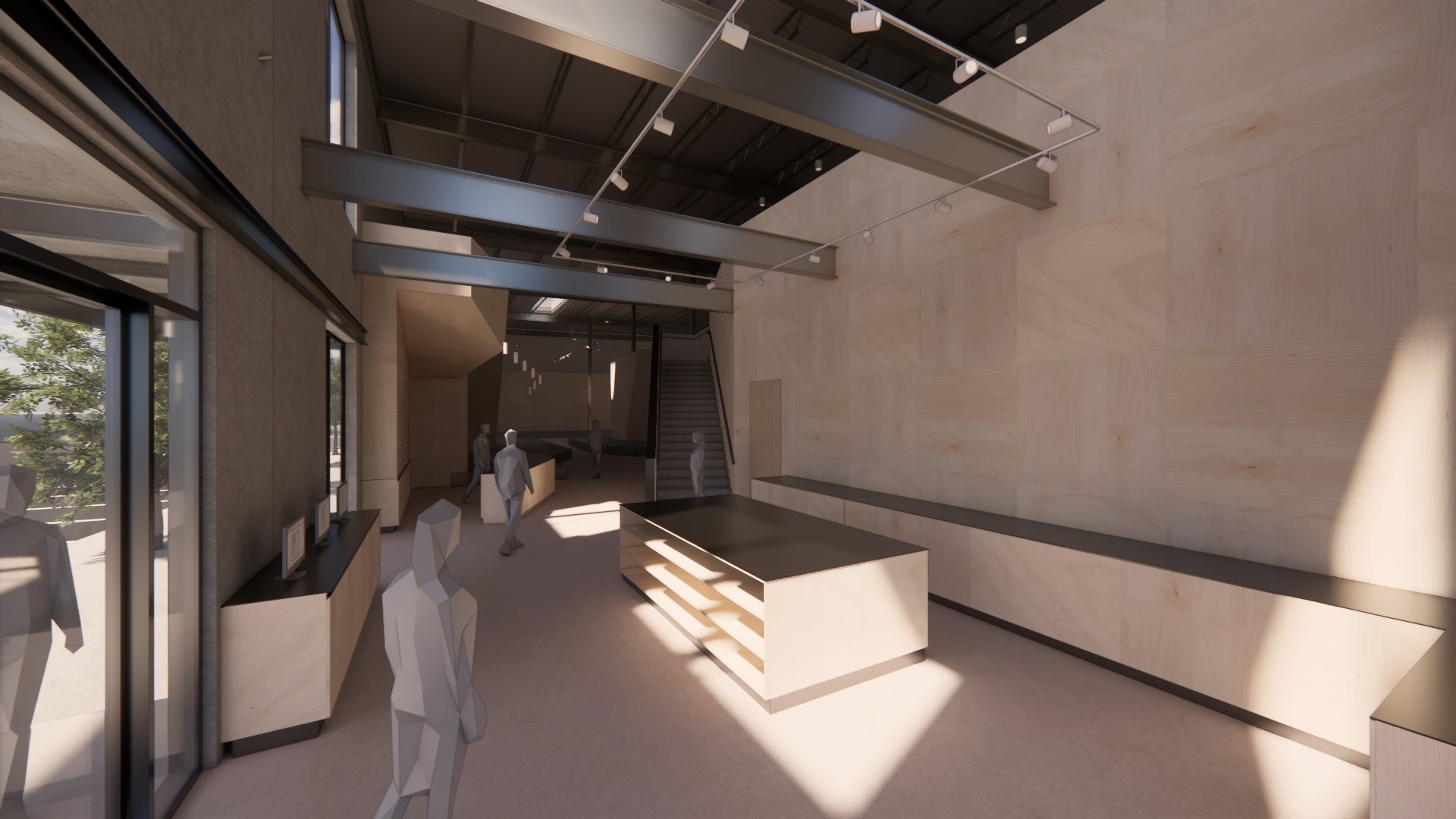
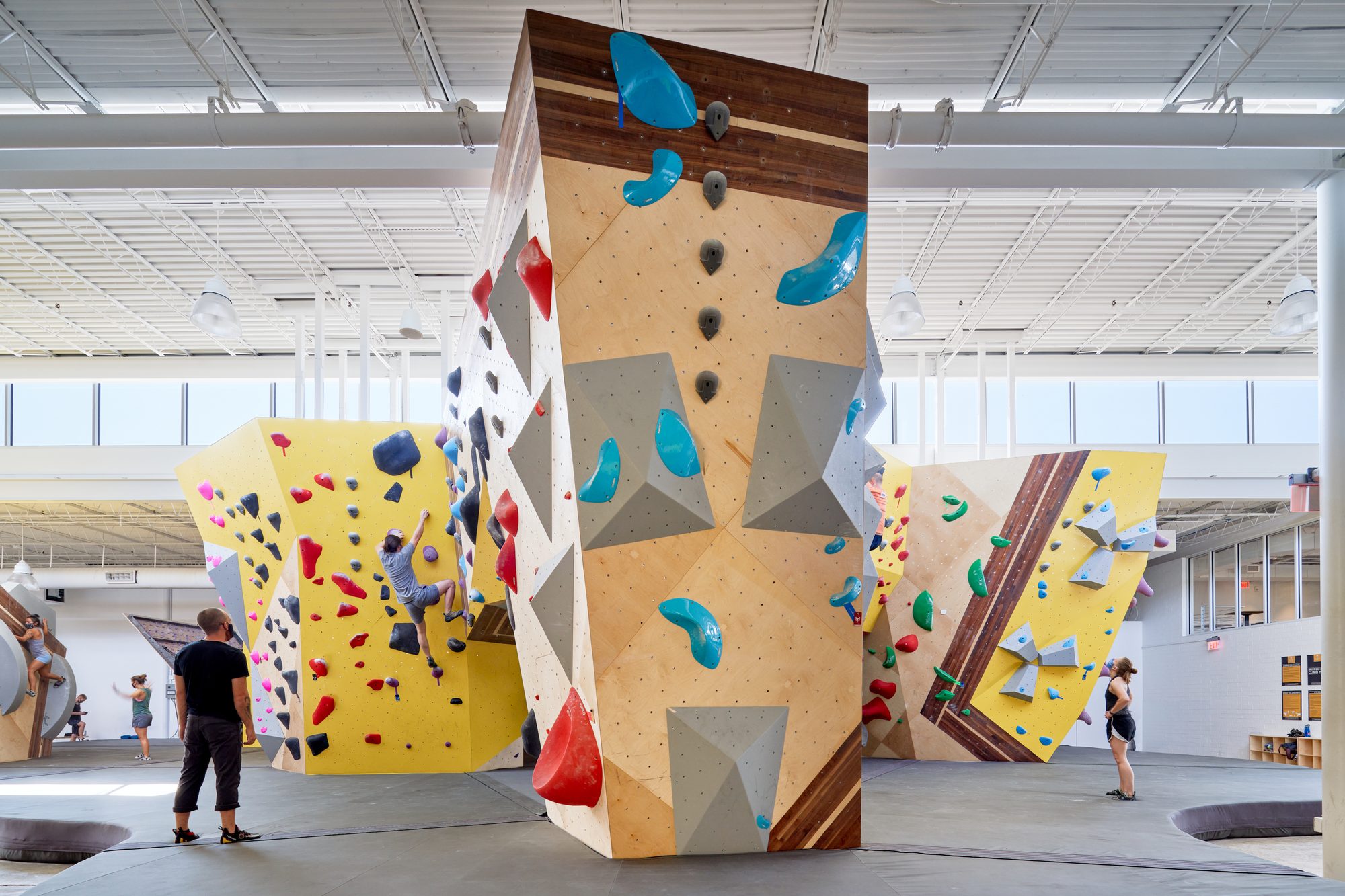
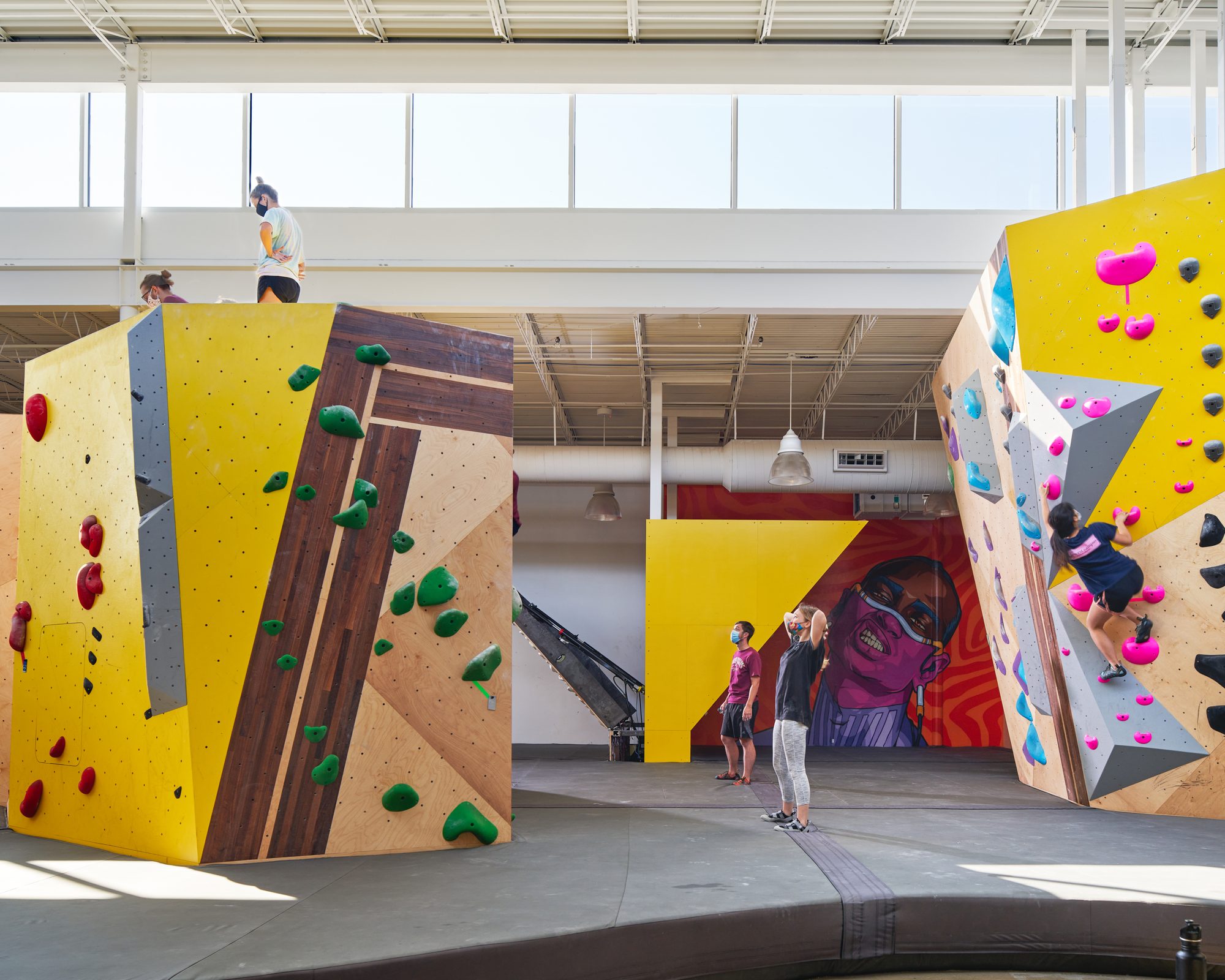
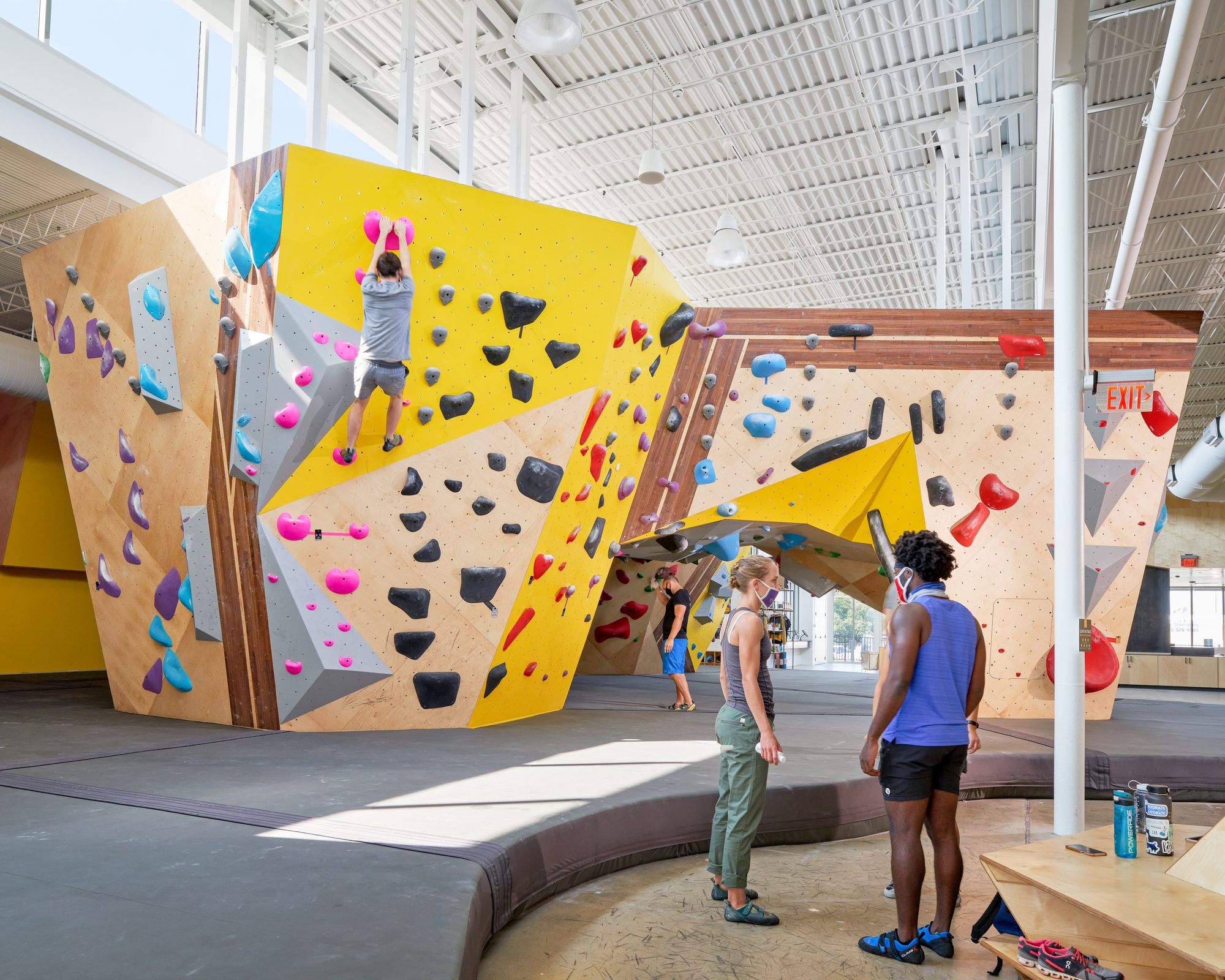
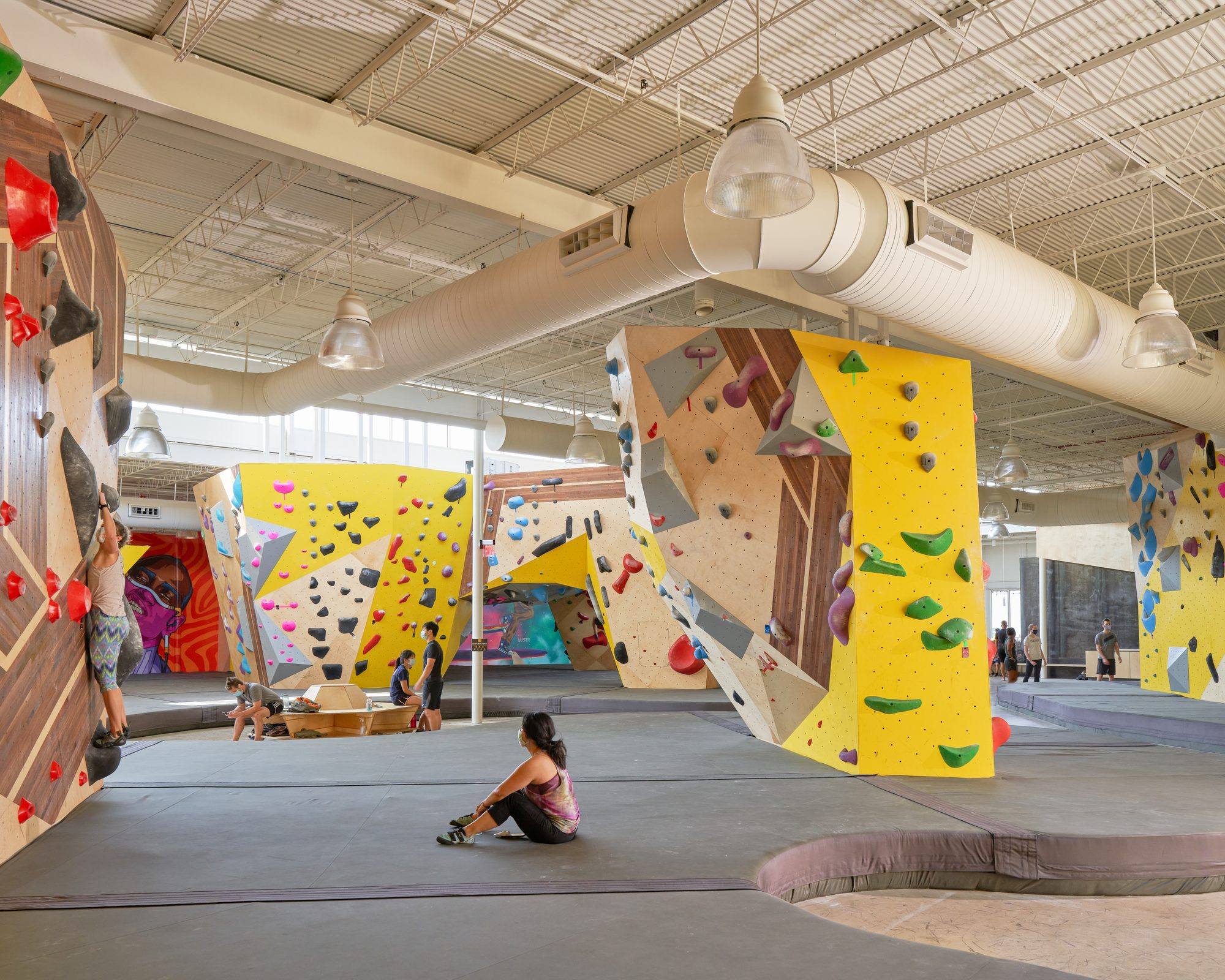
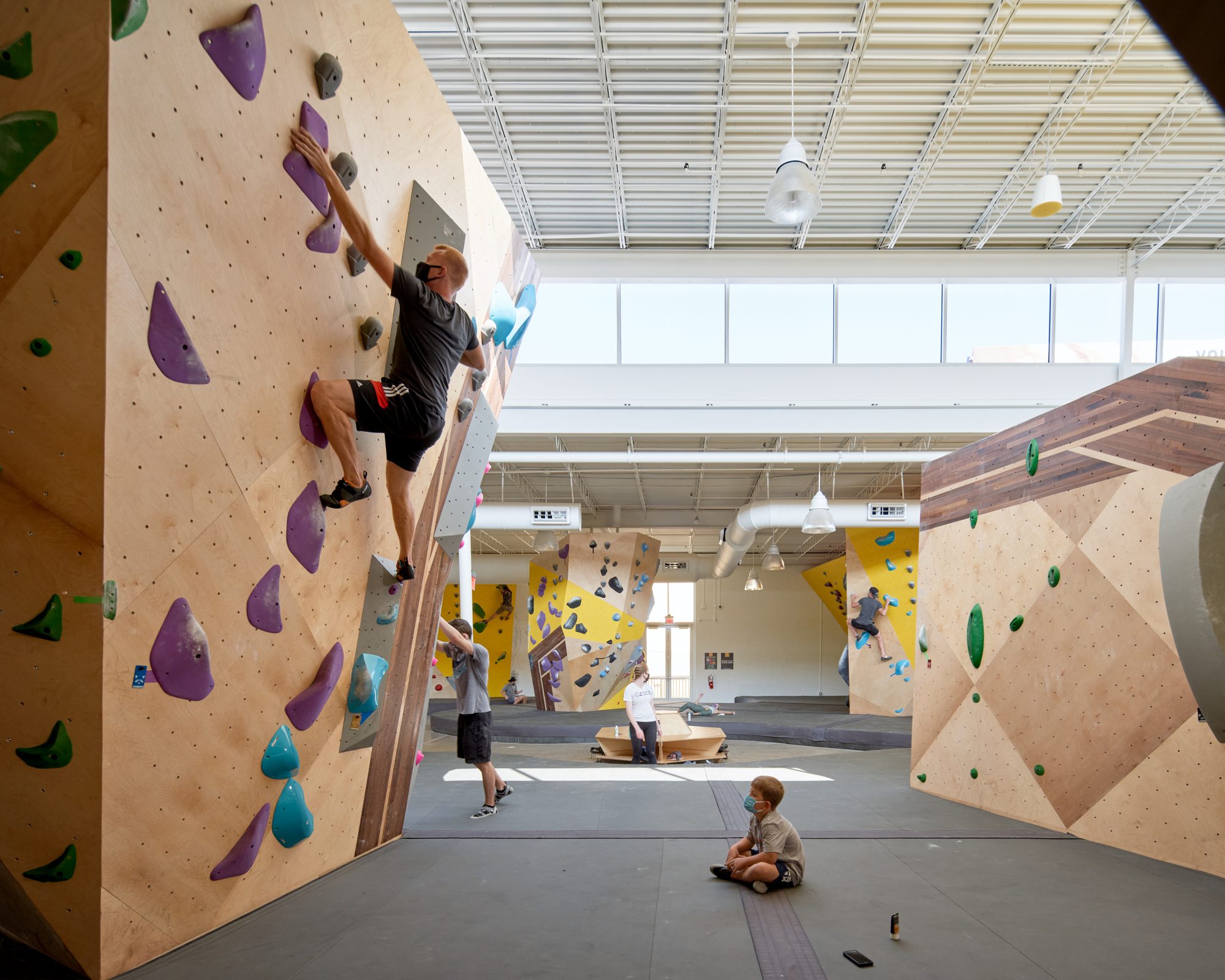
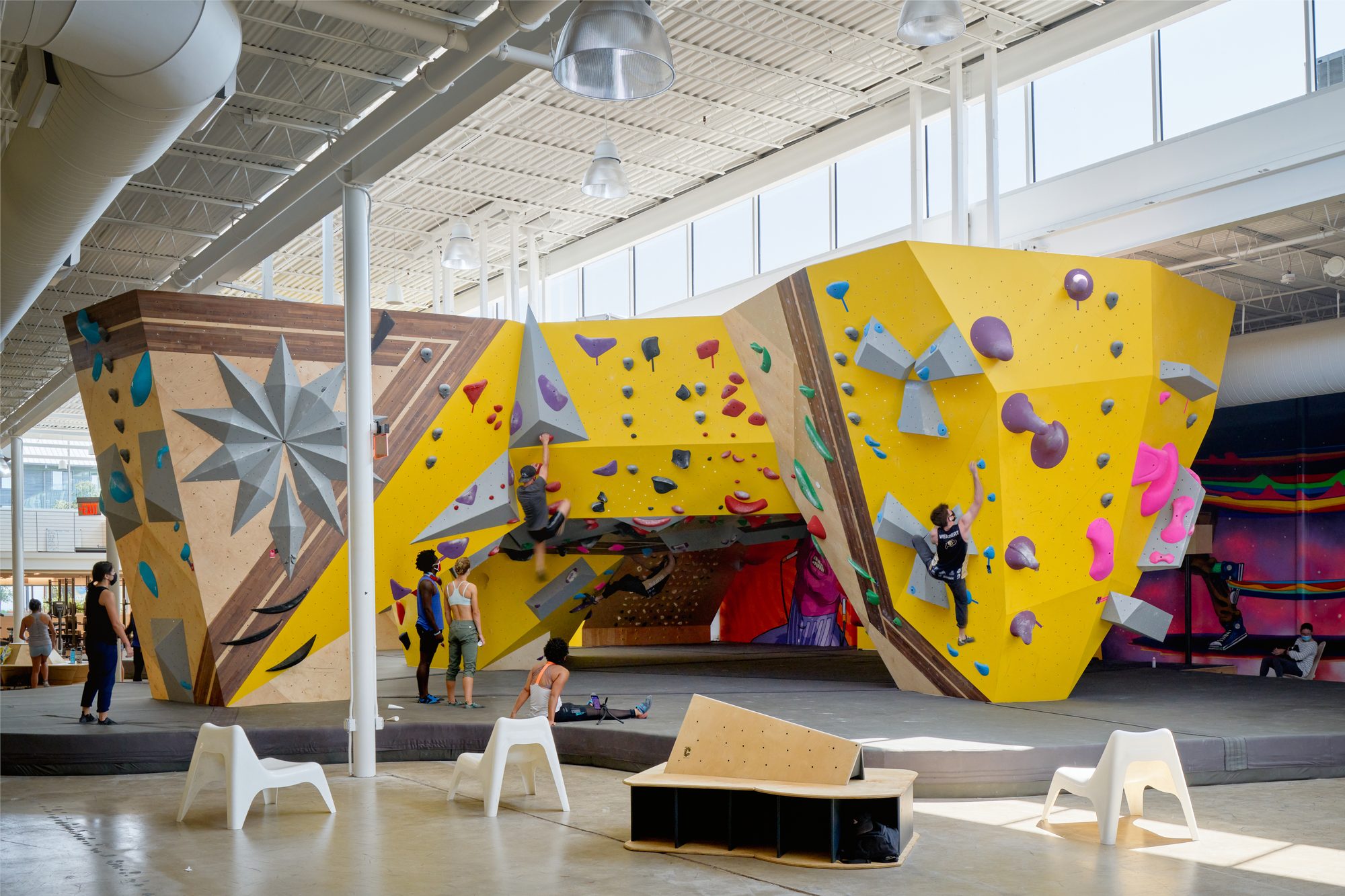
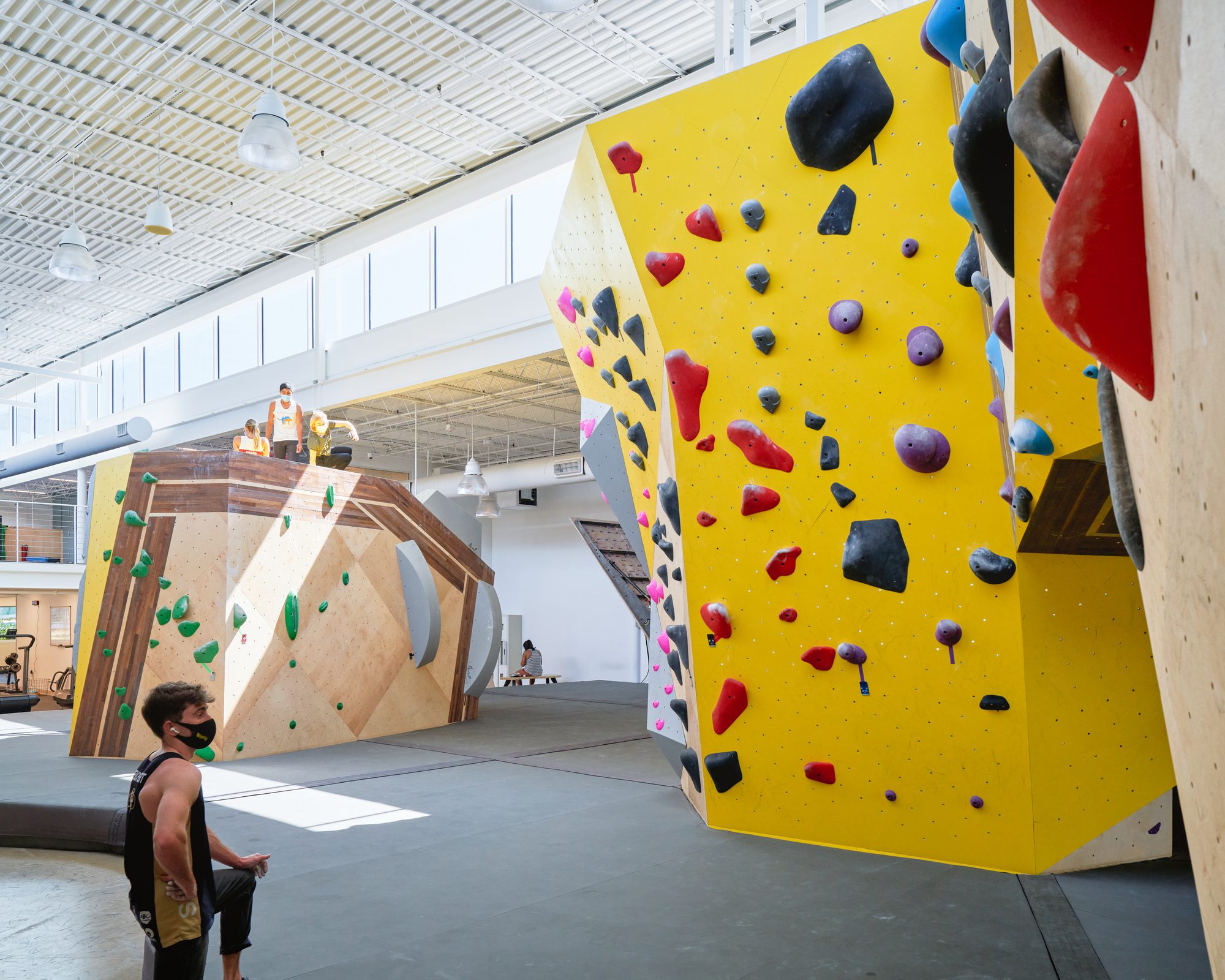
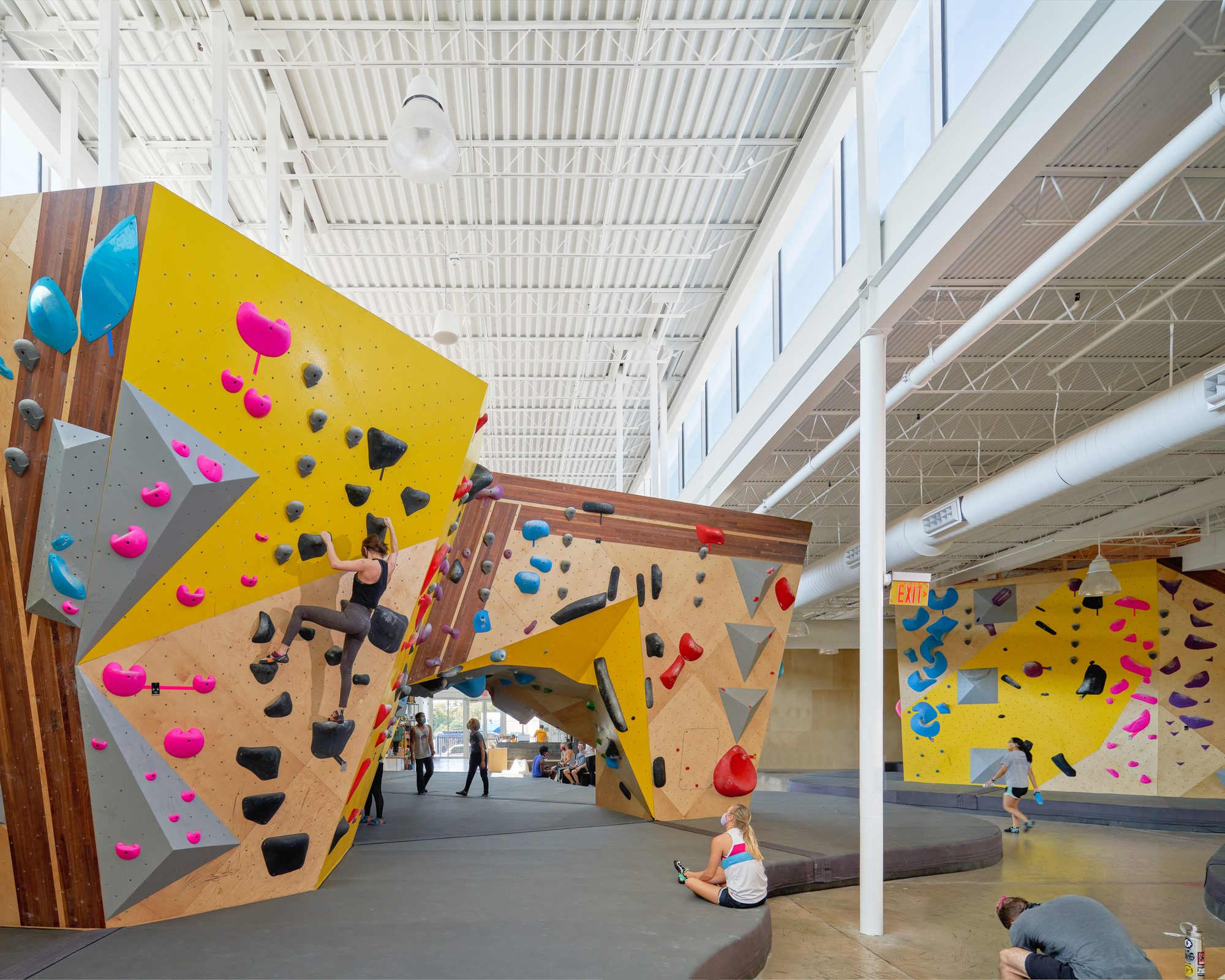
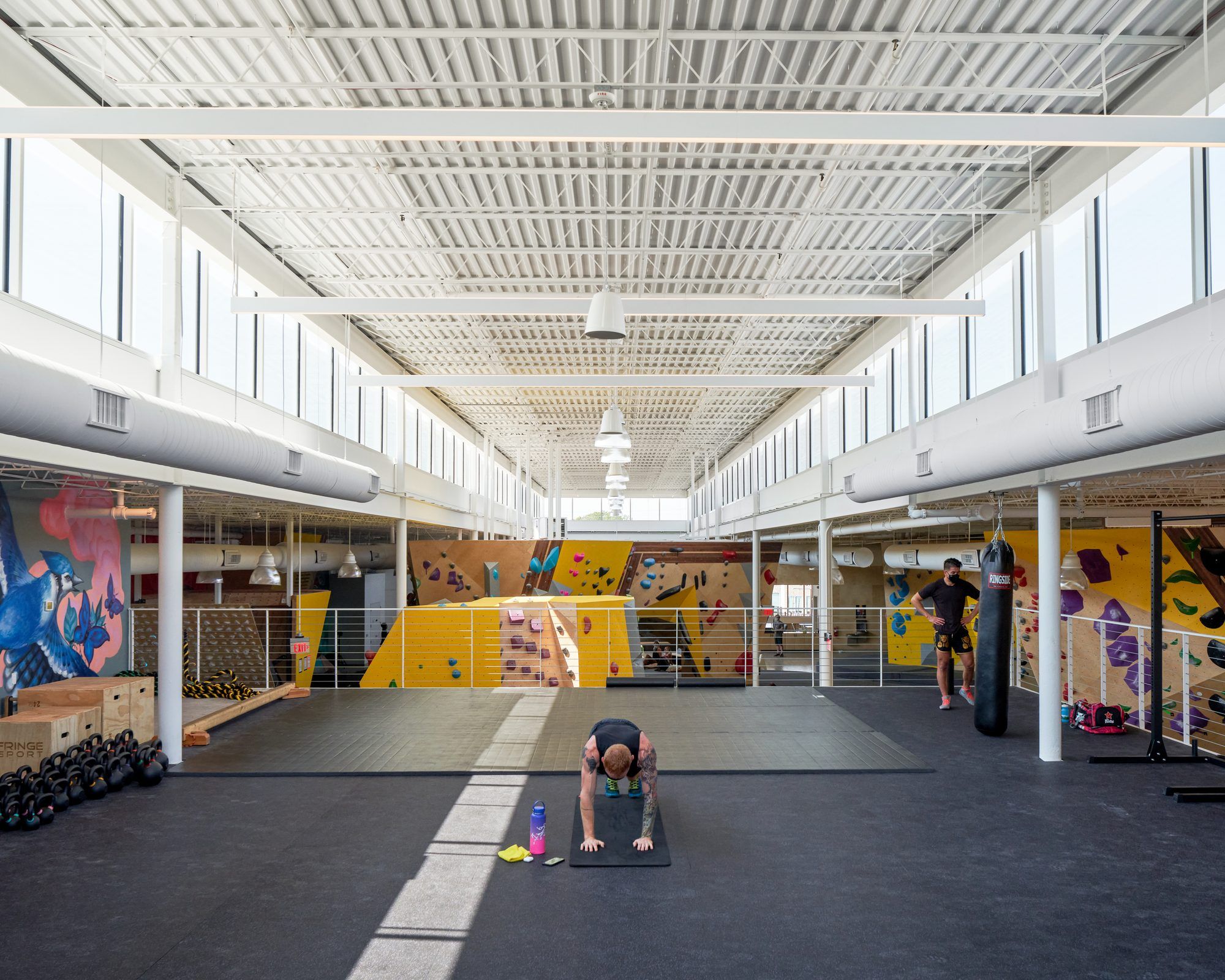
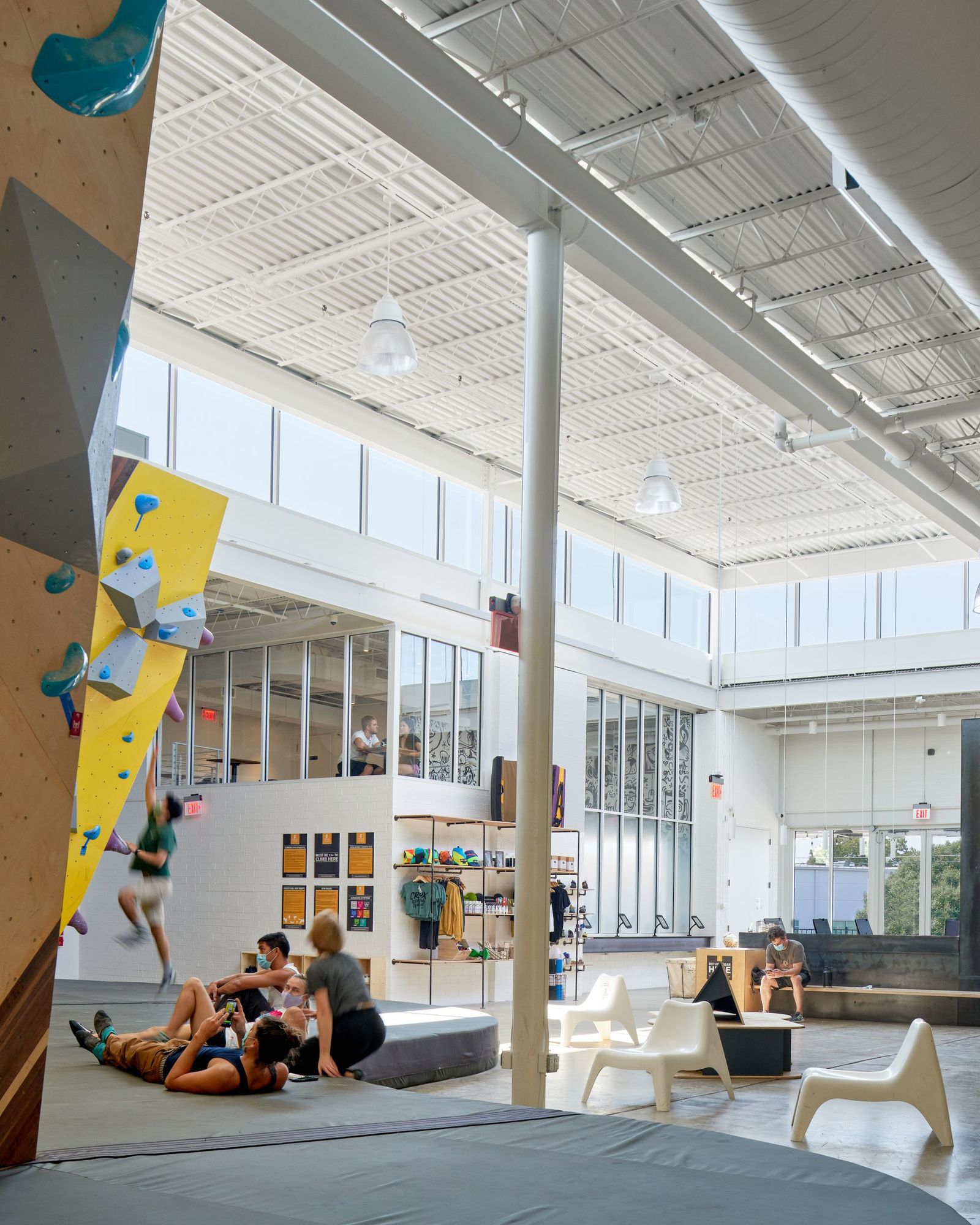
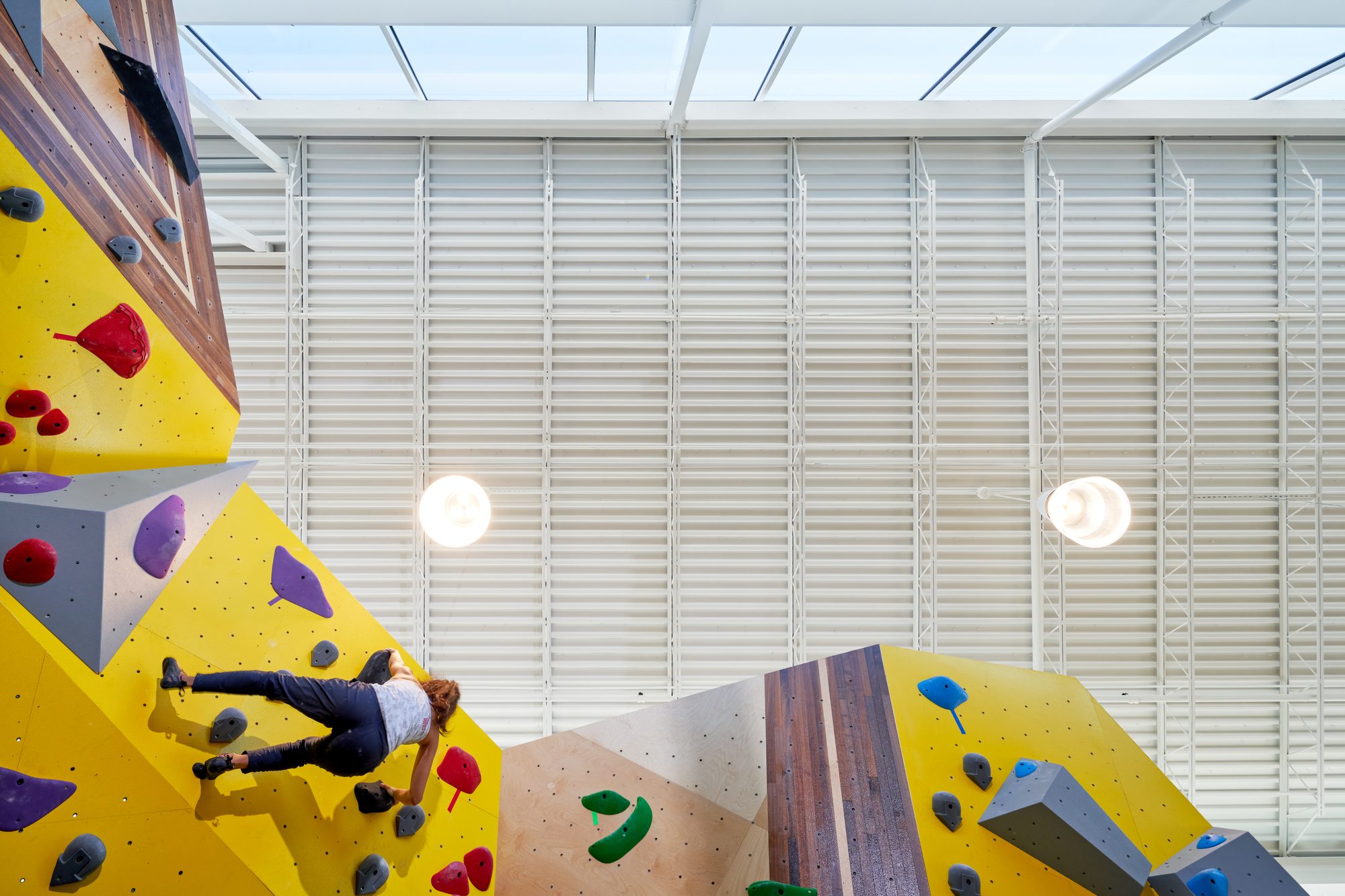
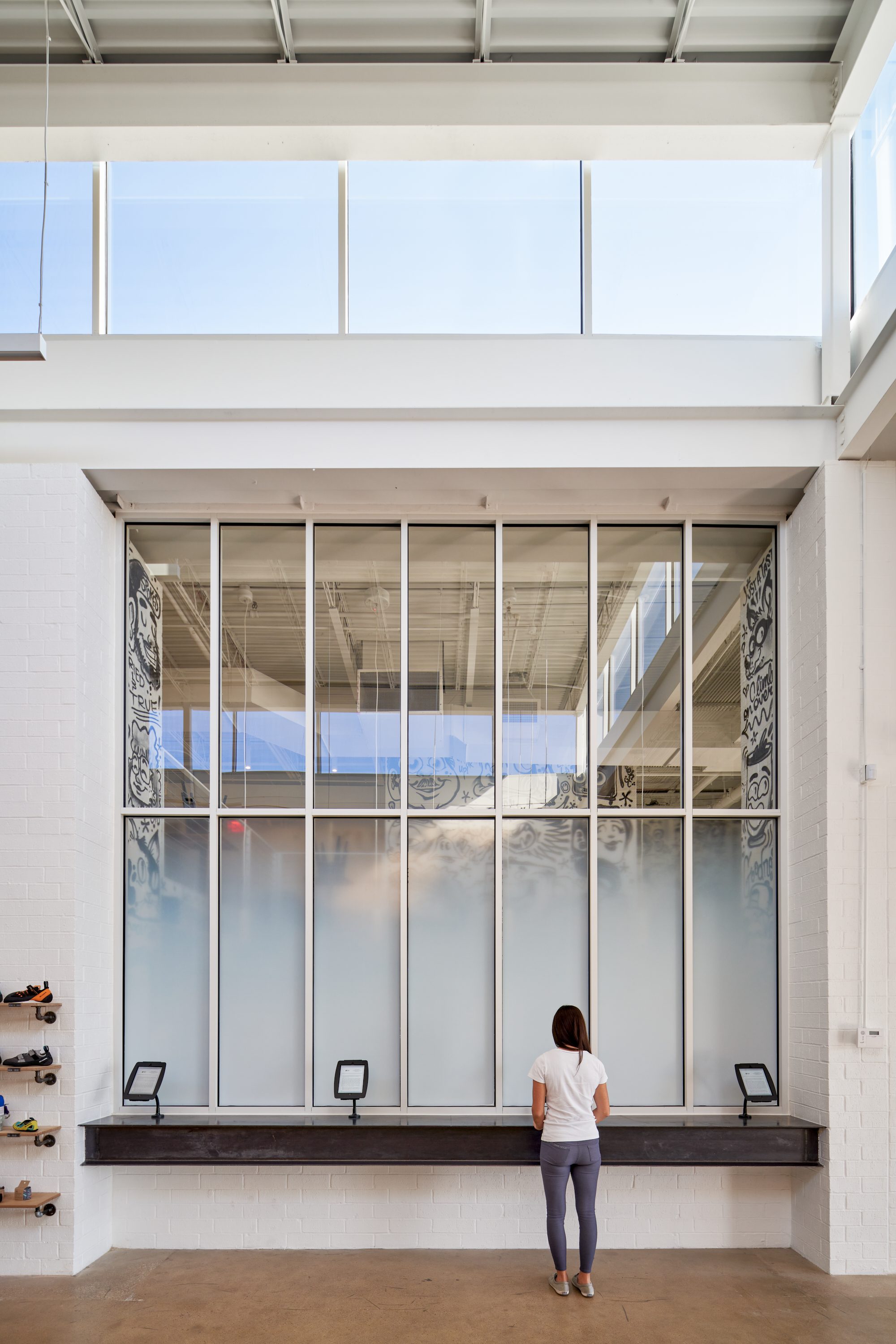
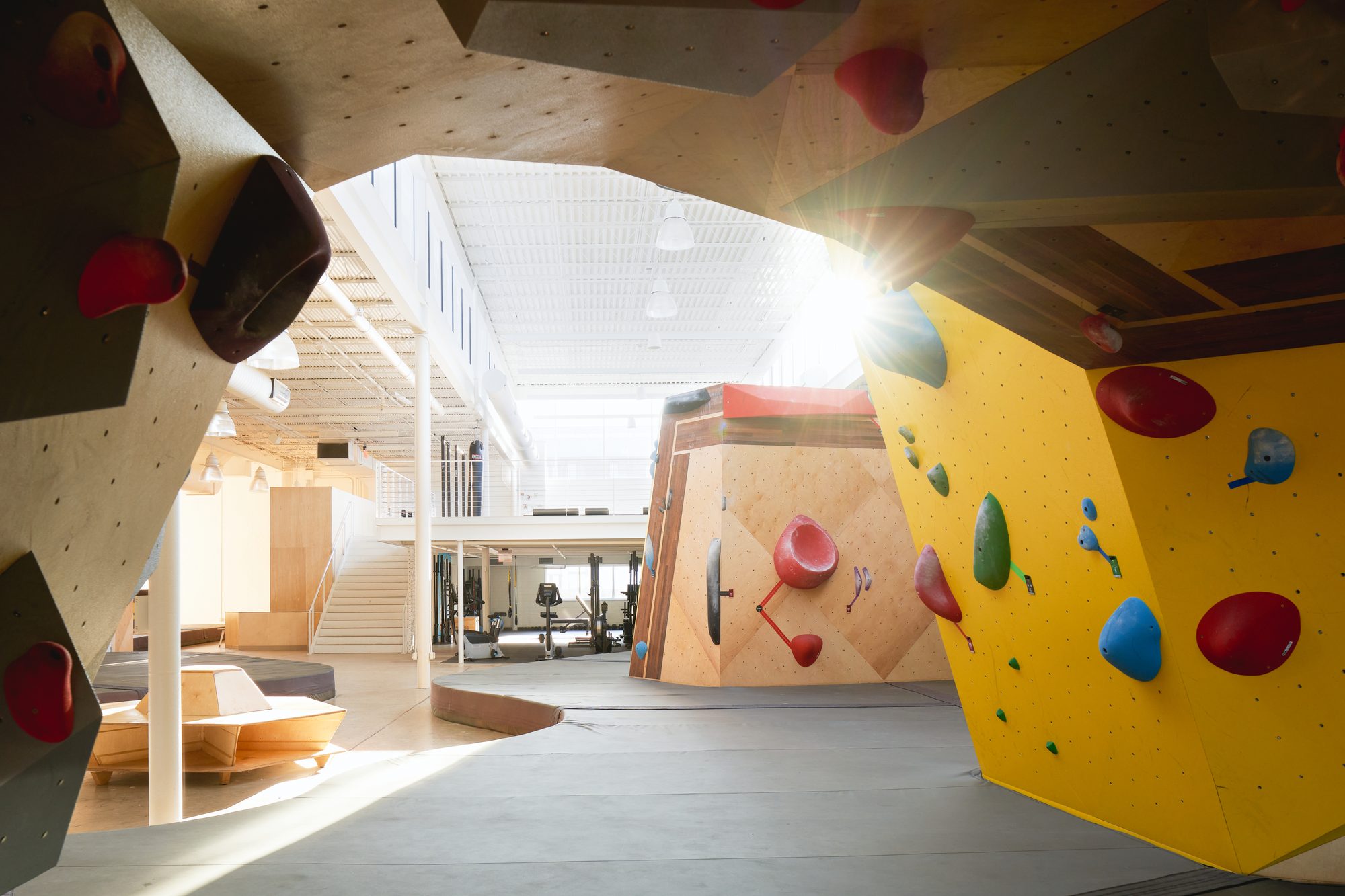
The renovation’s central move is the roof. We raised the roof height and ran a new clerestory band the full length of the building. The added height opened room for a new mezzanine — carrying the fitness program above the floor — while the clerestory washes daylight across the entire gym. The climbing program is inserted beneath it as honest, low-finish volumes, with Crux’s brand color doing the rest of the work.
Construction approach
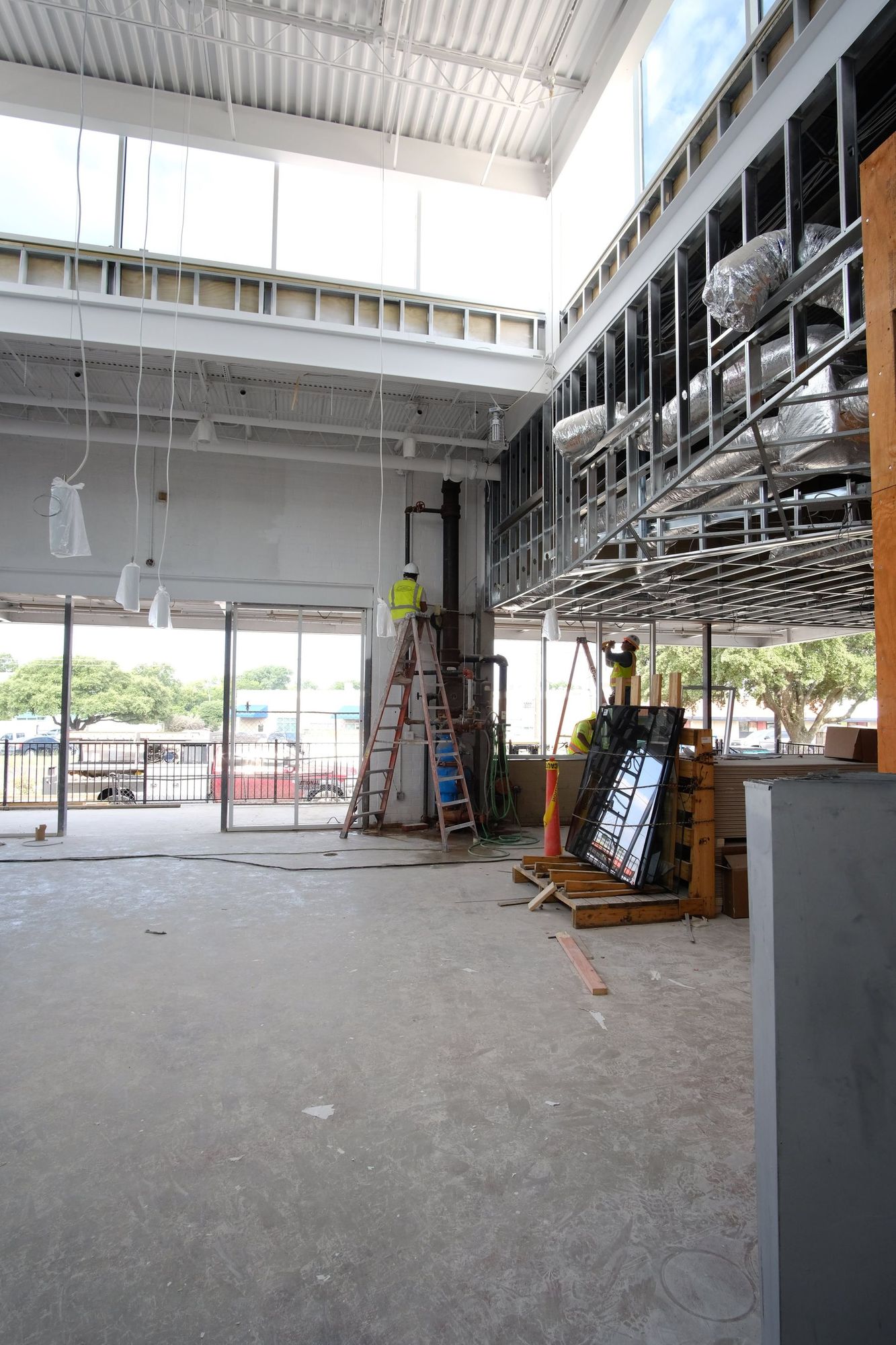
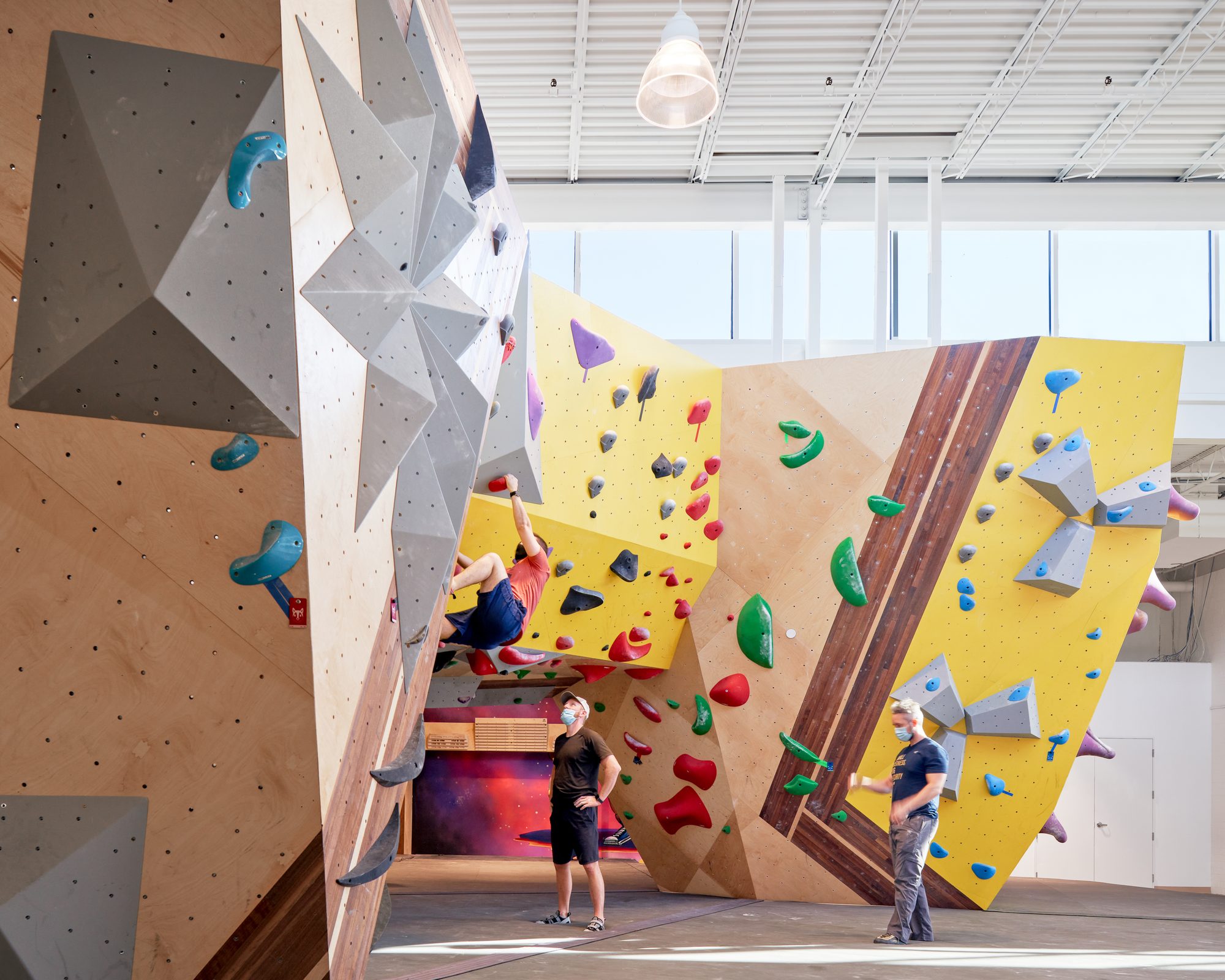
The project was sequenced as an adaptive reuse: selective demolition of the existing shell, the roof raised and the new clerestory framed, then the mezzanine and climbing walls built into the reworked volume. Structure and systems are left exposed throughout — a raw material palette that reads as a nod to the climbing walls themselves.
Outcome
Crux Central established that the Crux typology could carry into an existing building through architecture — a raised roof, a new clerestory, and a new mezzanine — rather than through finish. It set the pattern the network has since taken to Crux Houston and beyond.