Client and program
The Waller Creek Conservancy commissioned Deep Curiosity for the 2016 Creek Show — an annual ten-night outdoor installation series along Waller Creek in downtown Austin. The brief was open: respond to the creek, respond to the night, respond to the foot traffic that crosses the bridges and walks along the trail. The studio collaborated with East Side Collective and Drophouse Design on the work, with Tim Derrington as architect and Wilson Hanks as design collaborator.
Site and constraint
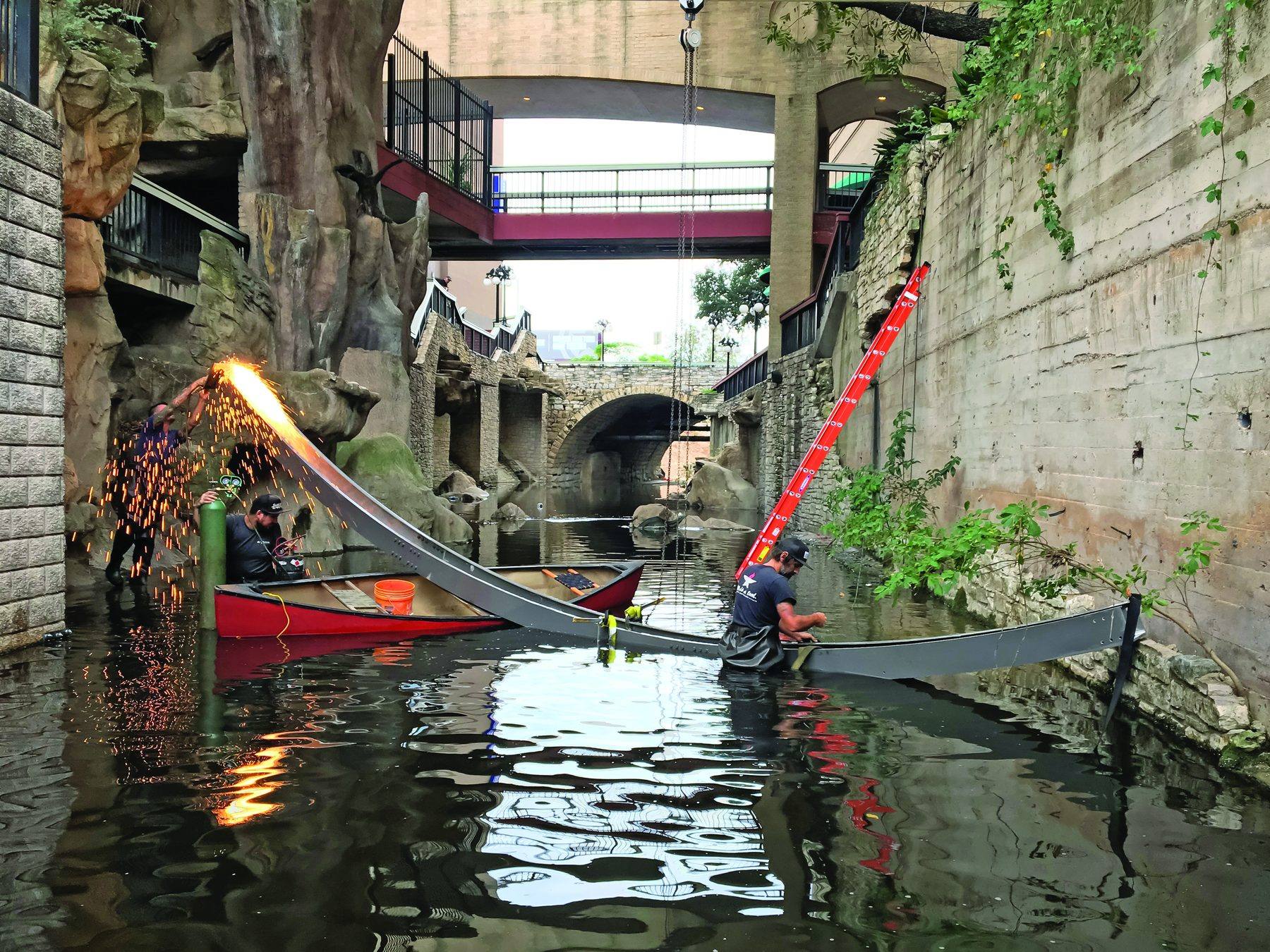
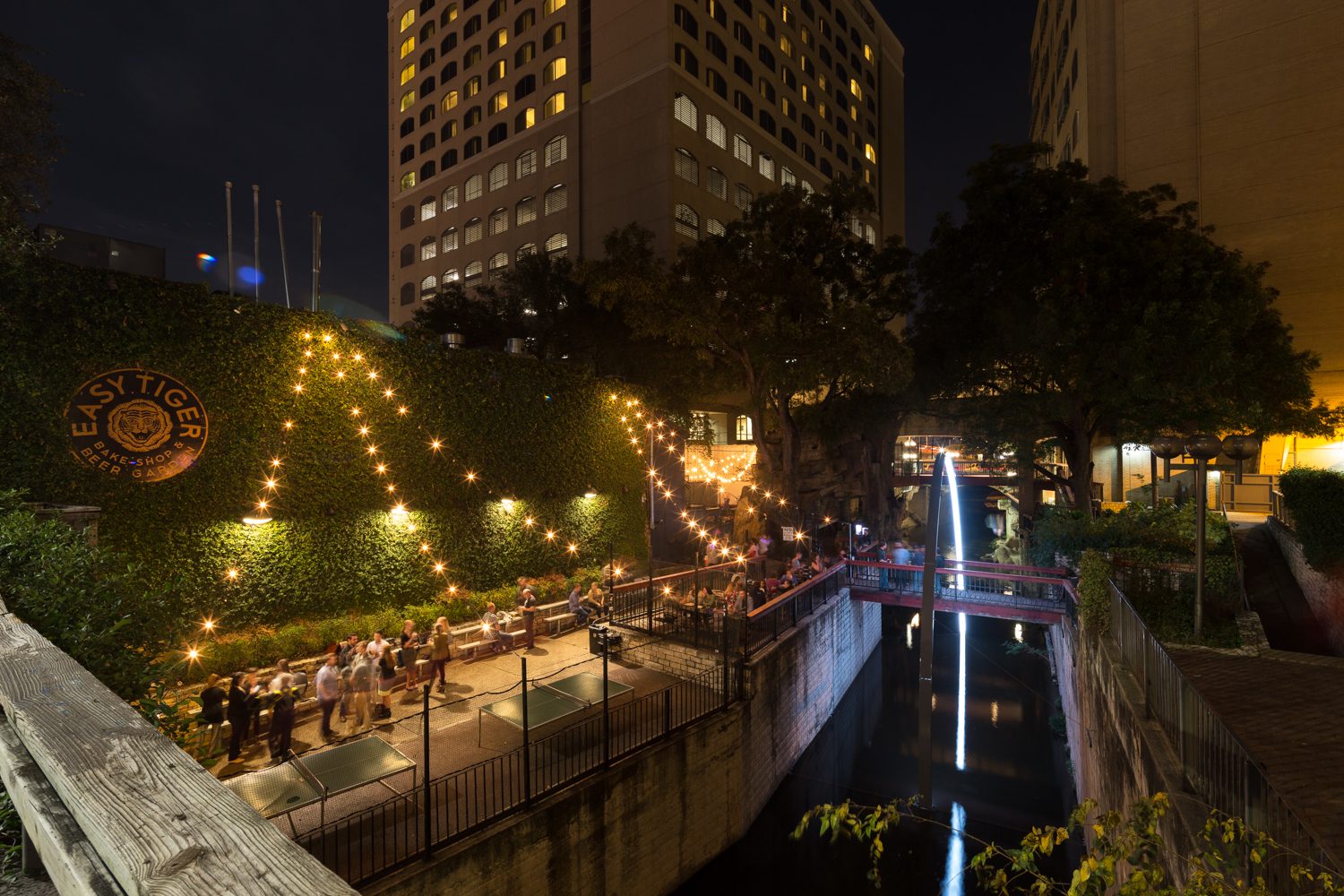
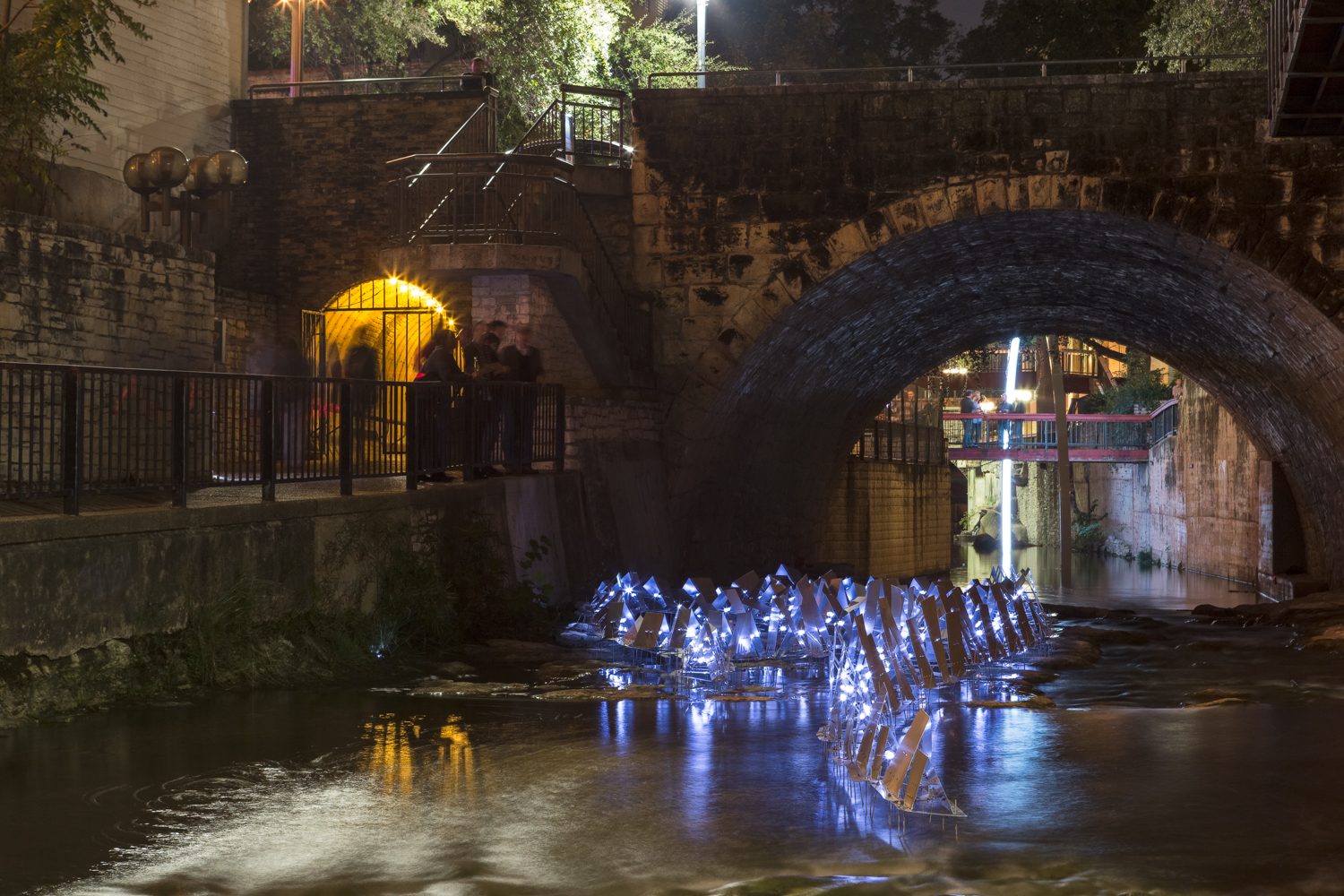
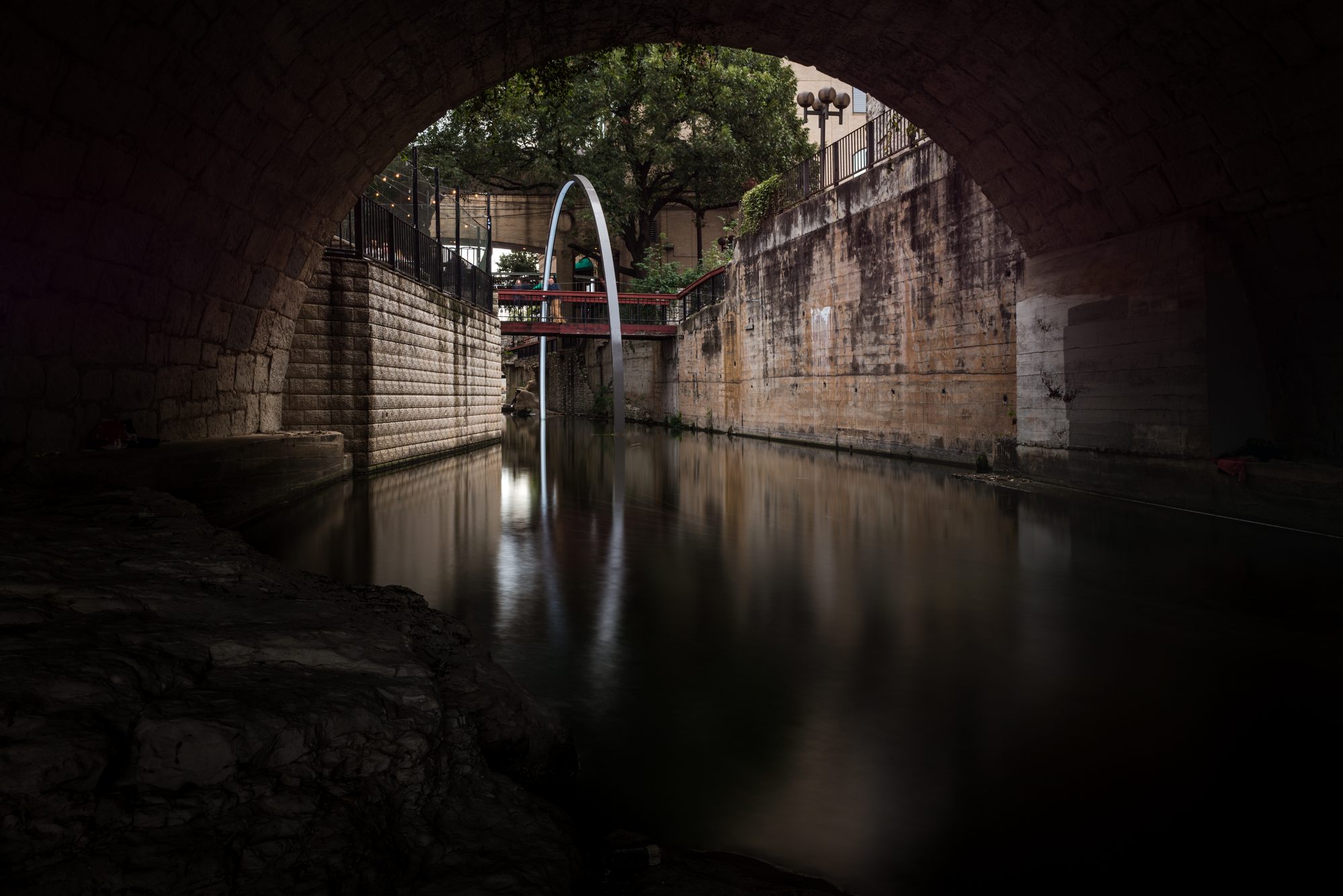
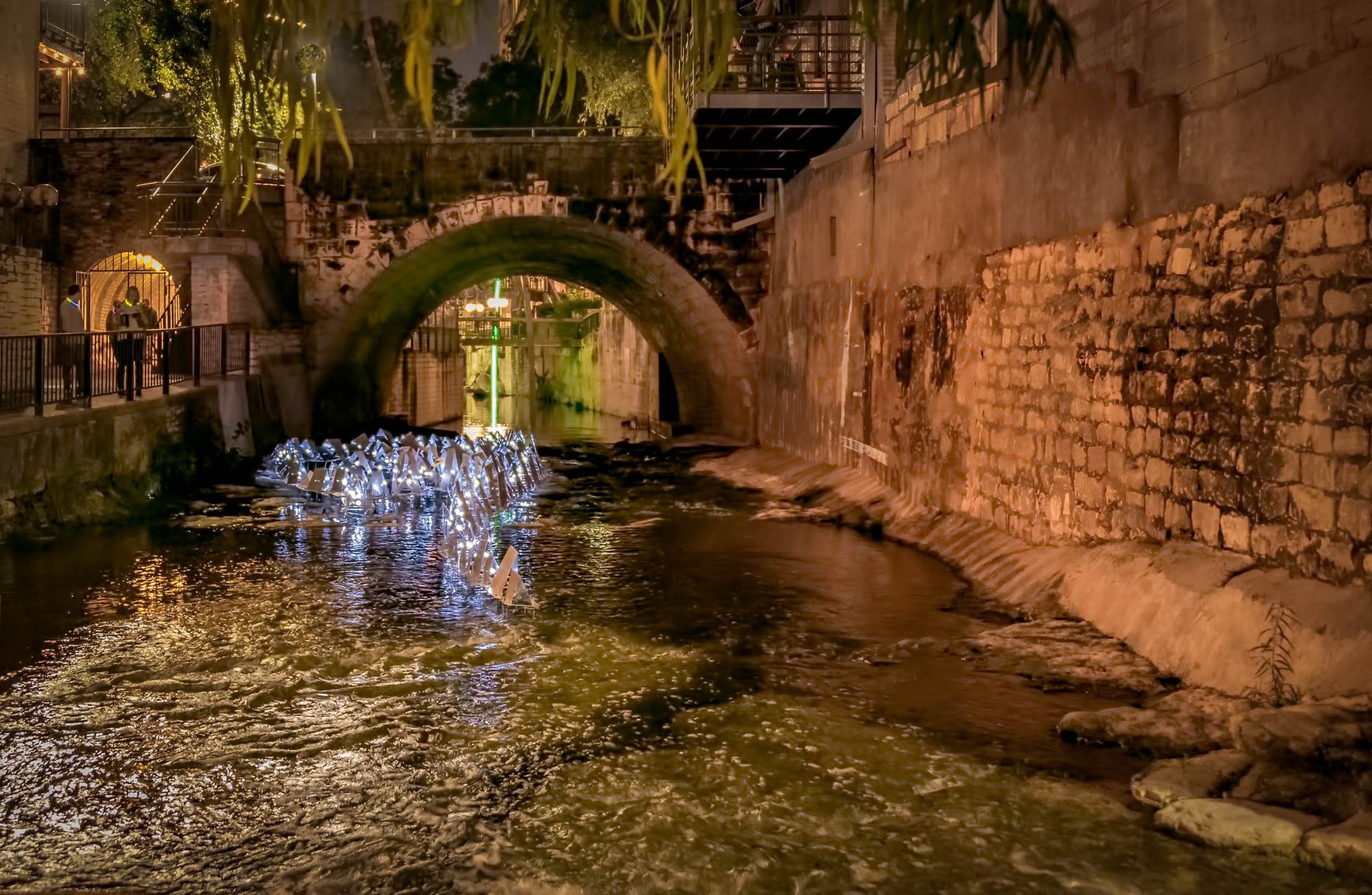
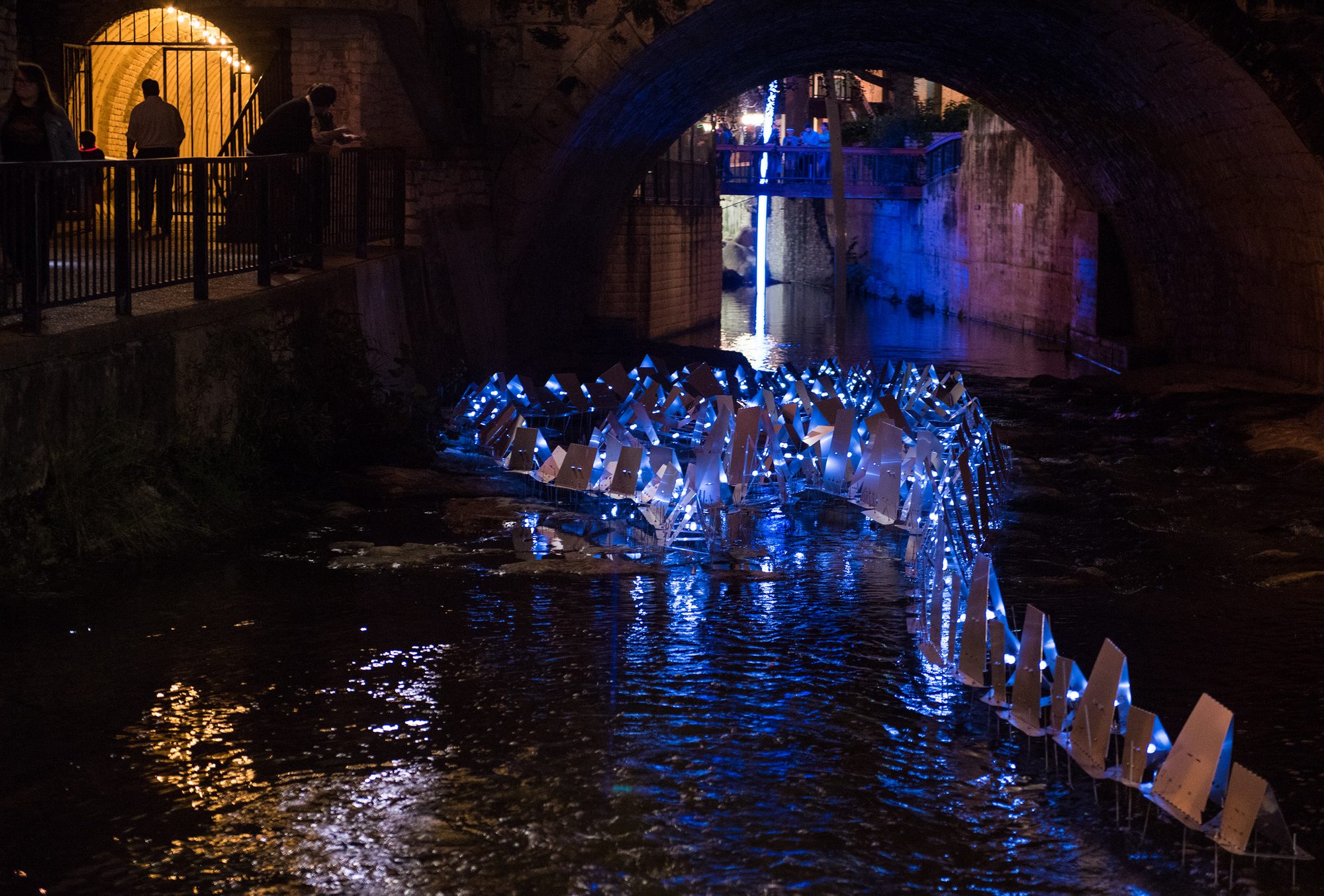
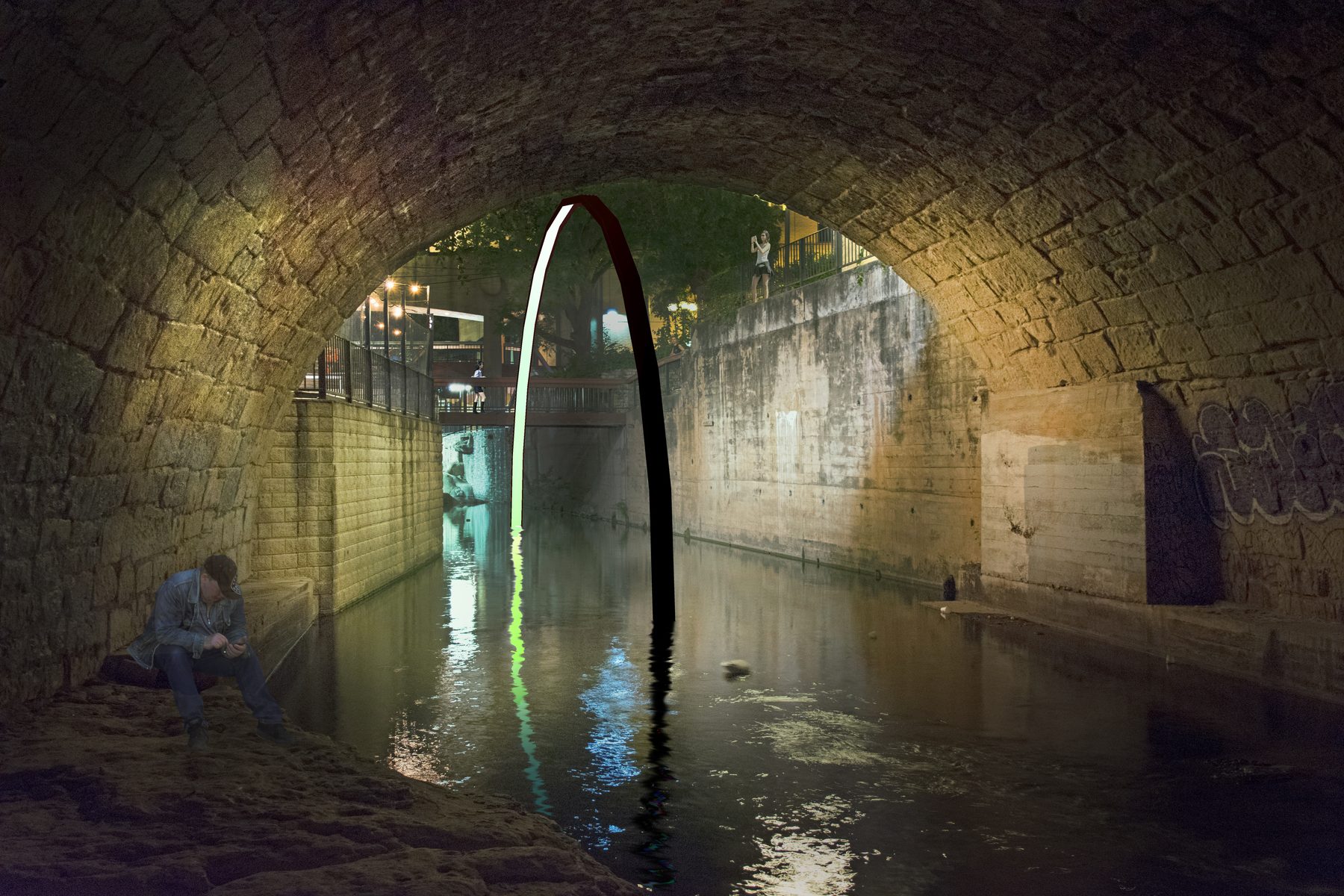
The site is a stretch of Waller Creek where the creek runs through stained concrete walls thirty feet below the streets above. There is no flora, no fauna, no rocks to generate surface distortion, not even graffiti to mark the walls. The experience is what the project’s artist statement called “a downward gaze” — the viewer looks into a void and is left to wonder about the nature of the place. The constraint was finding a single architectural intervention that could give the void a form to read.
Design move
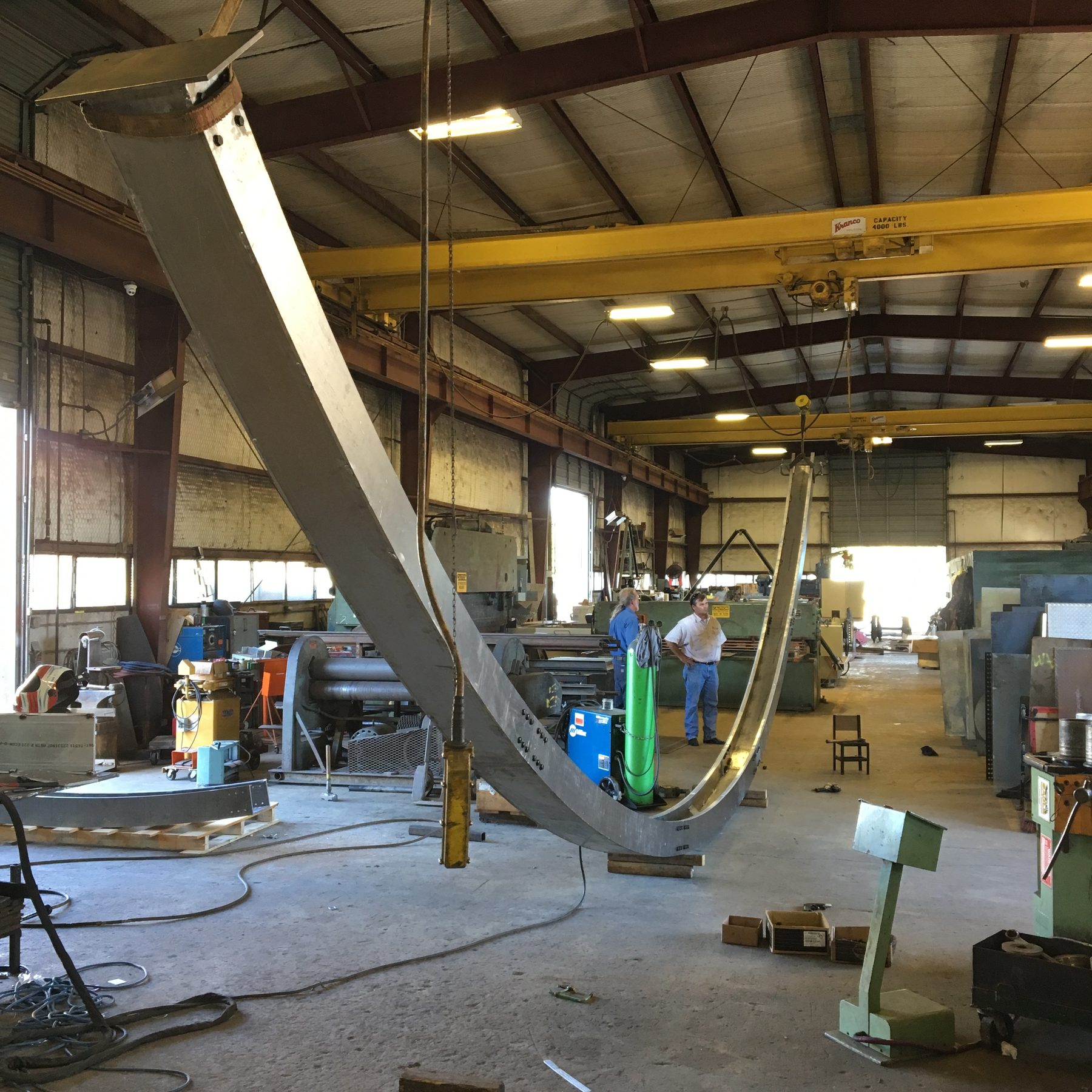
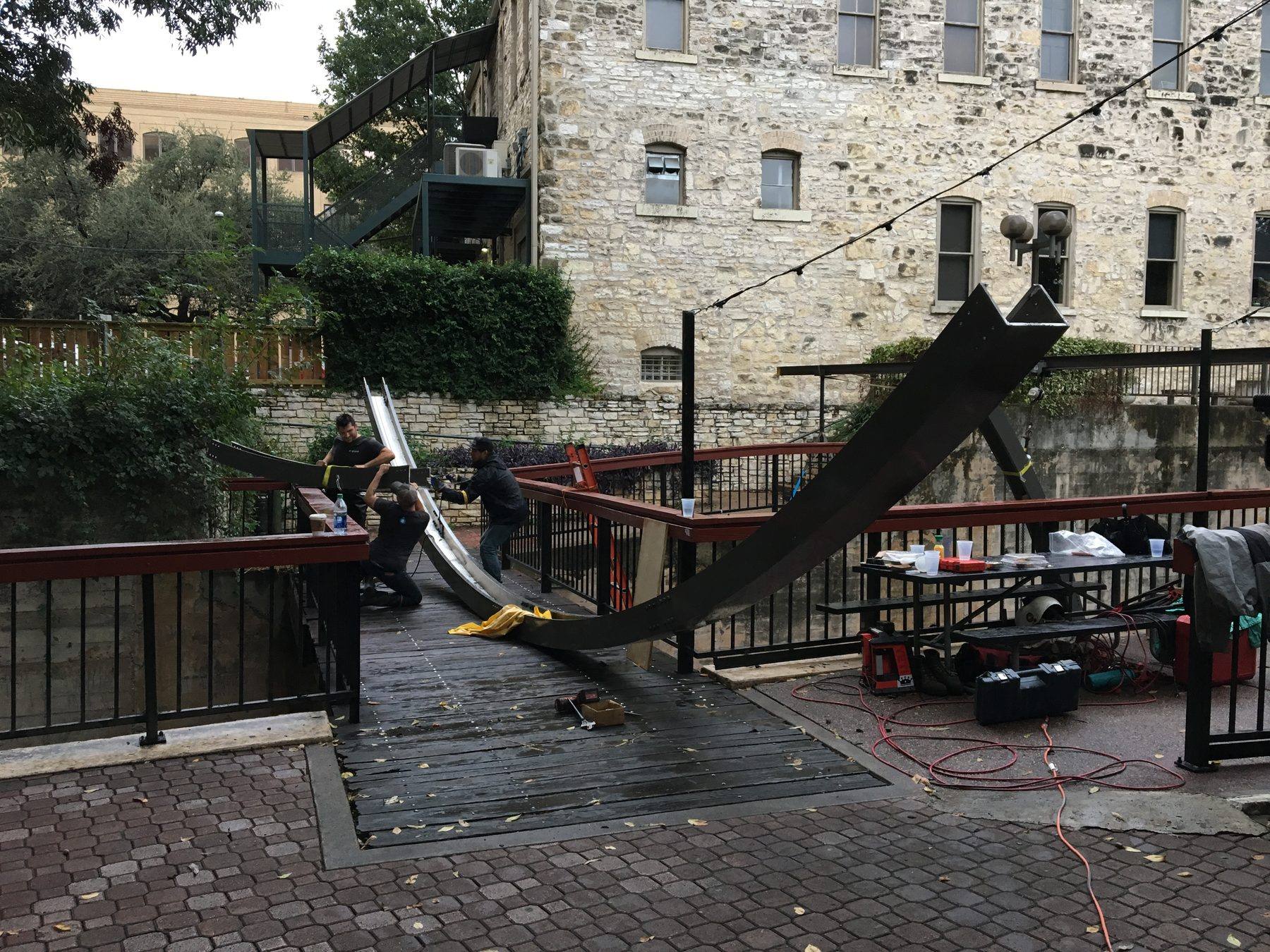
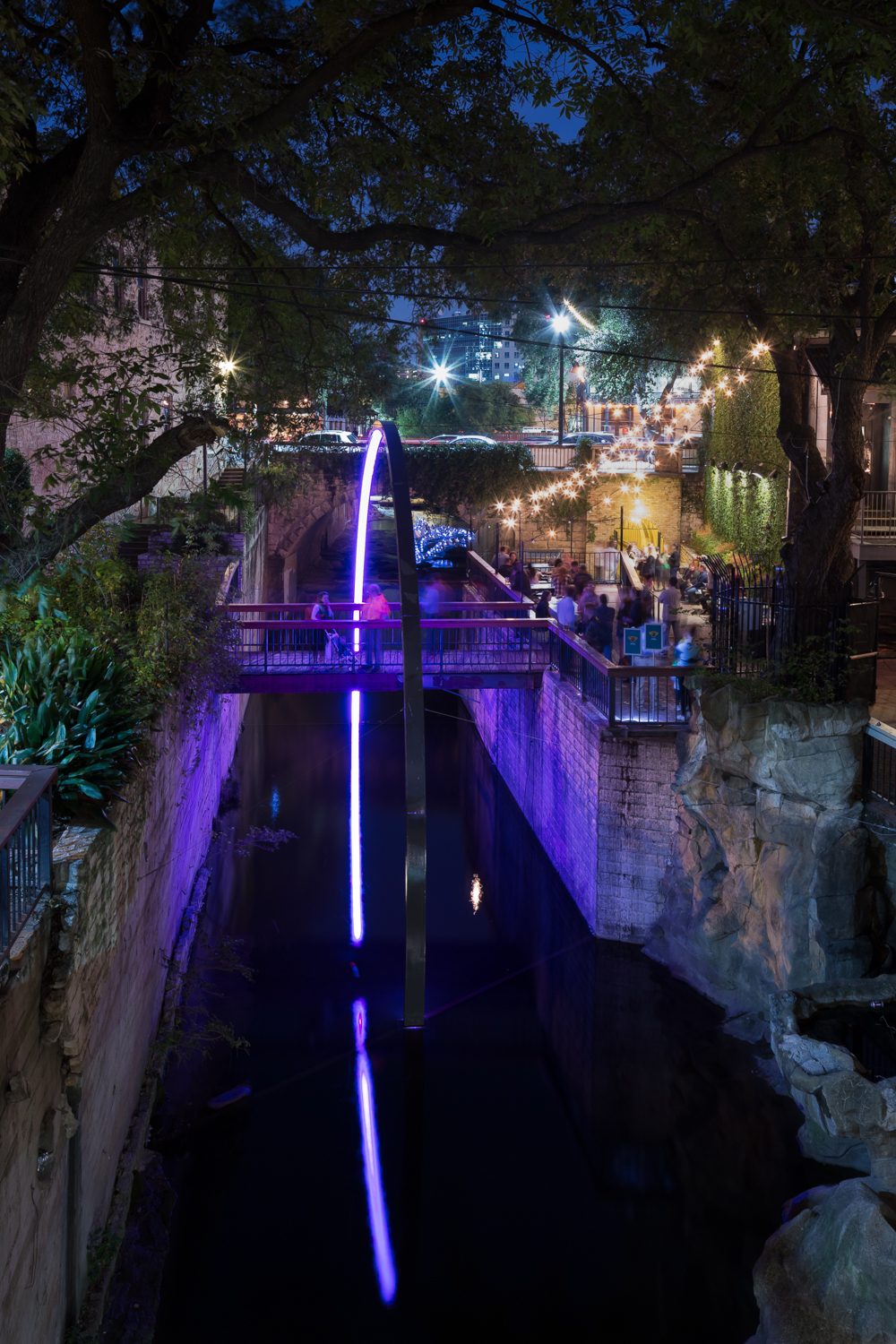
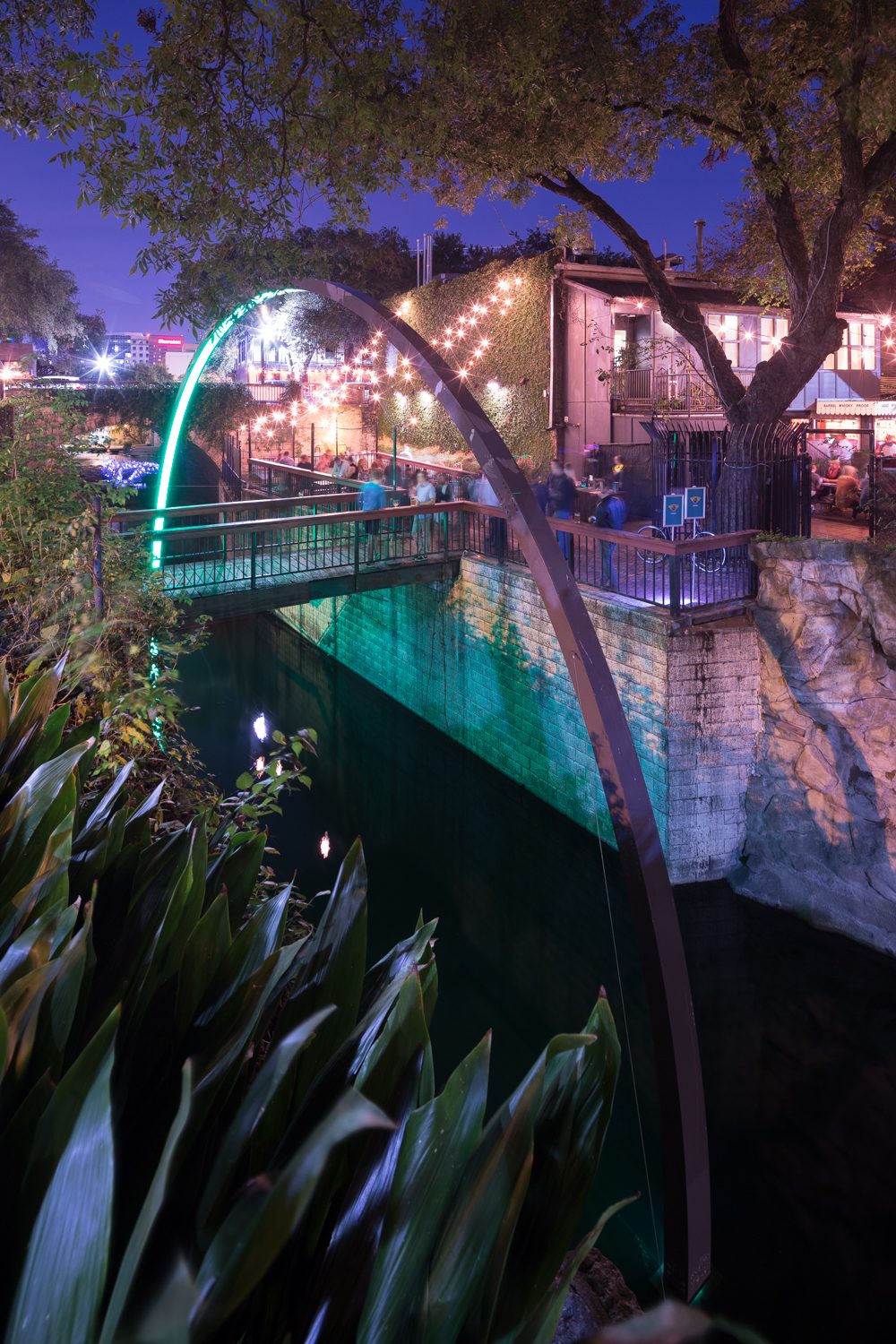
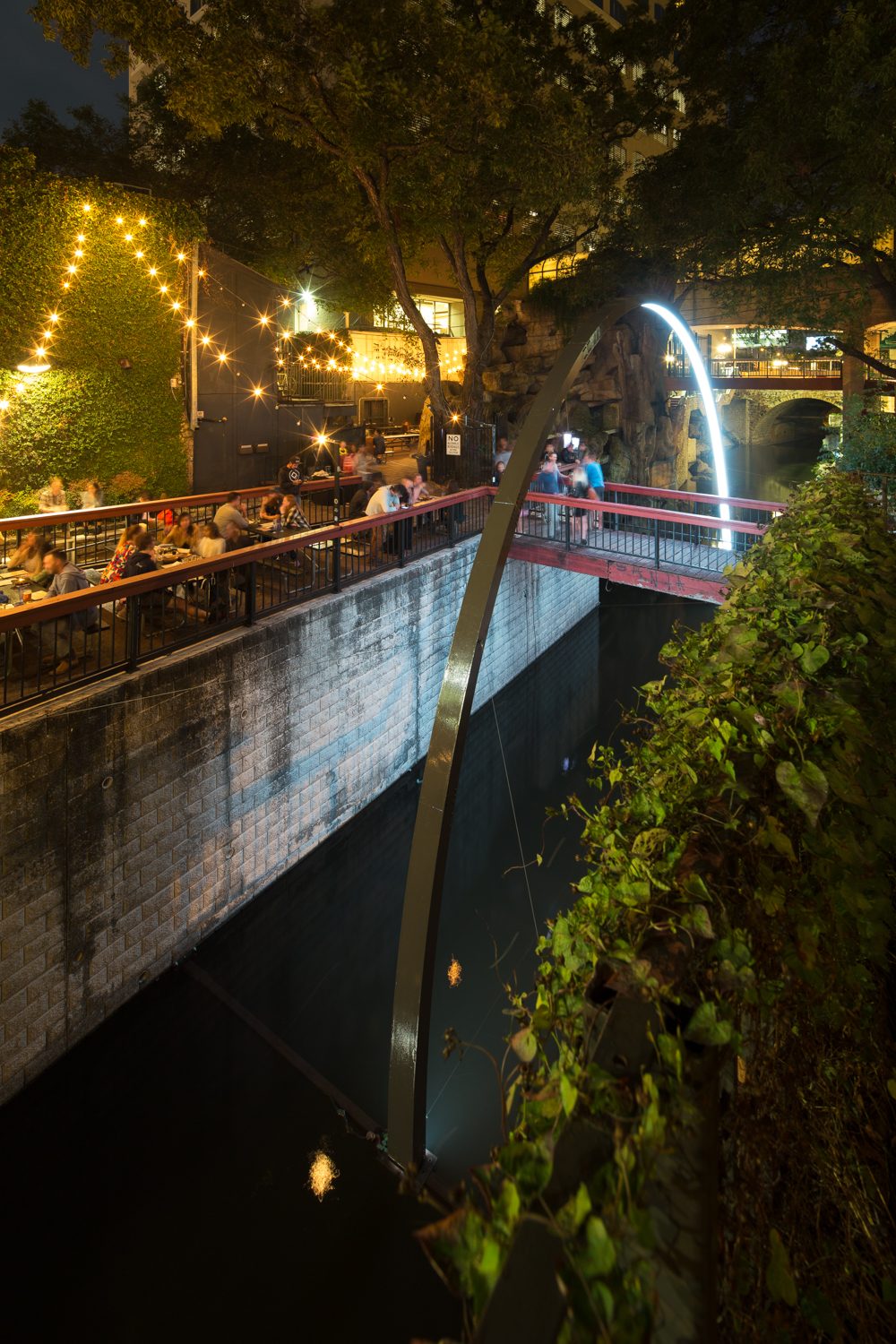
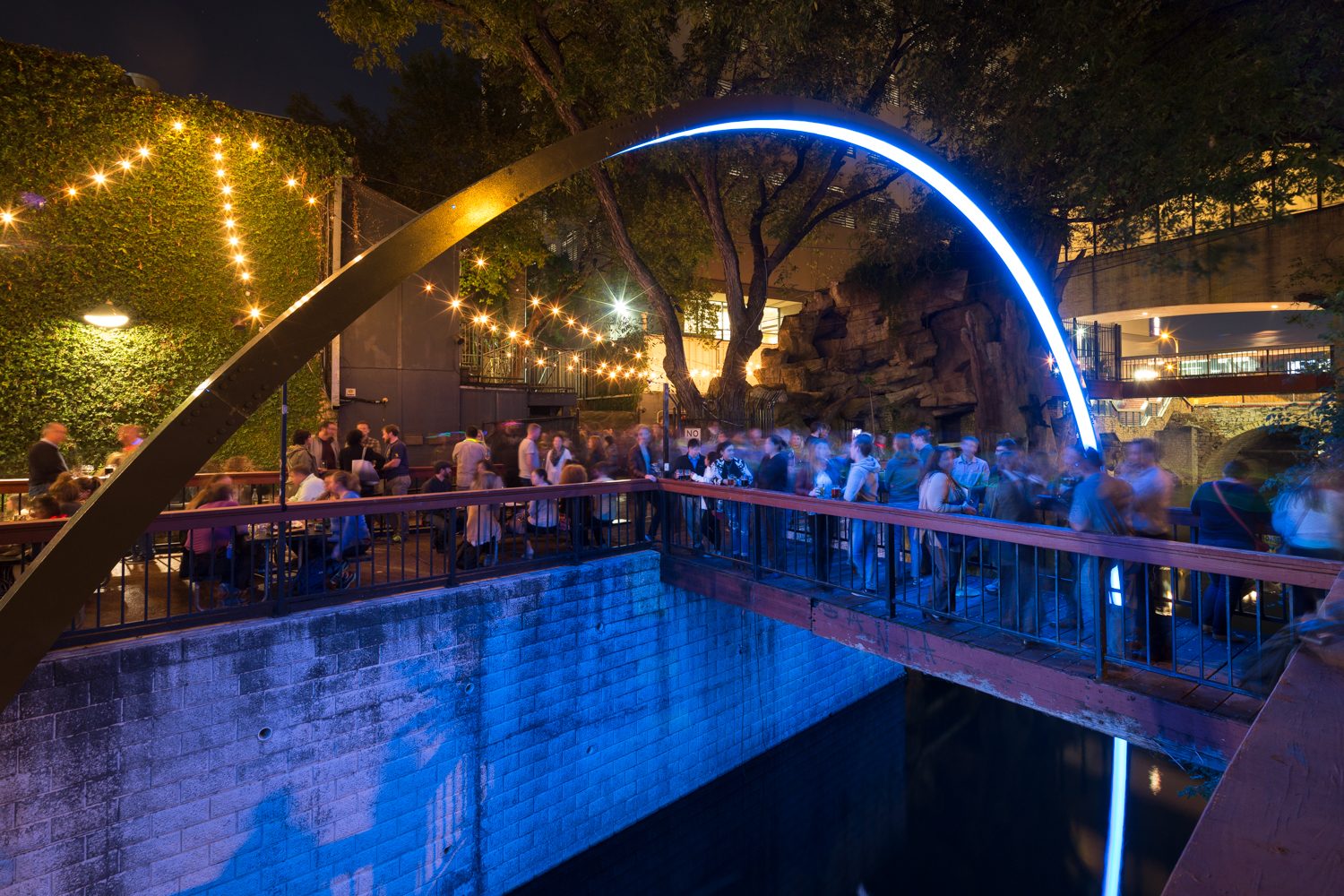
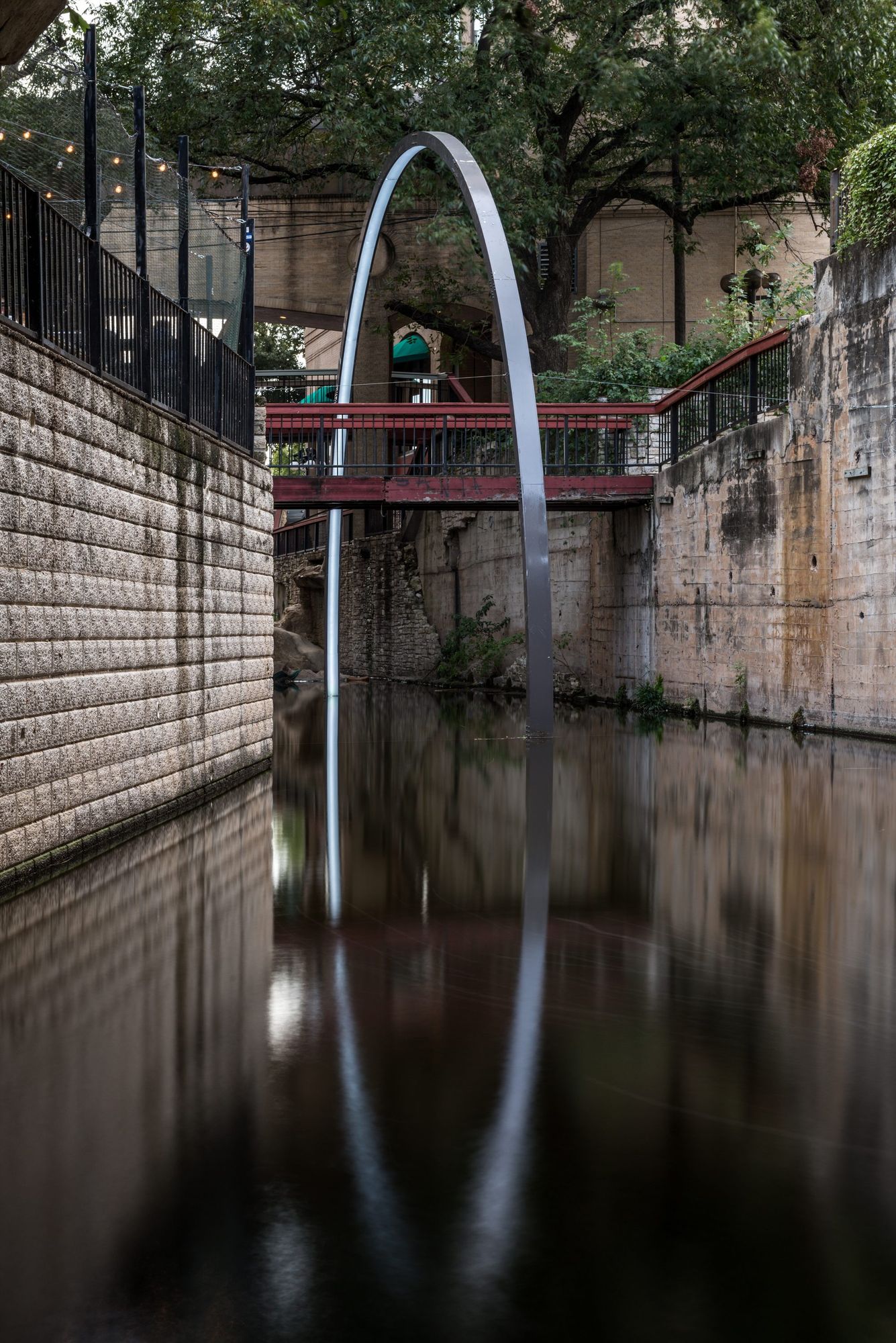
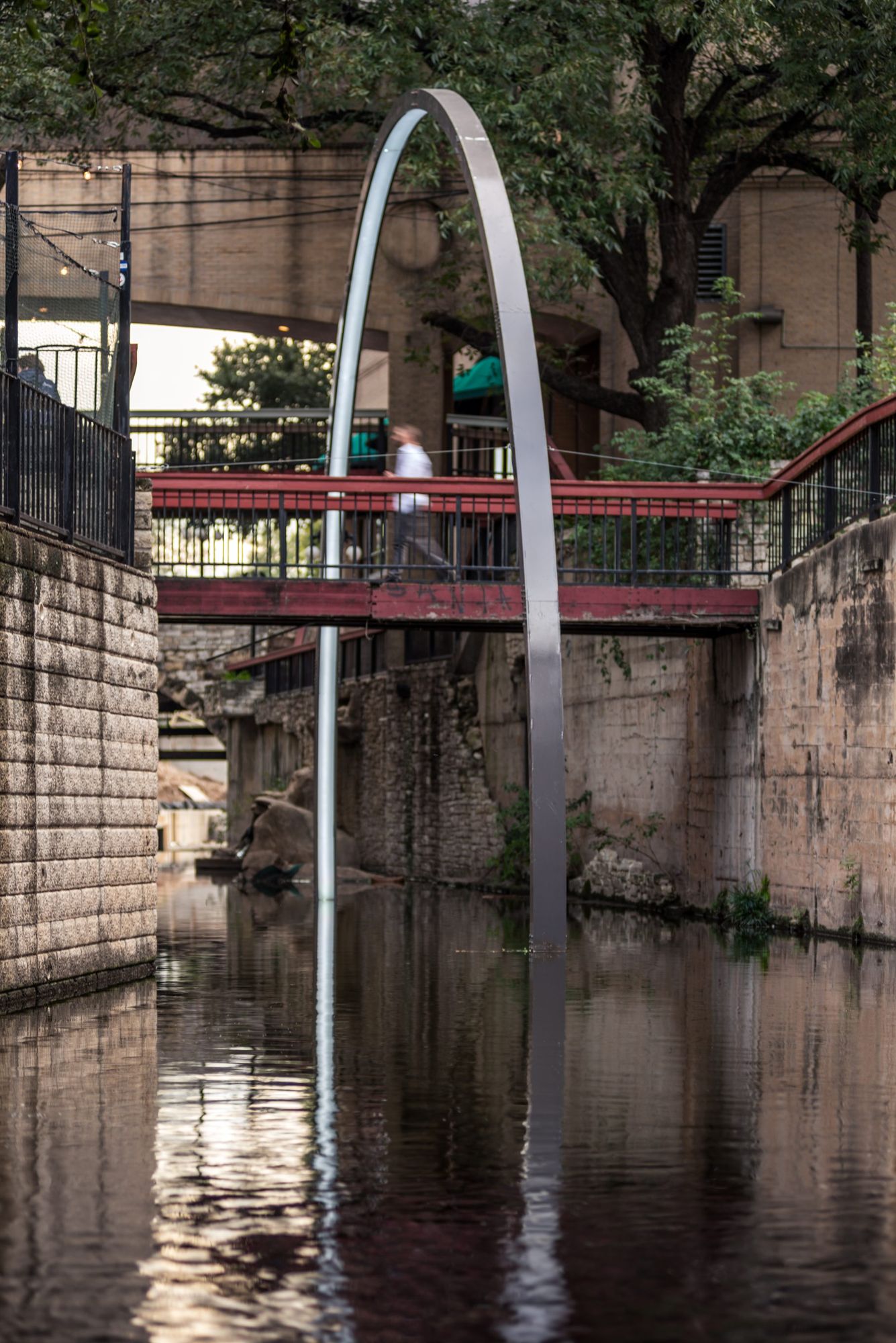
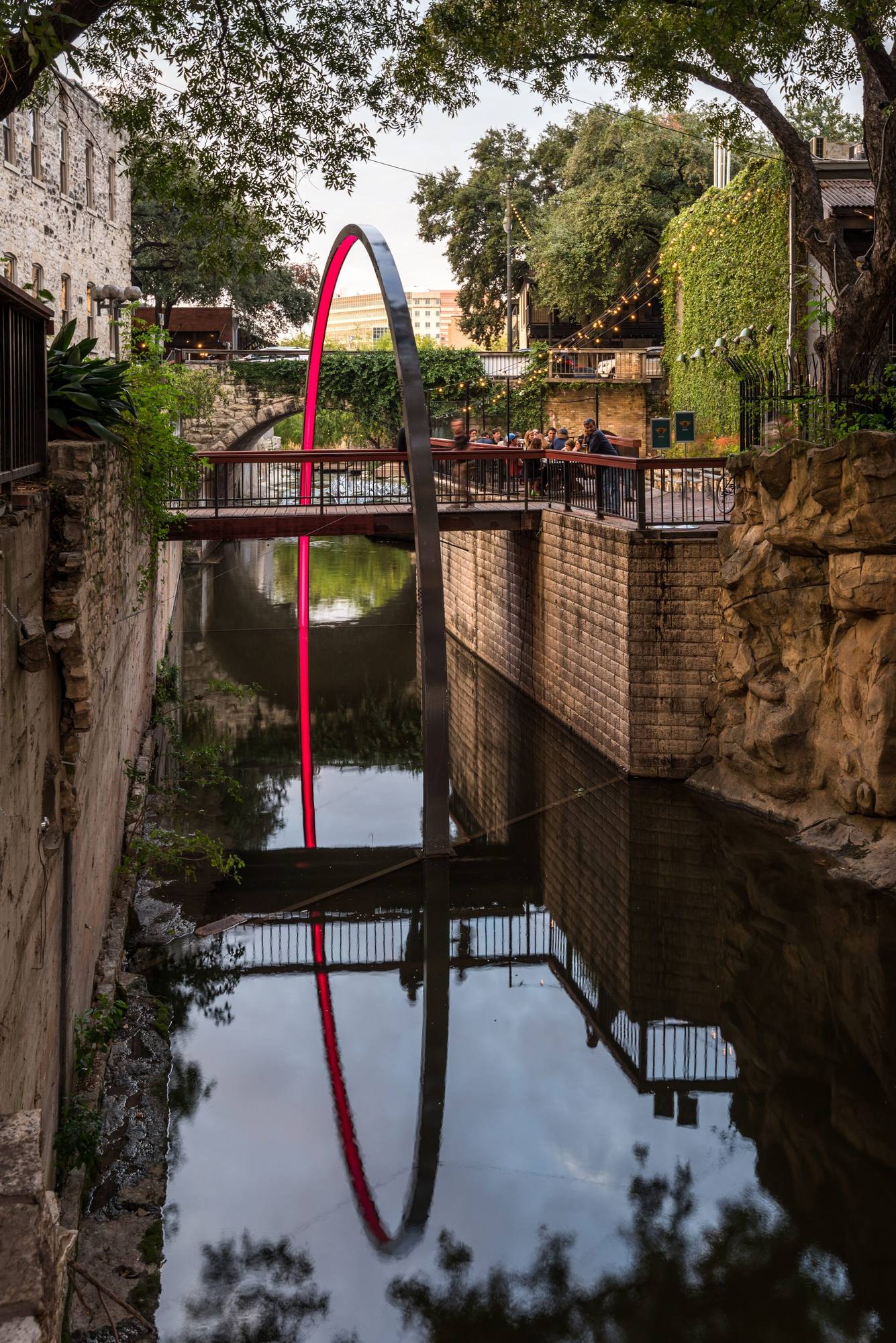
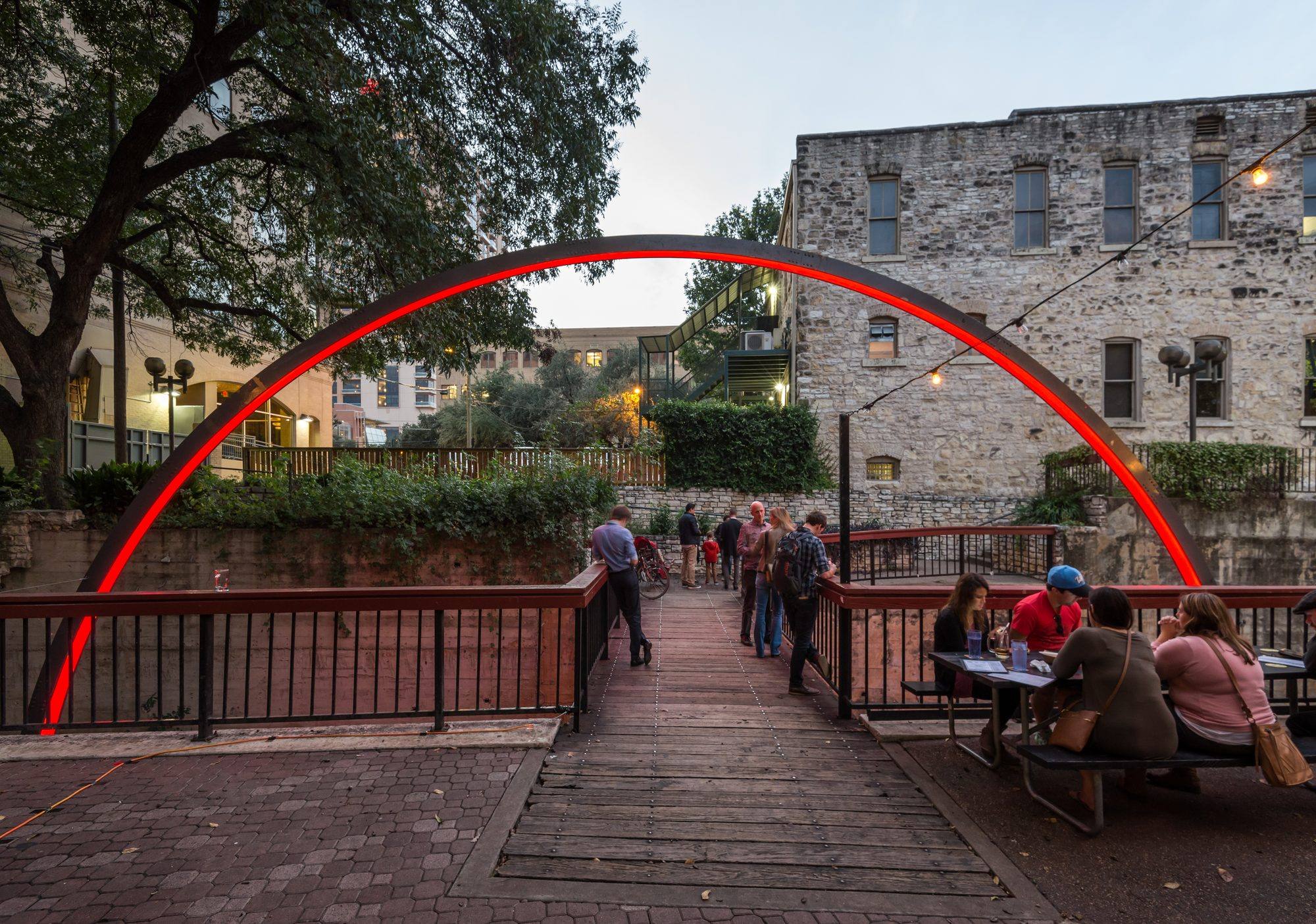
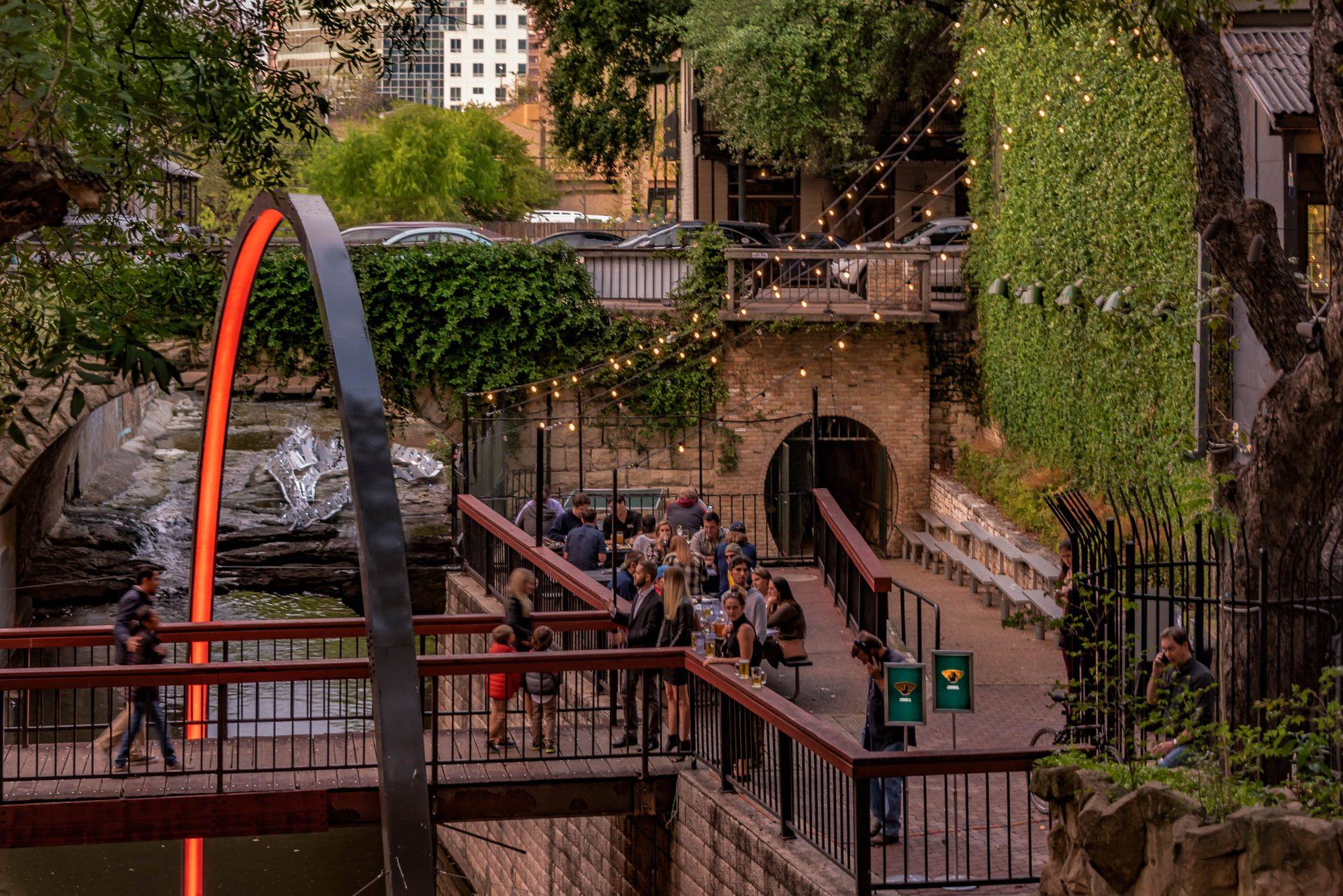
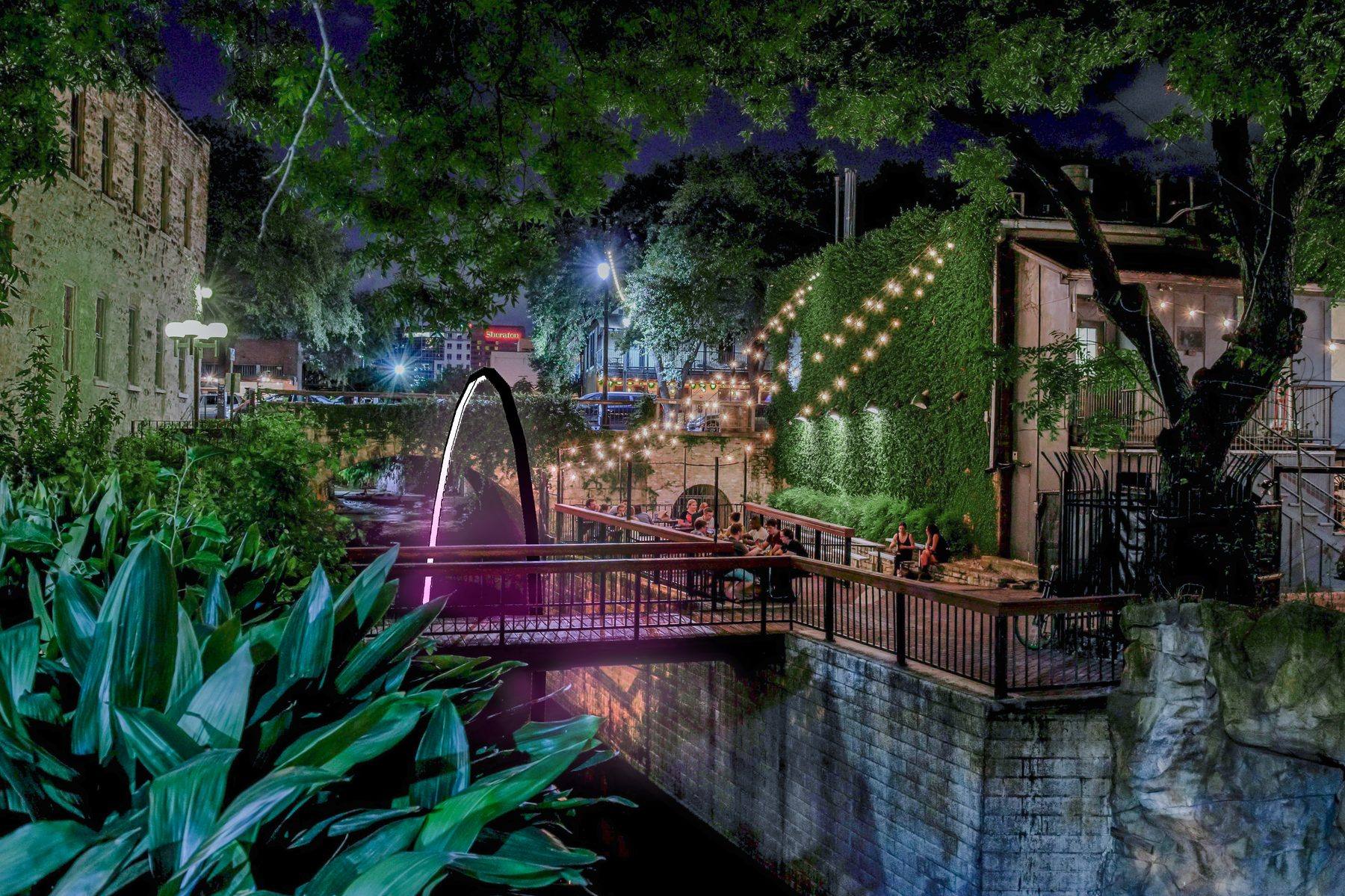
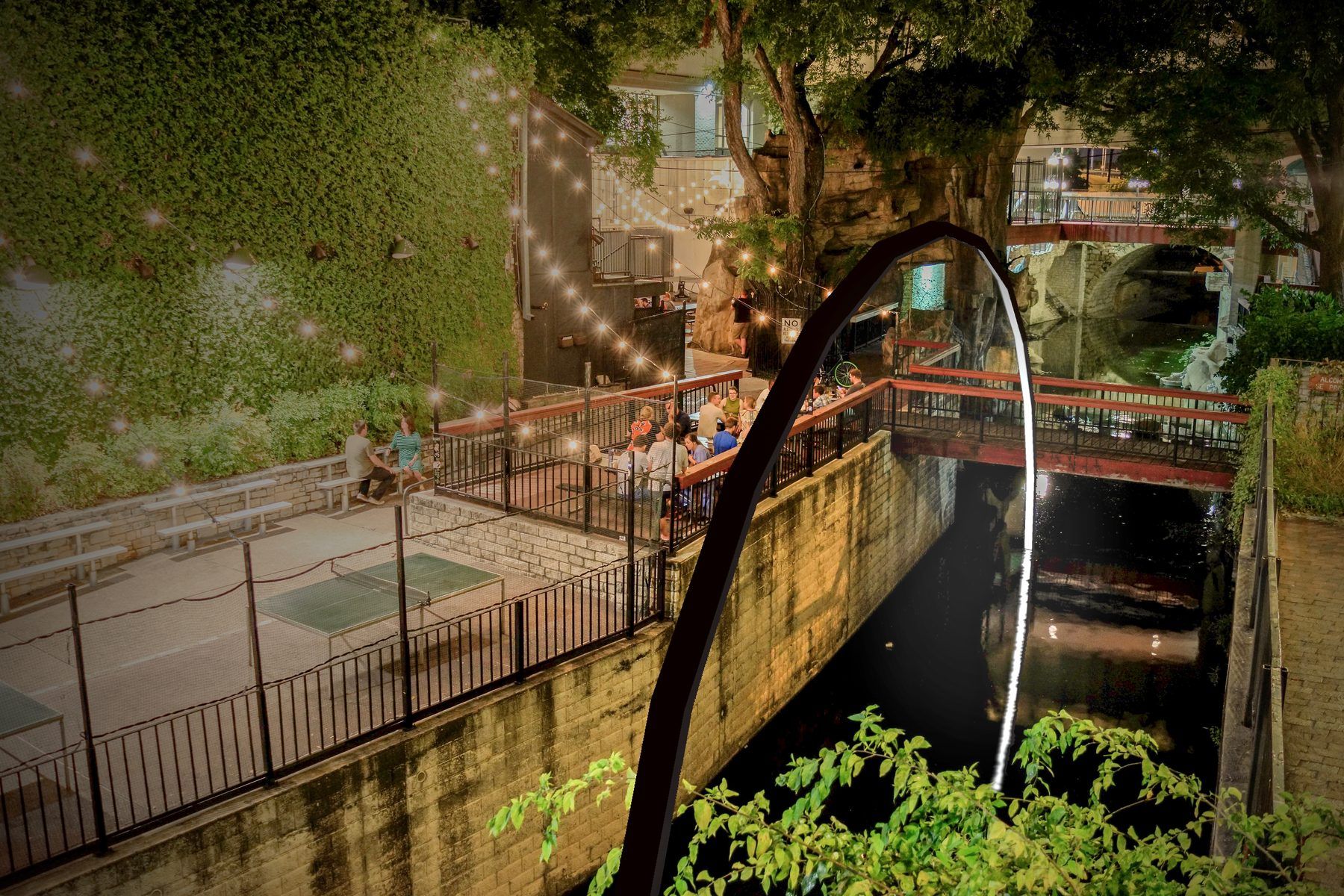
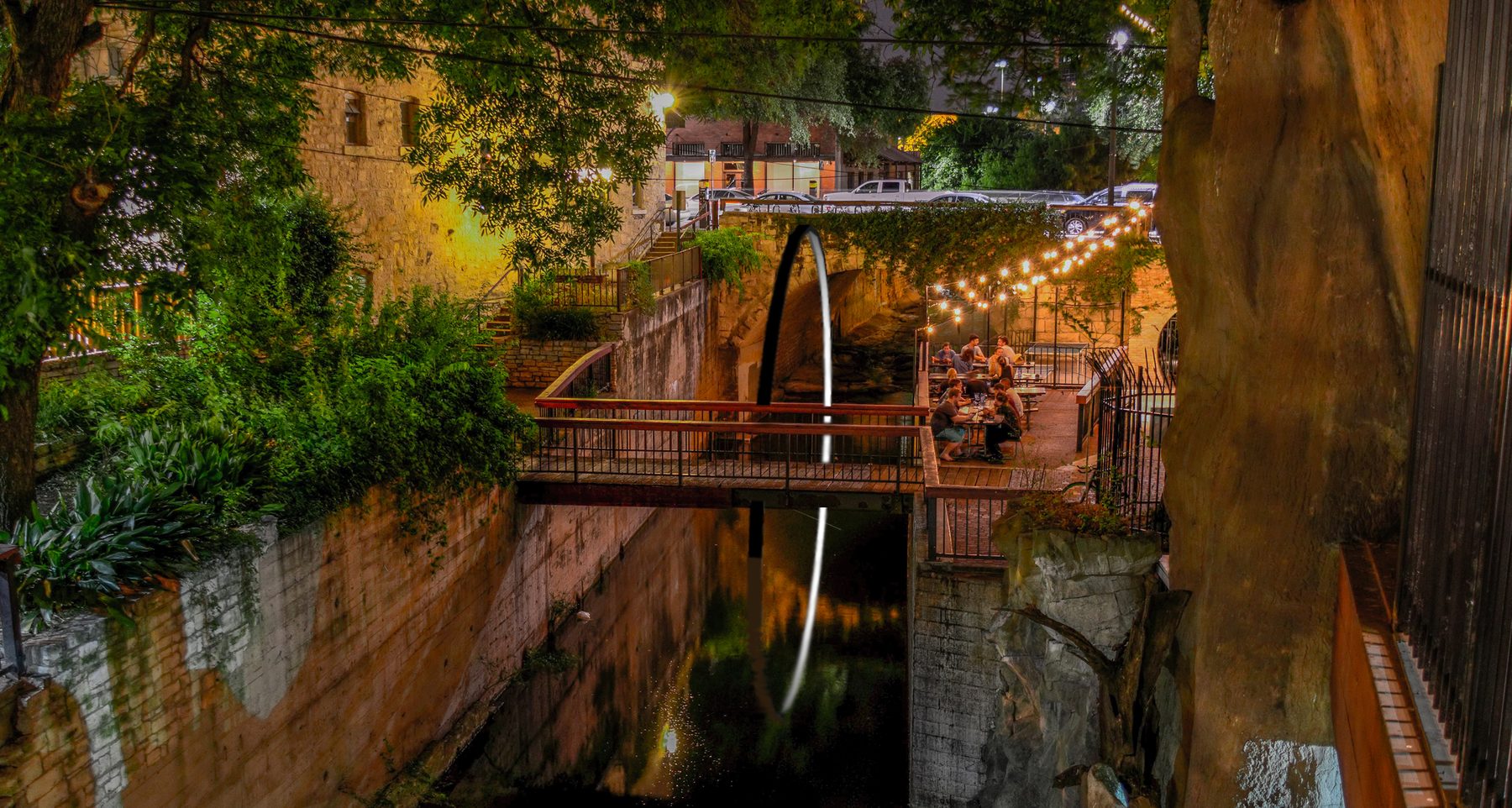
A single steel arc, fabricated from polished tubing, pierces the bridge railing from above and dips into the creek below. The arc is not a half-circle on its own — it is precisely the shape required so that, with its own reflection on the still creek surface, it completes a full circle. The viewer’s eye, which had nothing to anchor on, now has a complete geometry to read. By night, an LED runs the length of the tube; by day, the steel reflection alone does the work.
Construction approach
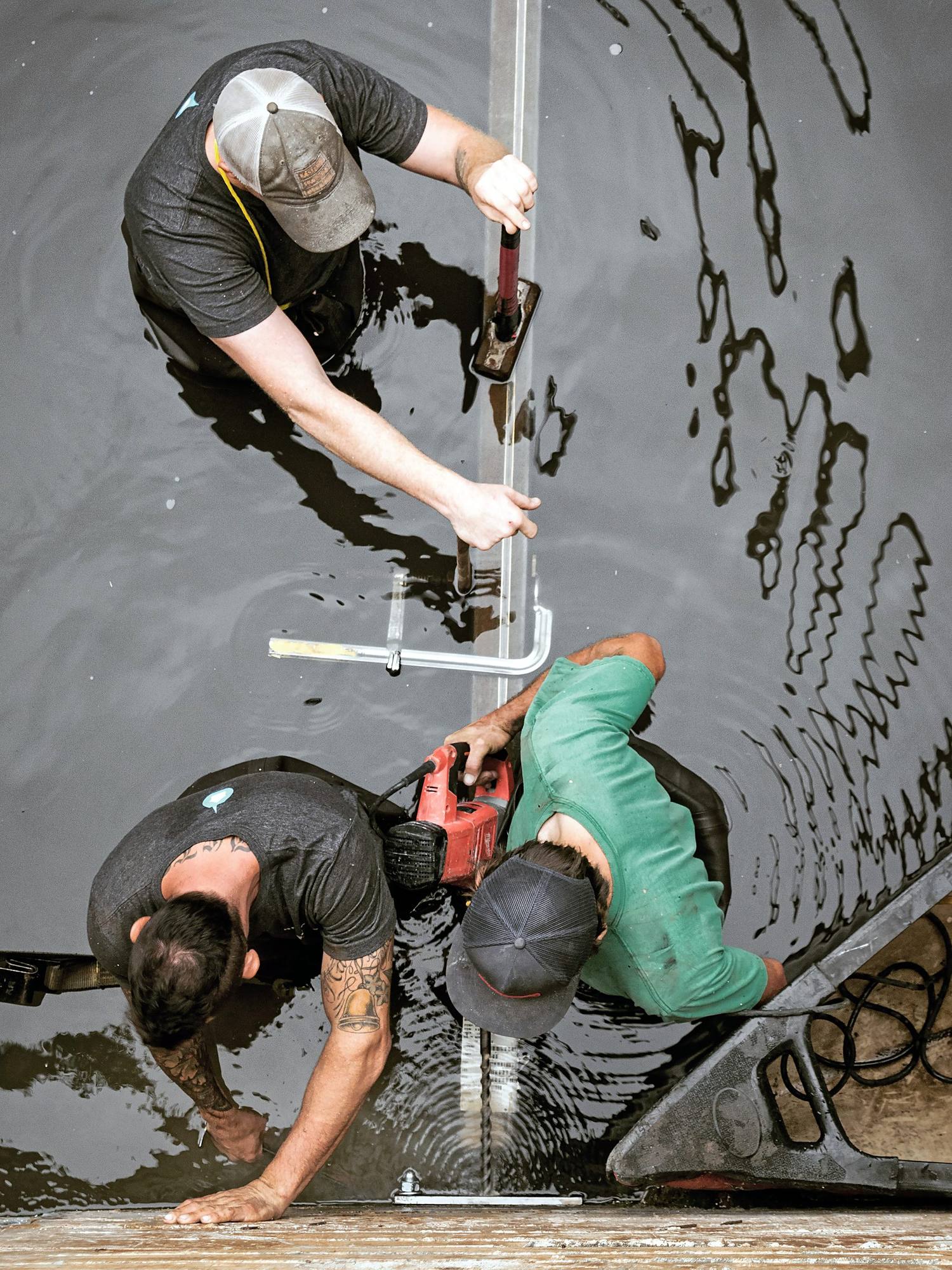
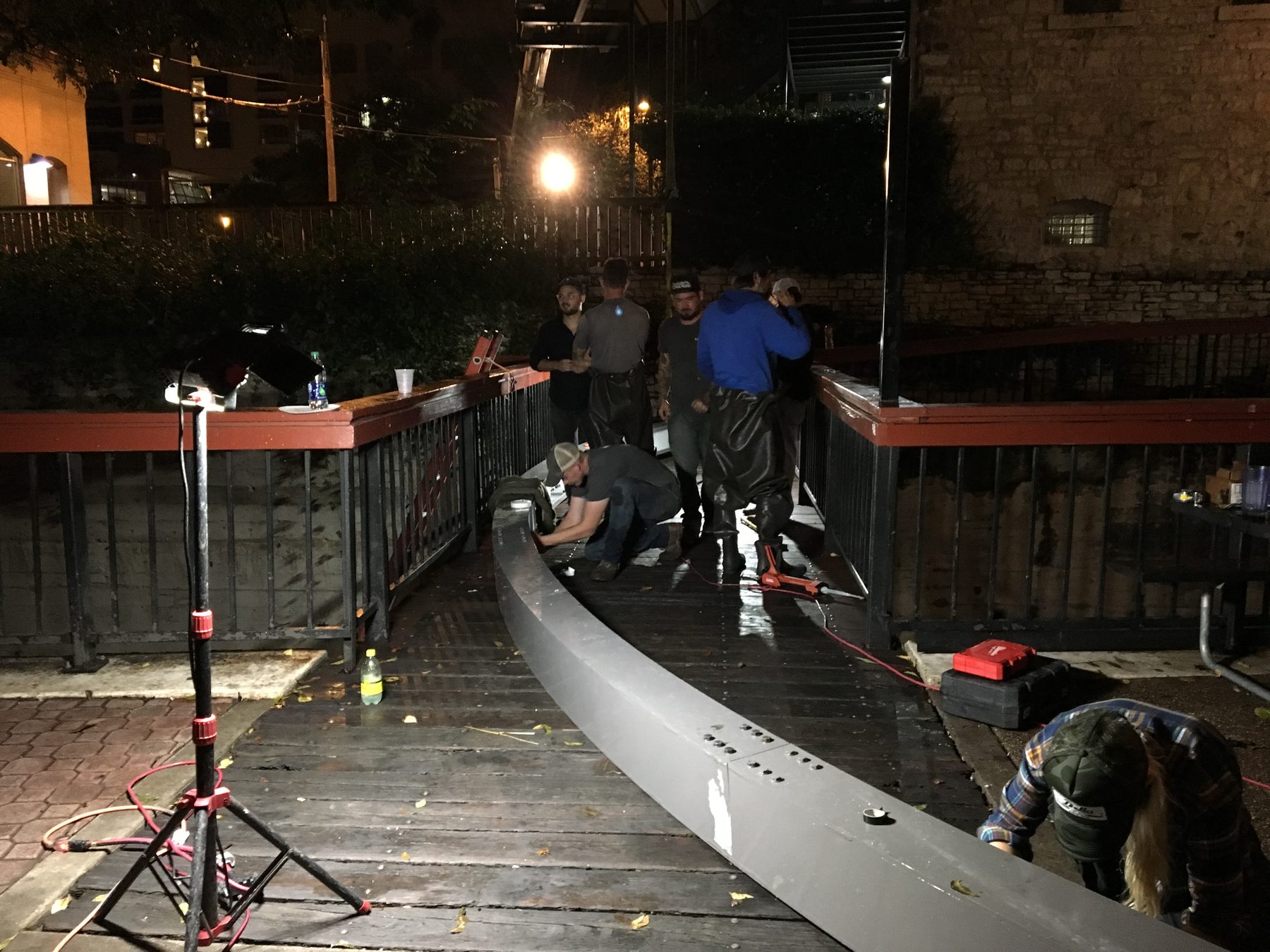
The arc was fabricated in segments off-site and welded together on the creek itself — workers standing in canoes, with the welding torch visible from the bridges above. The bridge anchor was drilled and bolted to the existing structure with a detachable connection so the installation could be removed cleanly at the end of the run. The LED was waterproofed for the segment that submerged.
Outcome
Deep Curiosity ran for ten nights in November 2016 and became one of the most-photographed installations in the Creek Show’s history. The project received recognition in the 2018 AIA Austin Design Awards. The work remains the studio’s clearest argument that the experiential-venue thesis extends beyond commercial architecture: a temporary public installation operating by the same logic as a climbing gym — a place for people to gather around a singular spatial idea, sized and lit for collective experience.