





Client and program
The client came to the studio with three programs that the pet-care market typically buys separately — a boutique, a grooming salon, and a fresh-food production kitchen — and the conviction that combining them in one purpose-built building would be both more profitable and more useful to the customer. The brief asked the architecture to make that combination read as a single deliberate decision rather than three businesses sharing a wall.
Site and constraint
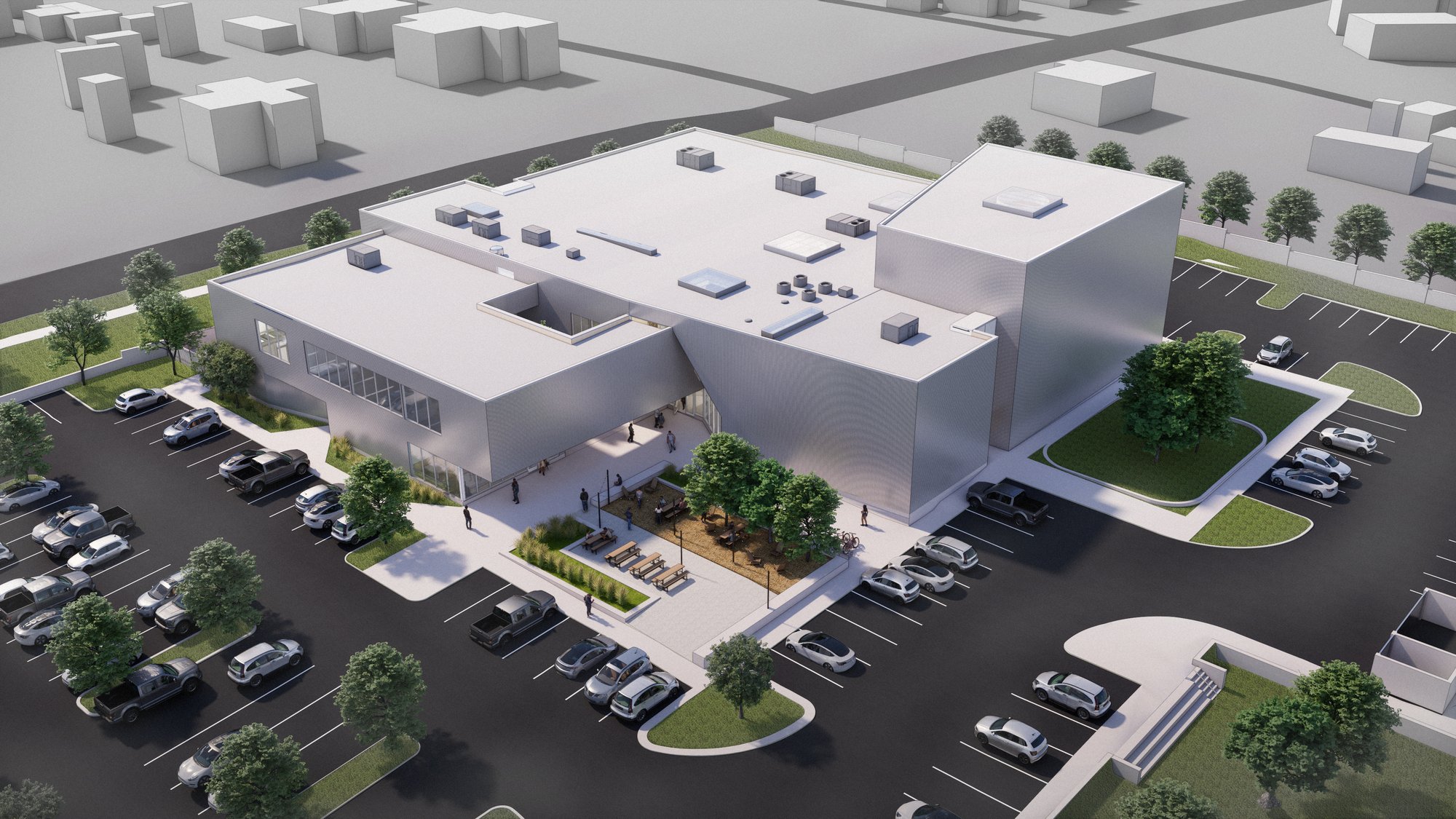
The site is a small commercial parcel on an Austin retail corridor. The constraints were the parking ratio, the storefront proportions the corridor expected, and the operational realities of running a real commercial kitchen — venting, plumbing, refrigeration, and code compliance — inside what had to also read as an inviting boutique. The kitchen could not feel like a back-of-house annex and the boutique could not feel like the front of a food-prep facility.
Design move
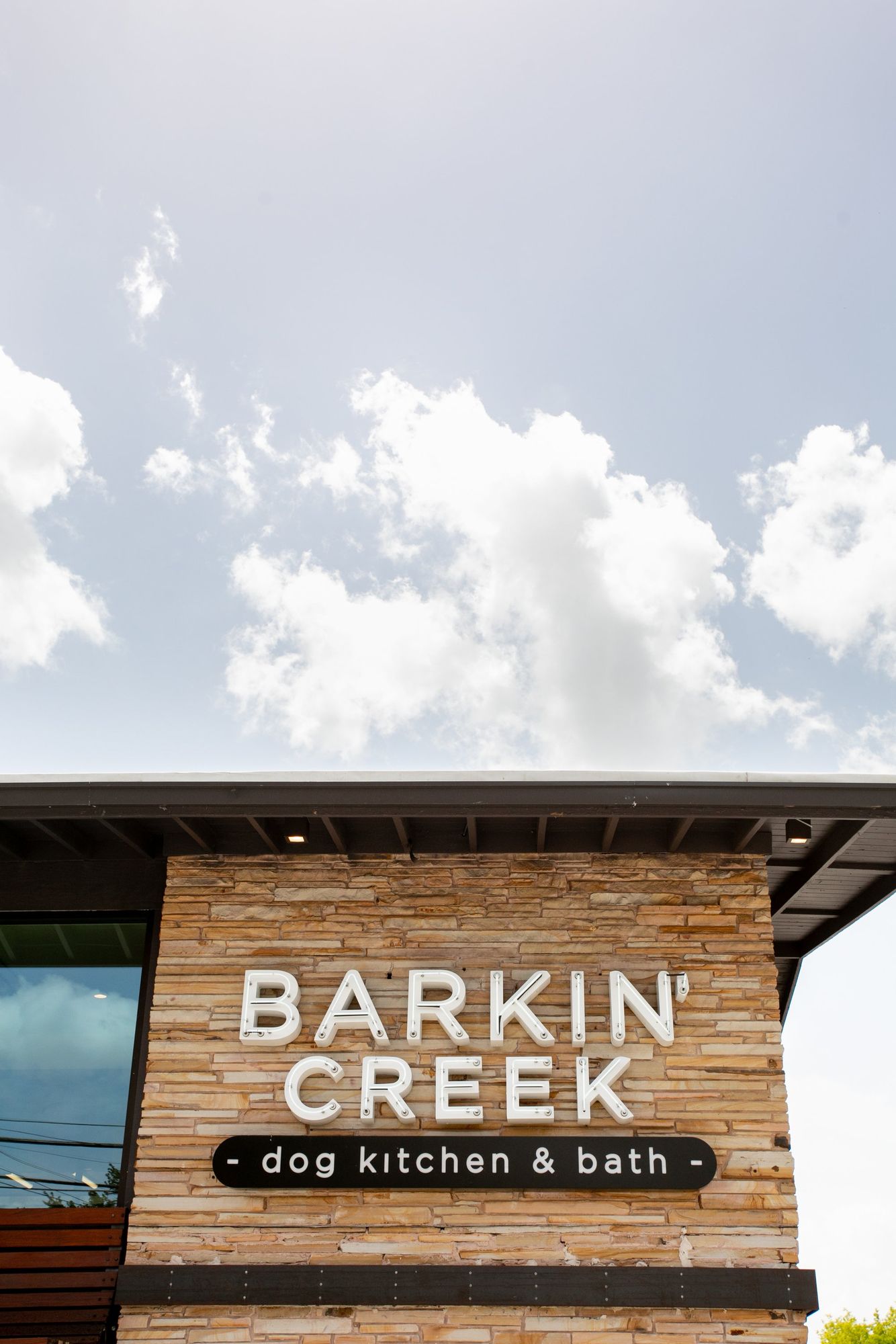
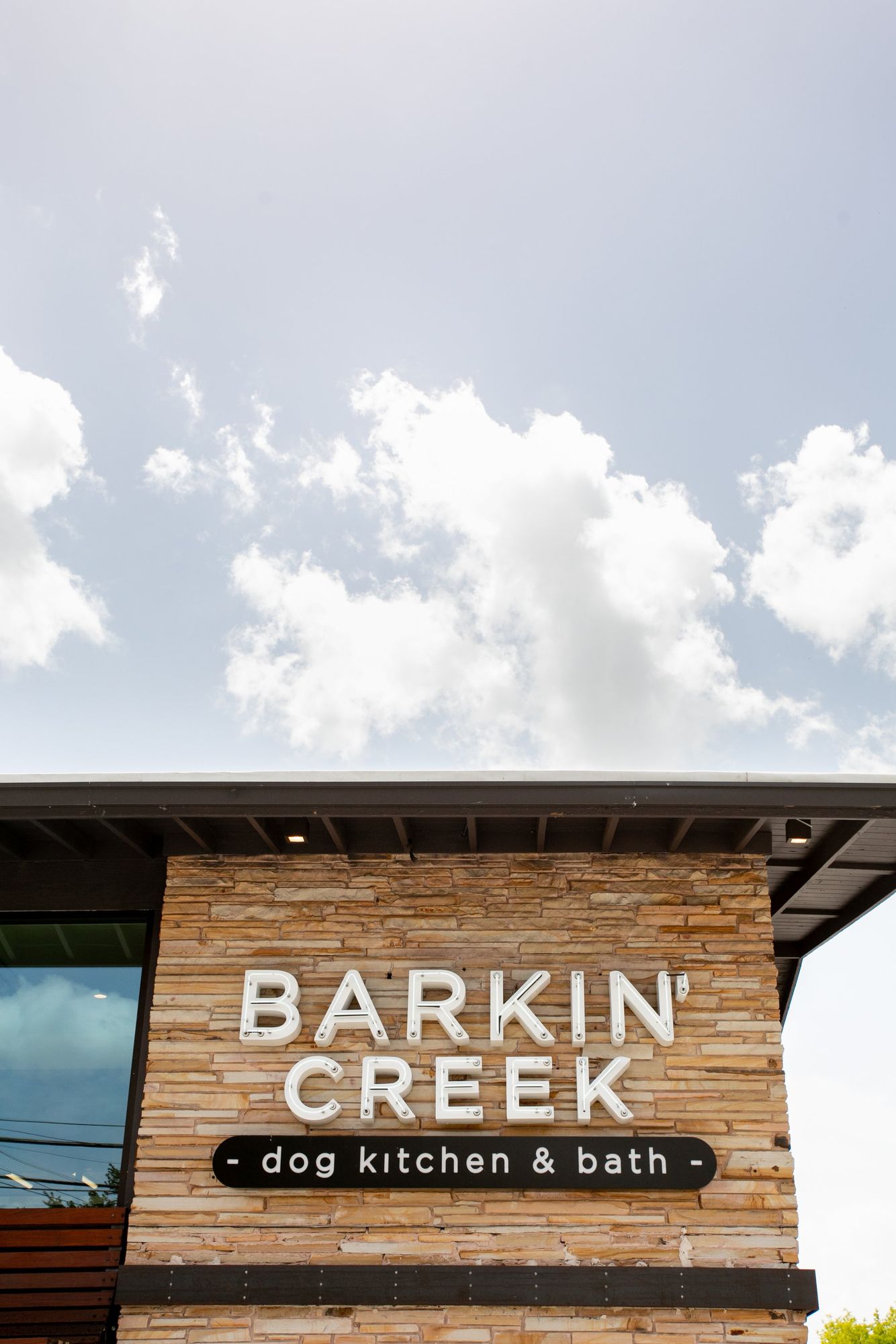
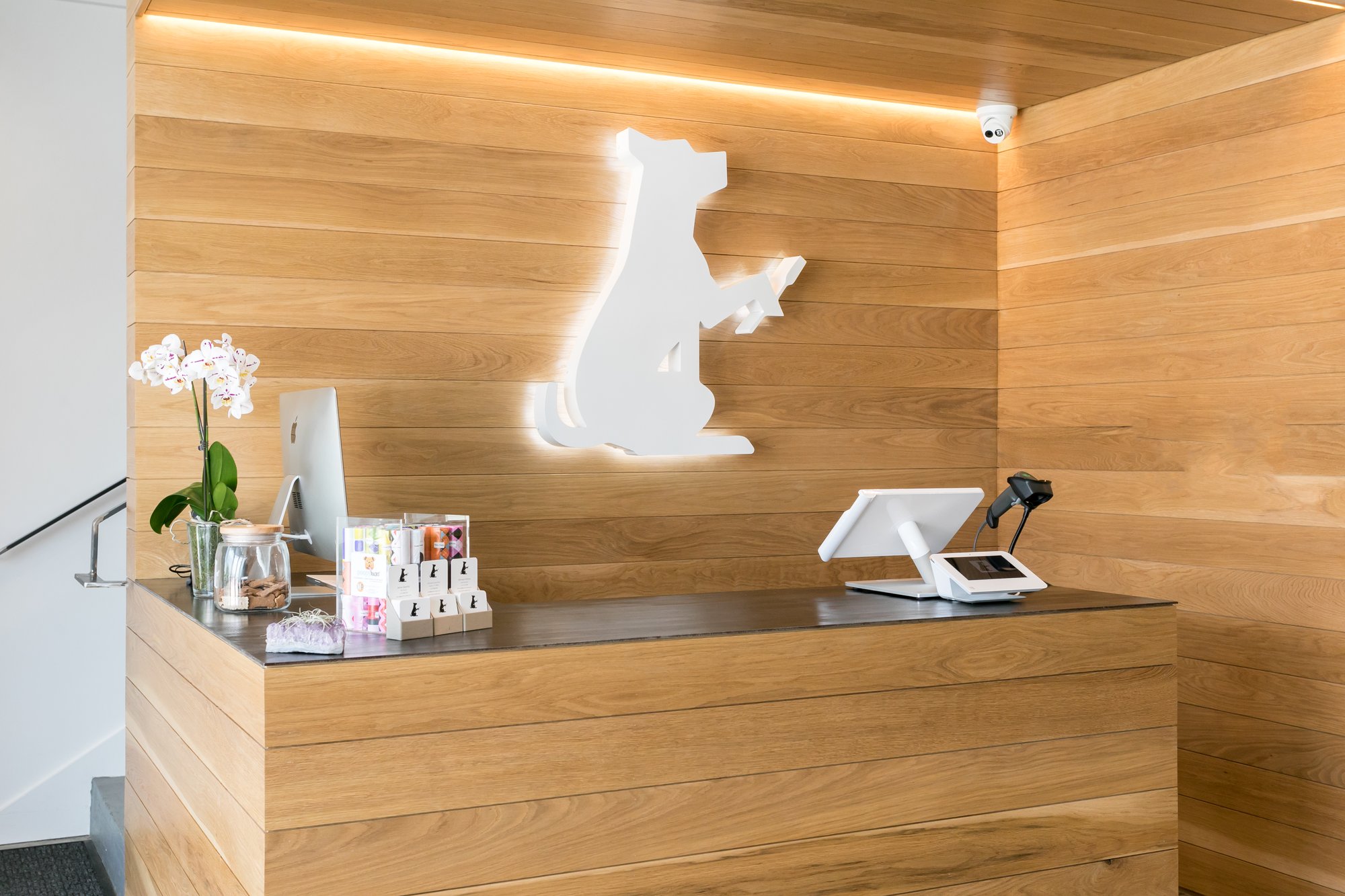
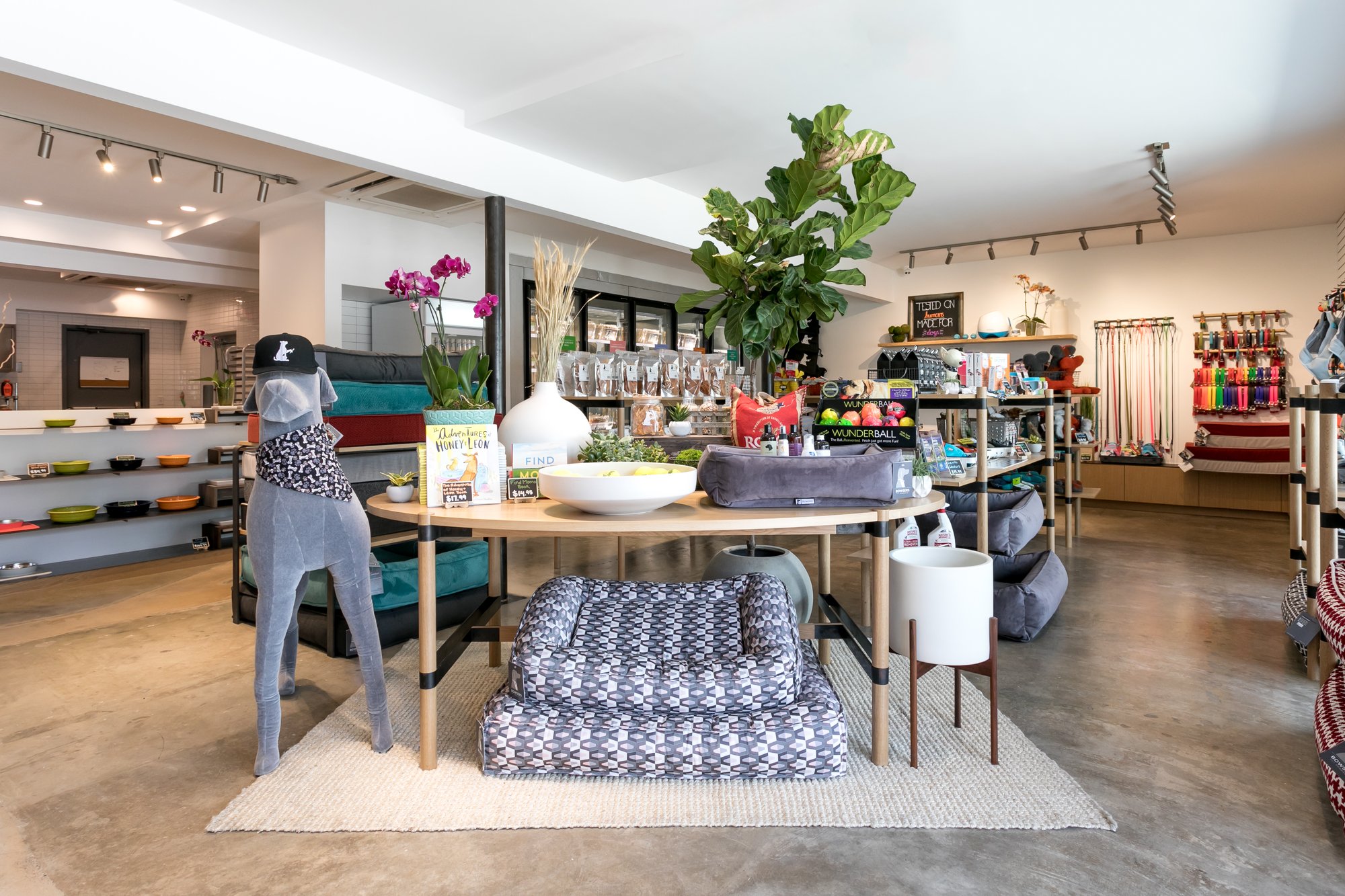
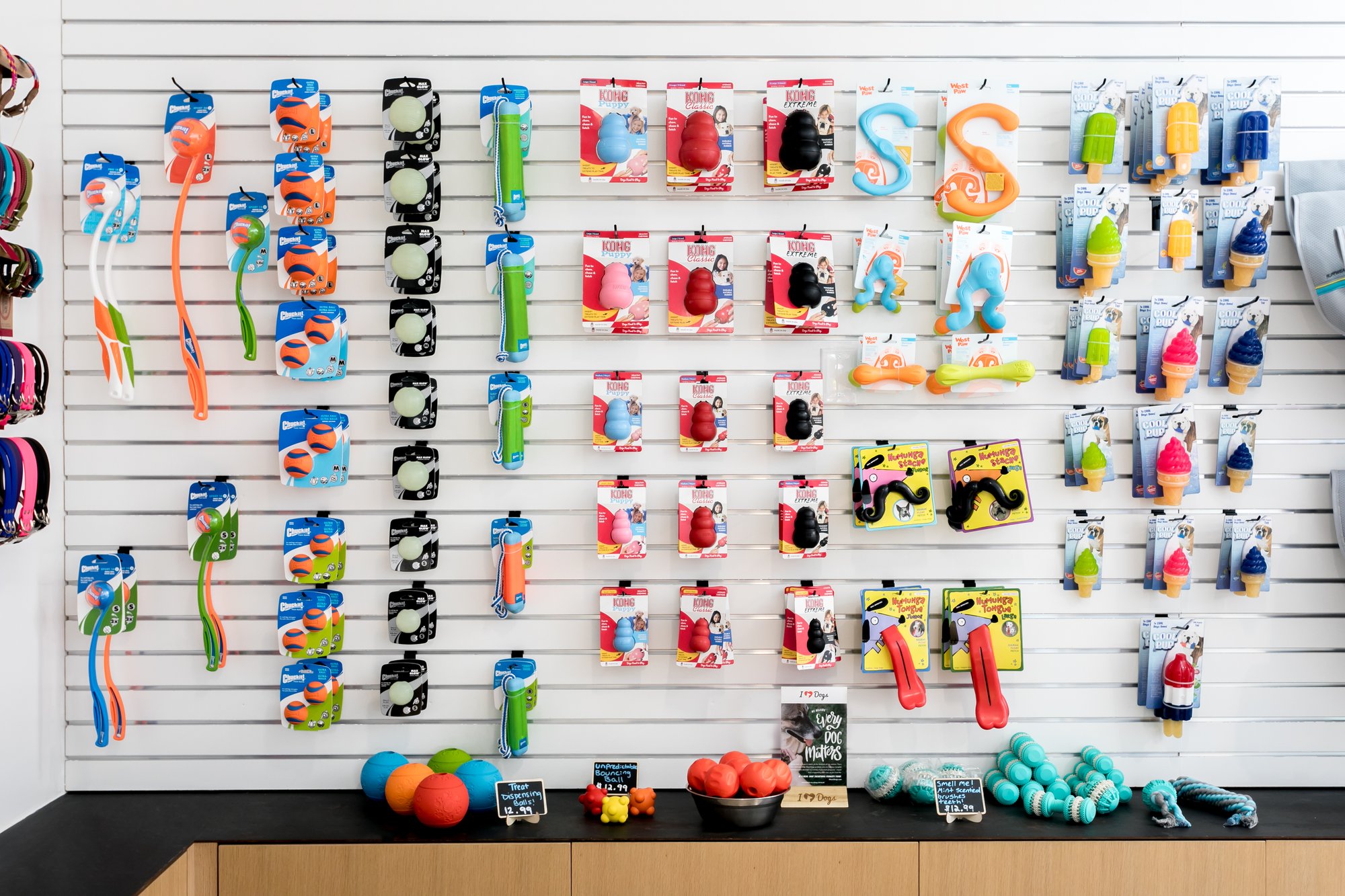
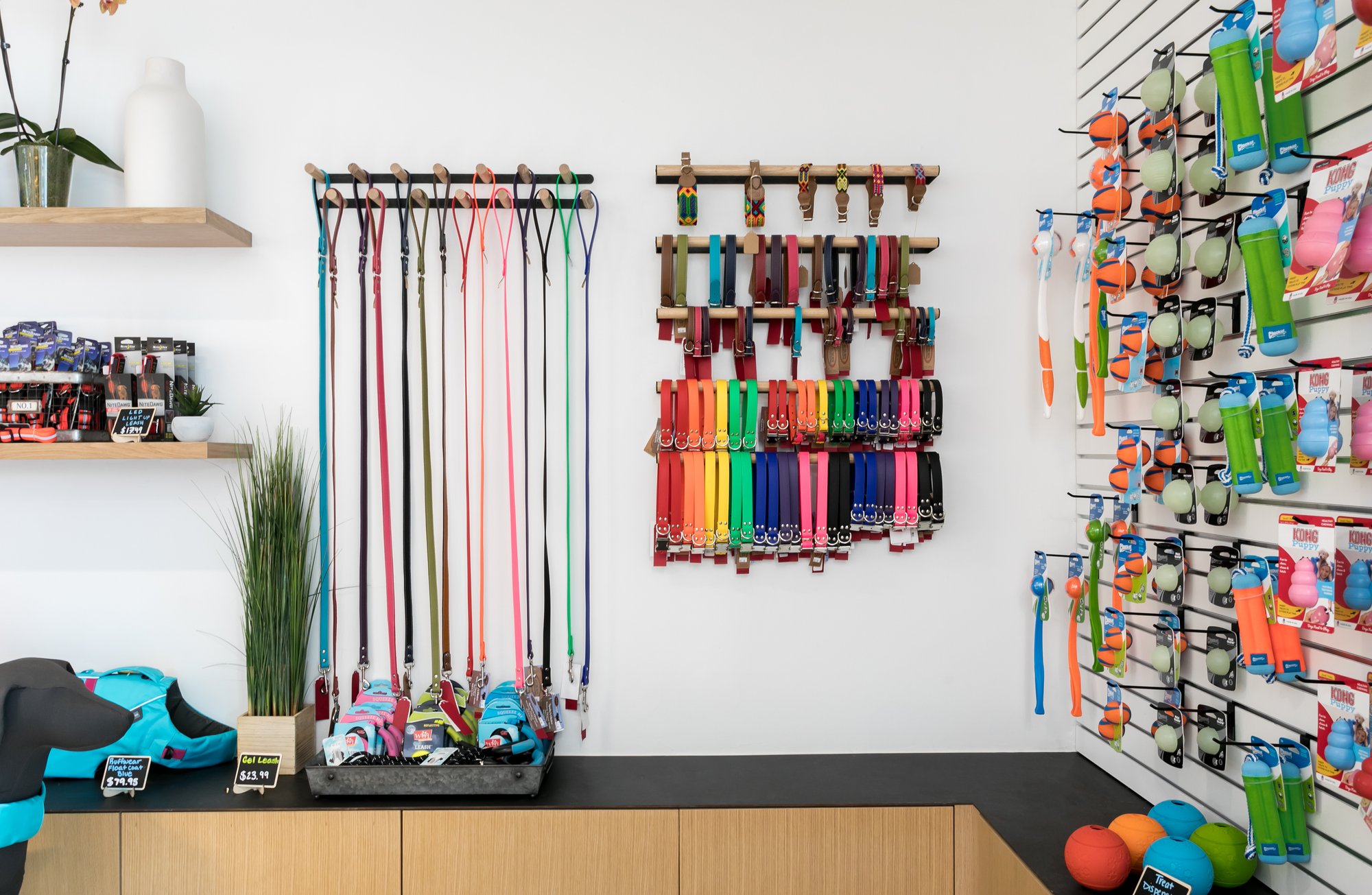
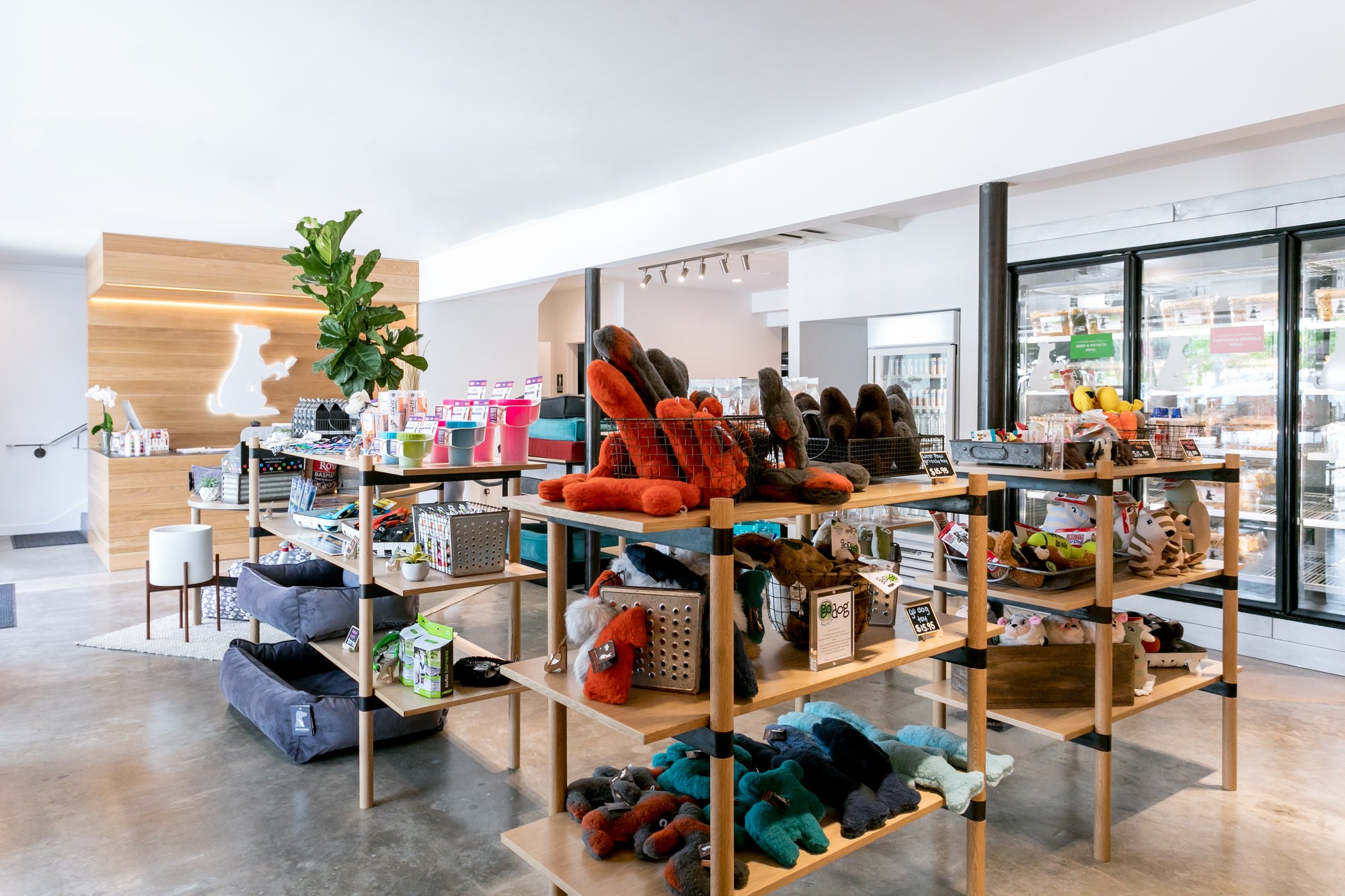
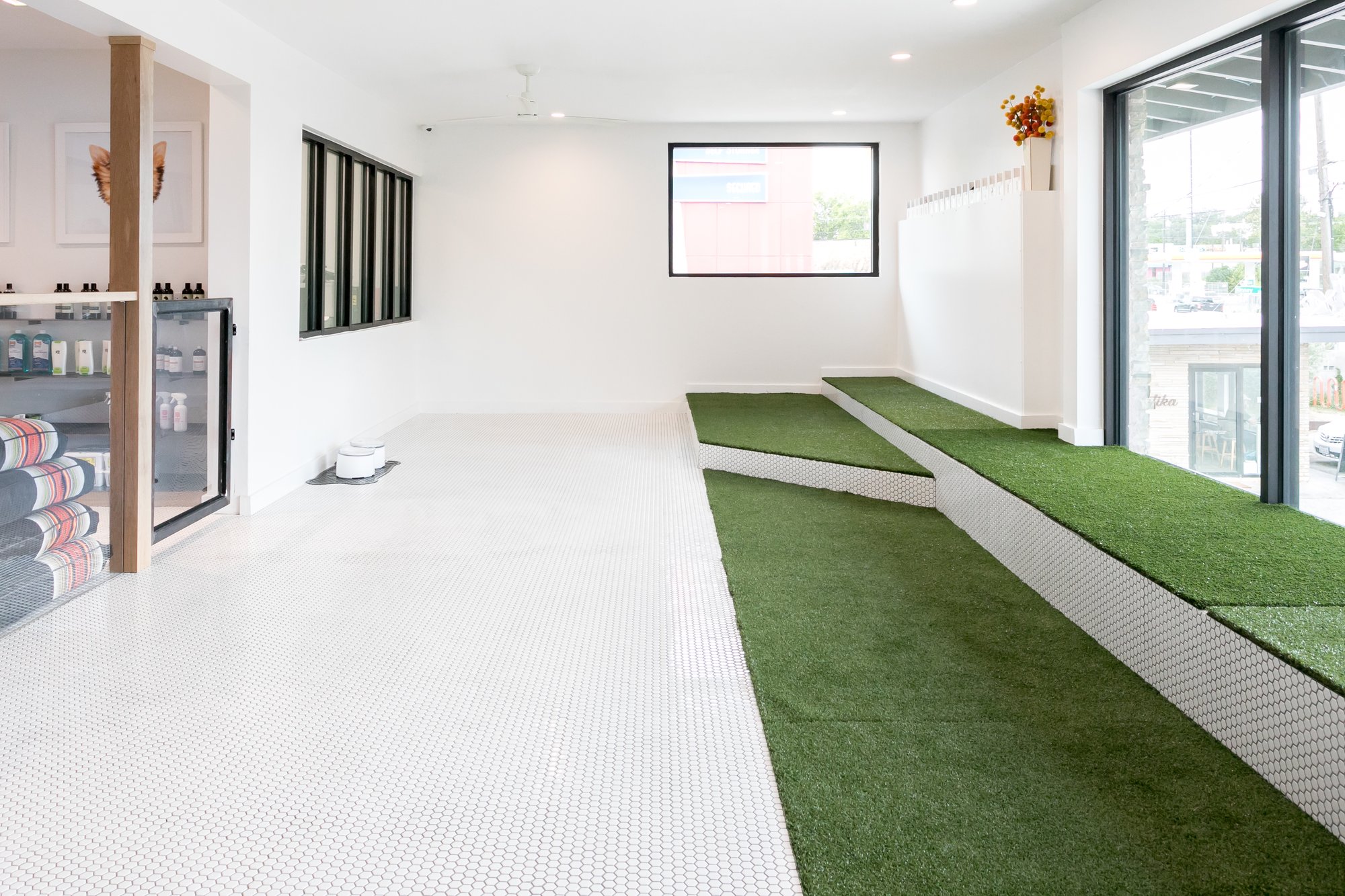
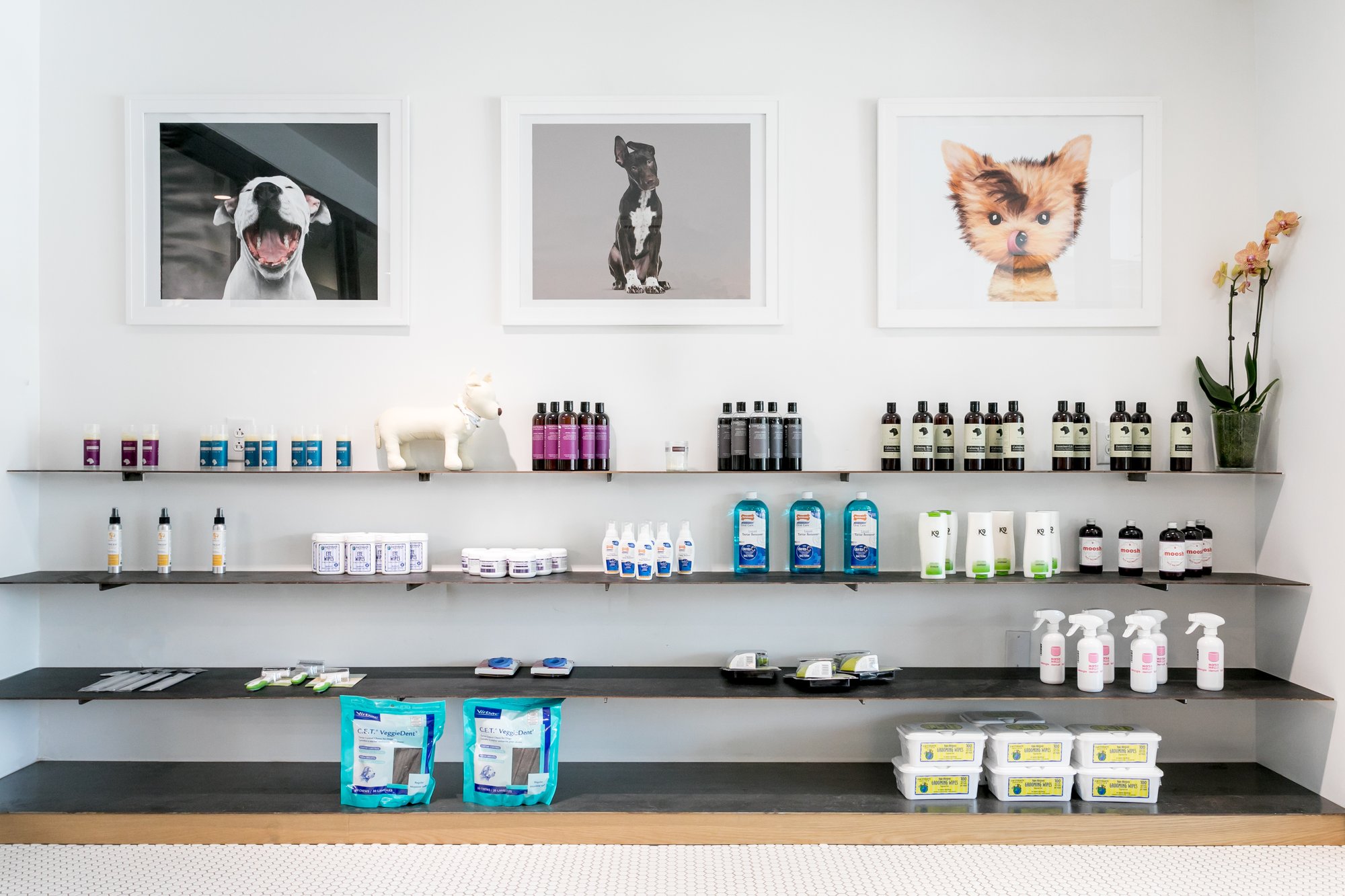
We organized the building as three coordinated rooms that share a single material logic. Stone and glass on the street face. White oak at every threshold a customer touches — reception desk, bench, retail millwork. White penny tile and subway tile in the wet zones. The kitchen is detailed with the same restraint as the boutique — stainless and butcher block, no decoration, no apology. The indoor play area at the rear borrows the same vocabulary as the front retail floor, with astroturf and oak introduced where they earn their place. The result is a building where every room reads as itself, and the three rooms together read as one practice.
Construction approach
Conventional commercial construction with the design ambition concentrated in the millwork, the tile work, and the kitchen build-out. The kitchen meets full commercial spec — Accurex hood, dedicated grease line, refrigeration sized for daily fresh-meal production — because it operates as a kitchen, not as a retail prop. The grooming bays are detailed to clean: closed seams, integral cove tile, perforated metal partitions designed to drain and dry.
Outcome
Barkin’ Creek opened to a market that had not previously seen its three programs combined under one architectural roof, and the building now reads as the reference image for the typology in Austin. The studio’s argument — that pet care, taken seriously, is a coherent piece of small-format retail architecture — has been validated commercially and operationally since opening.