Client and program
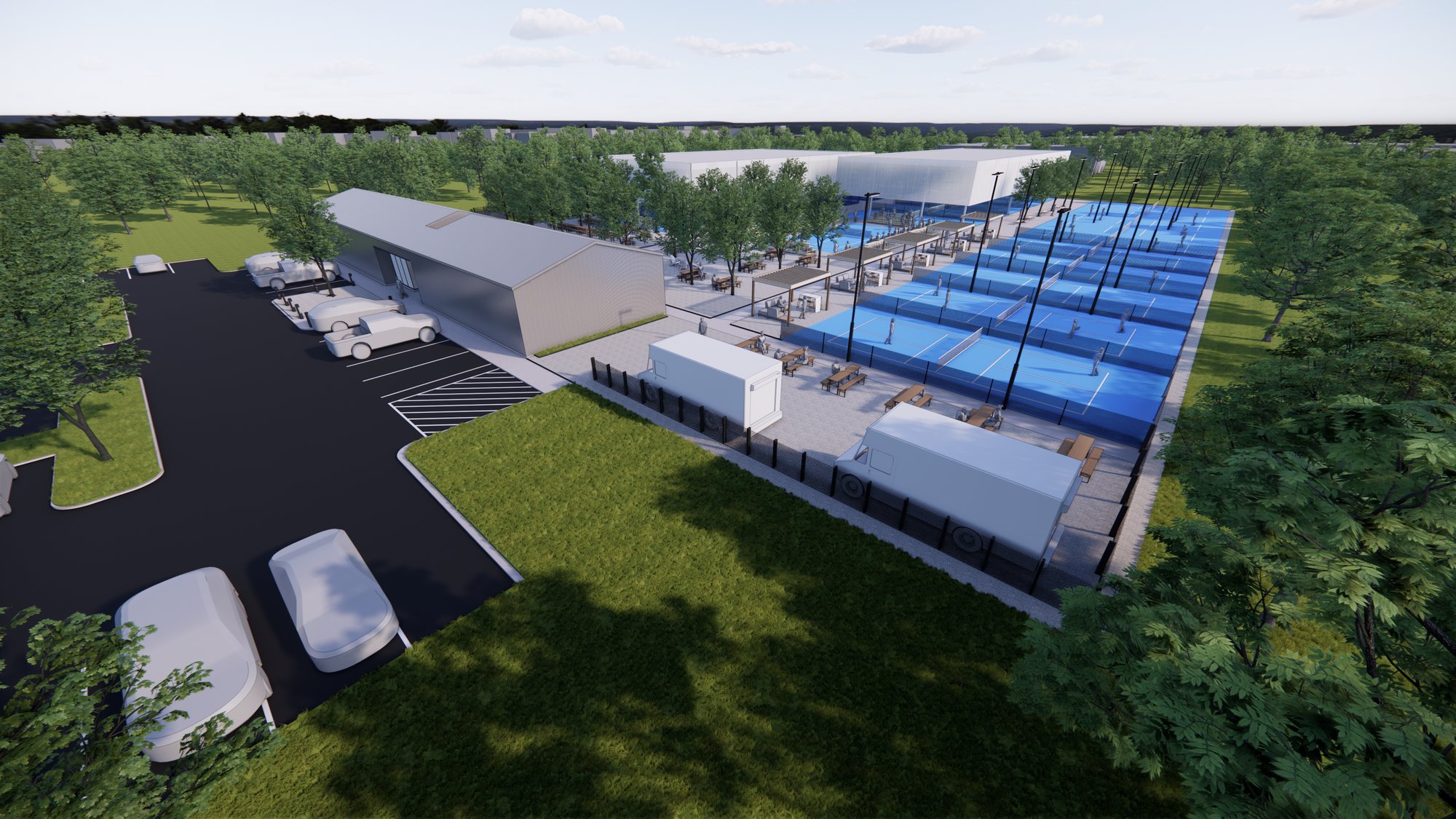
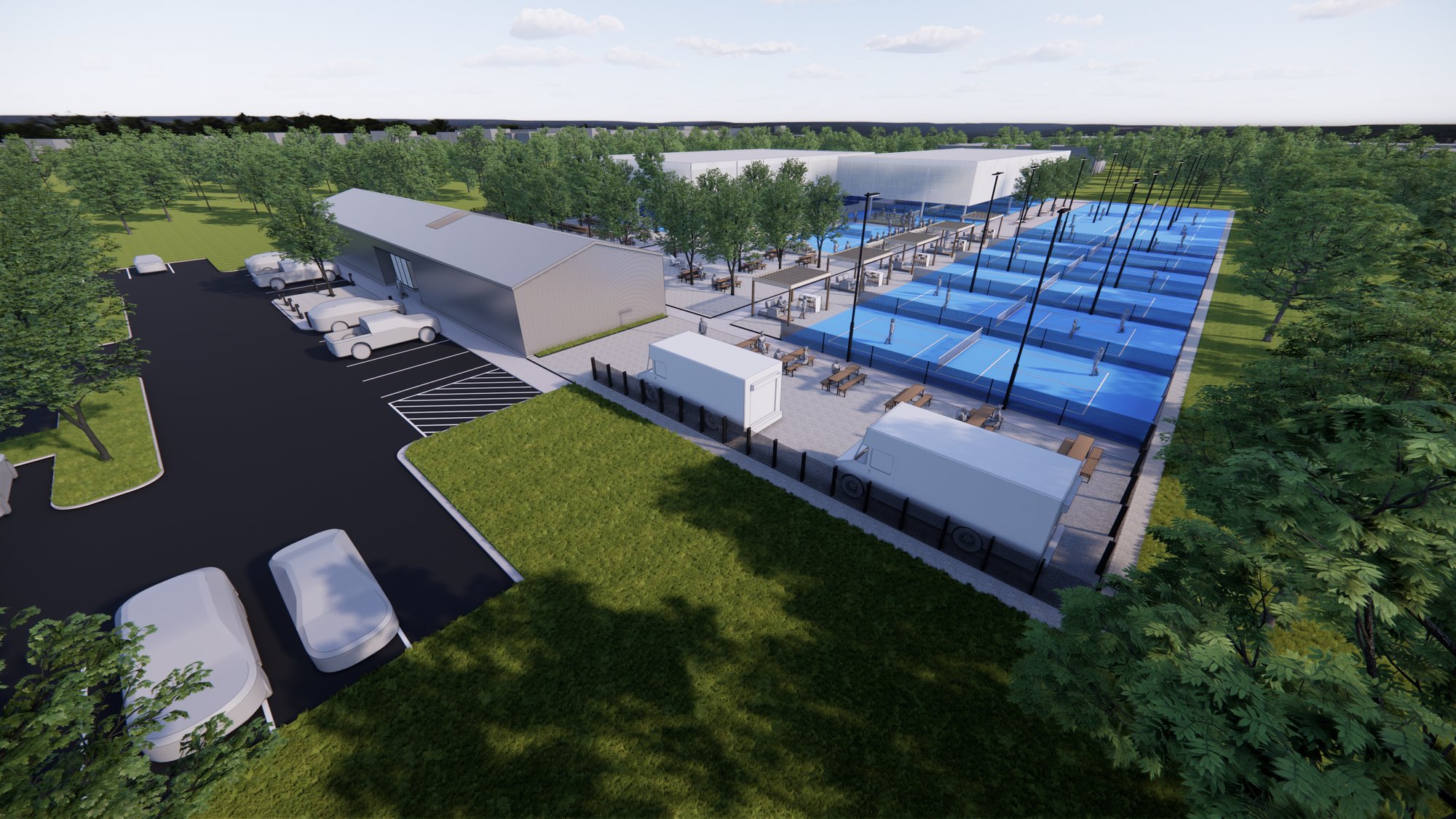
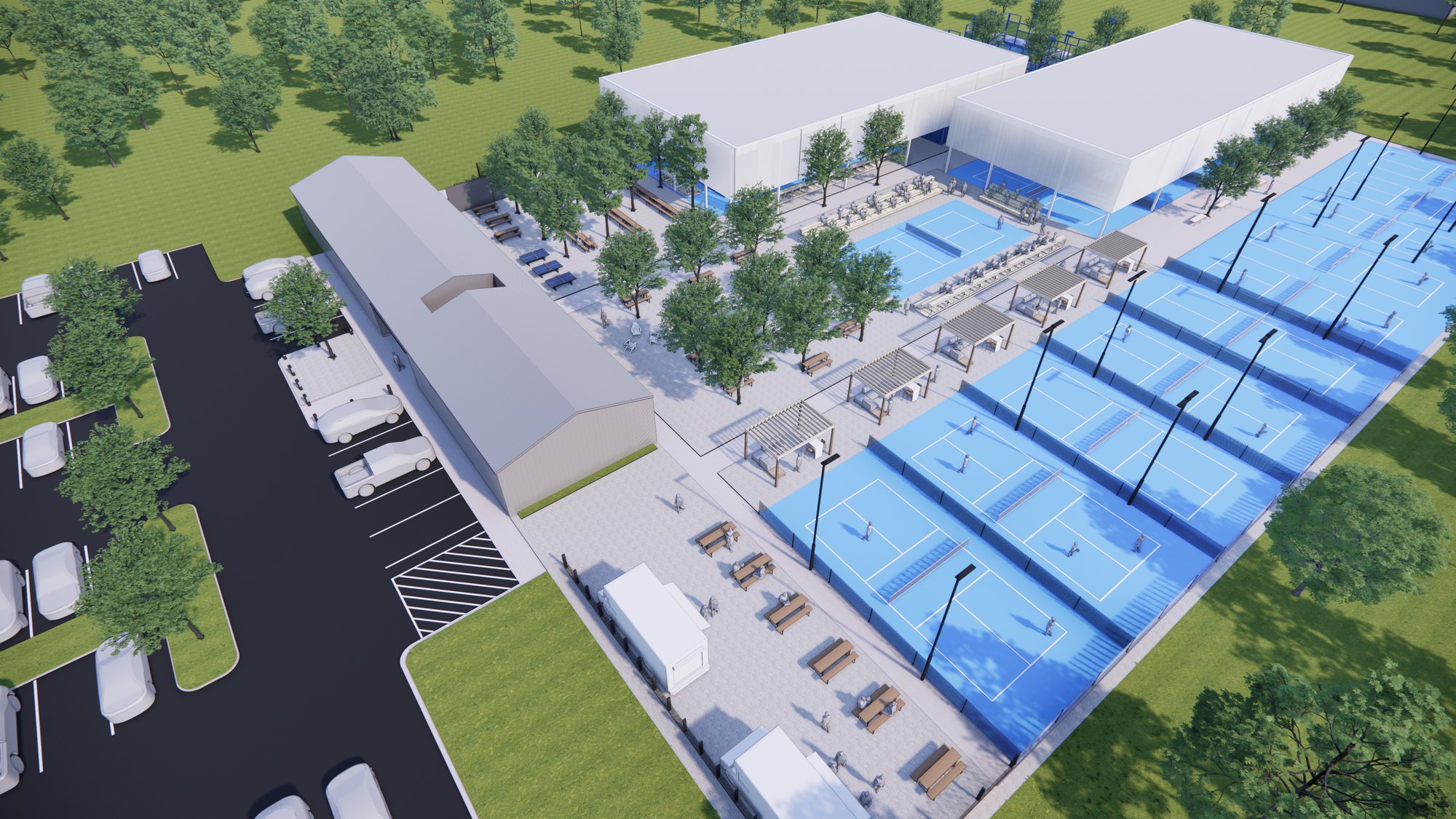
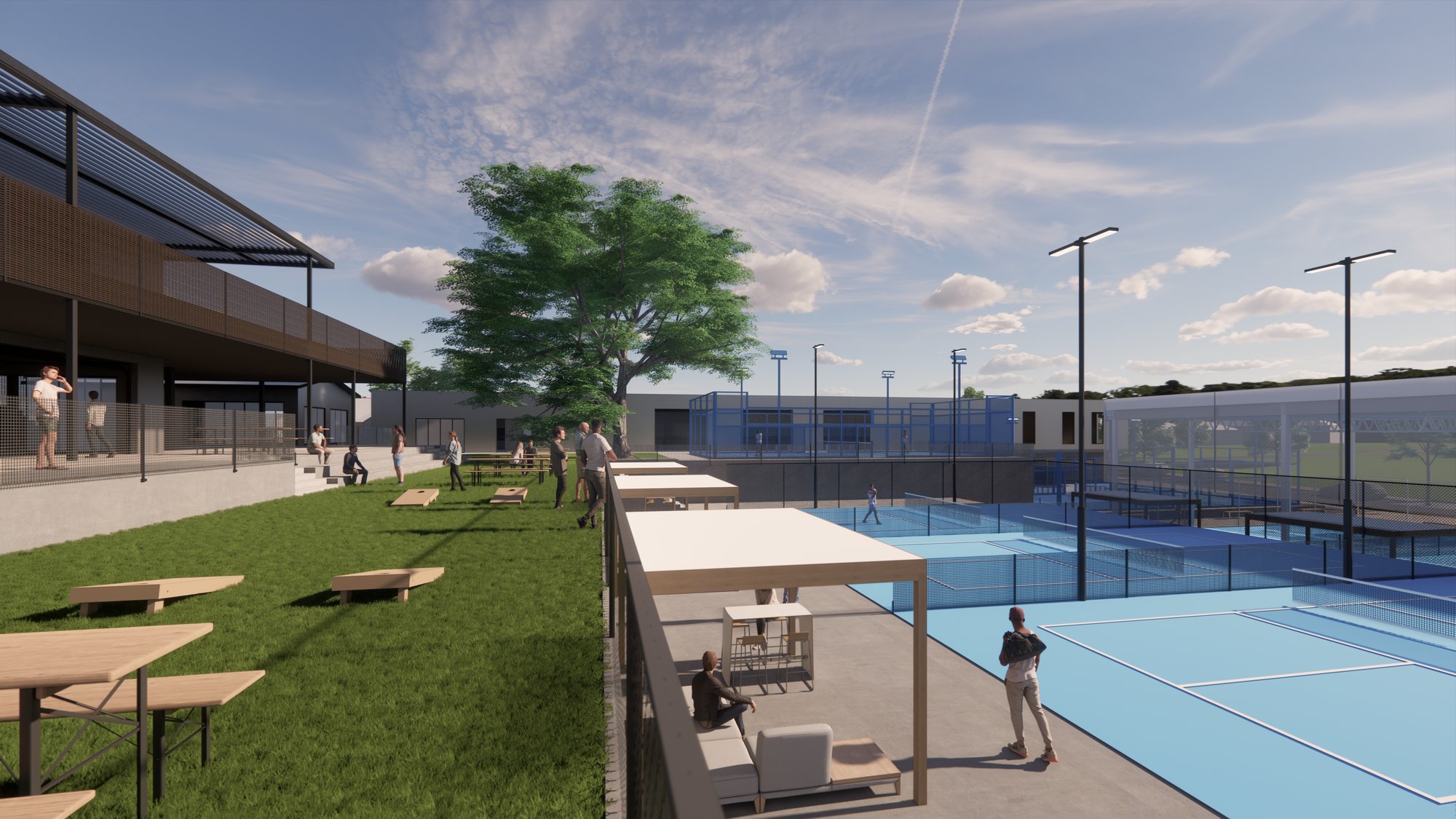
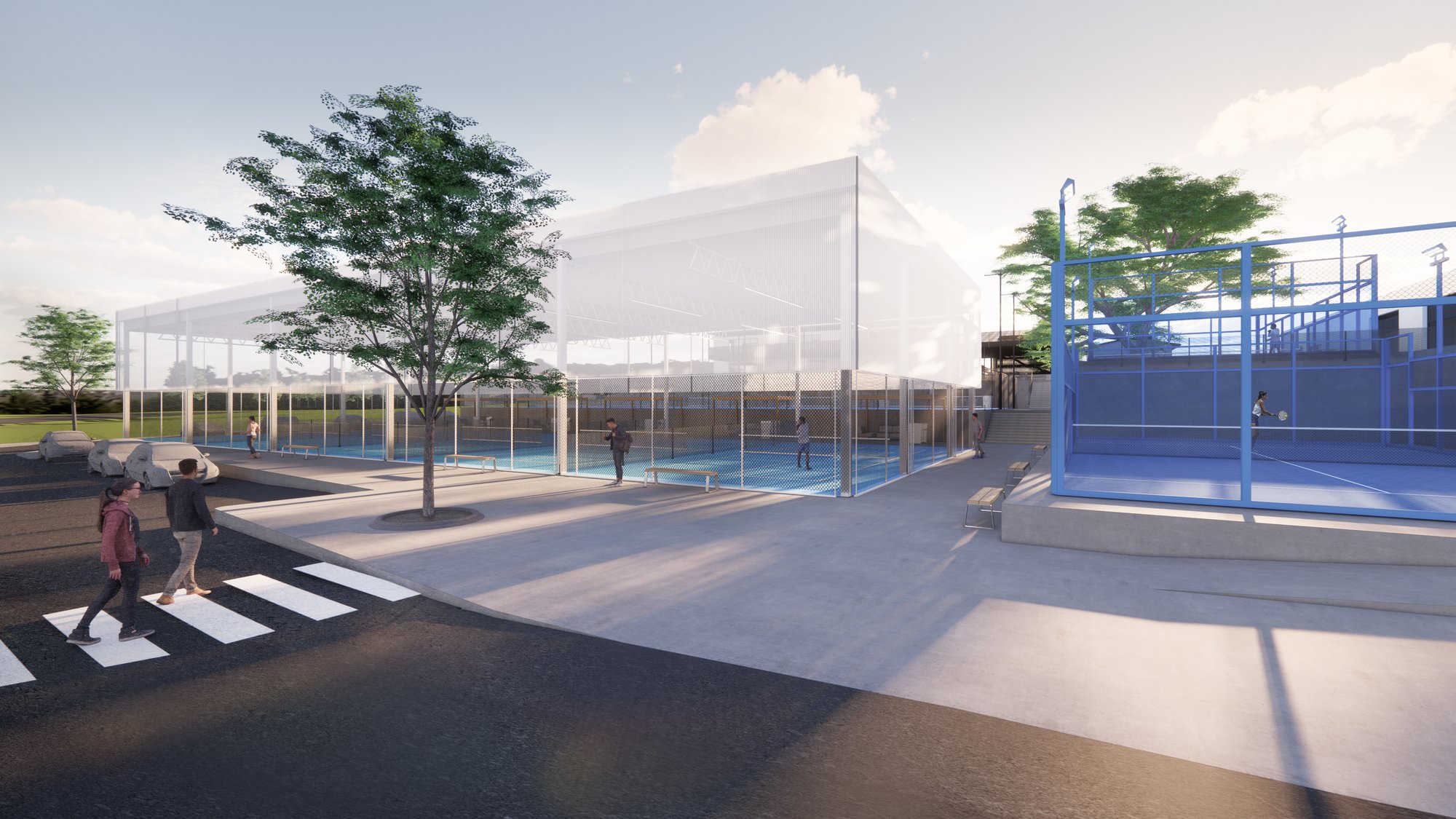
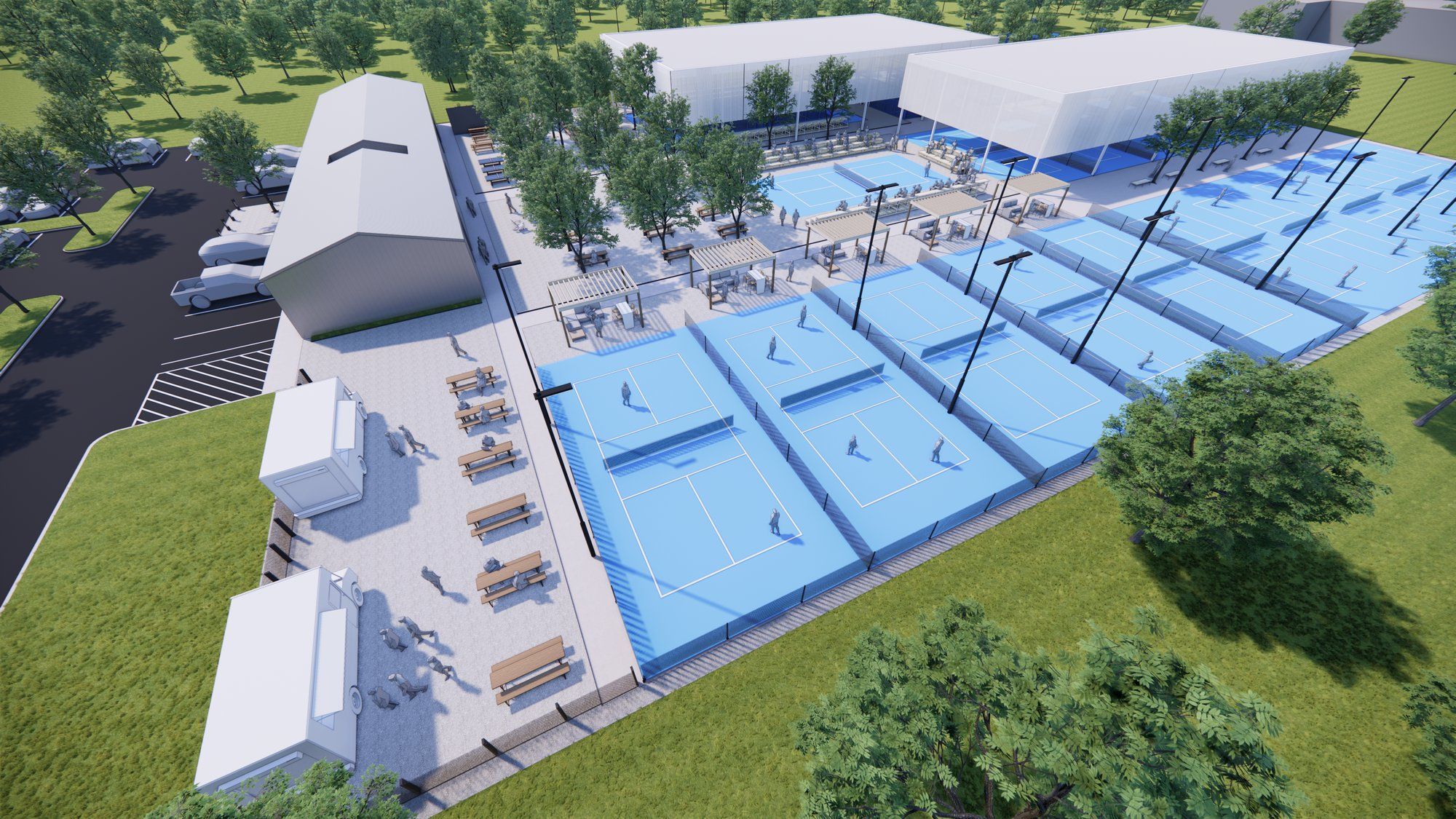
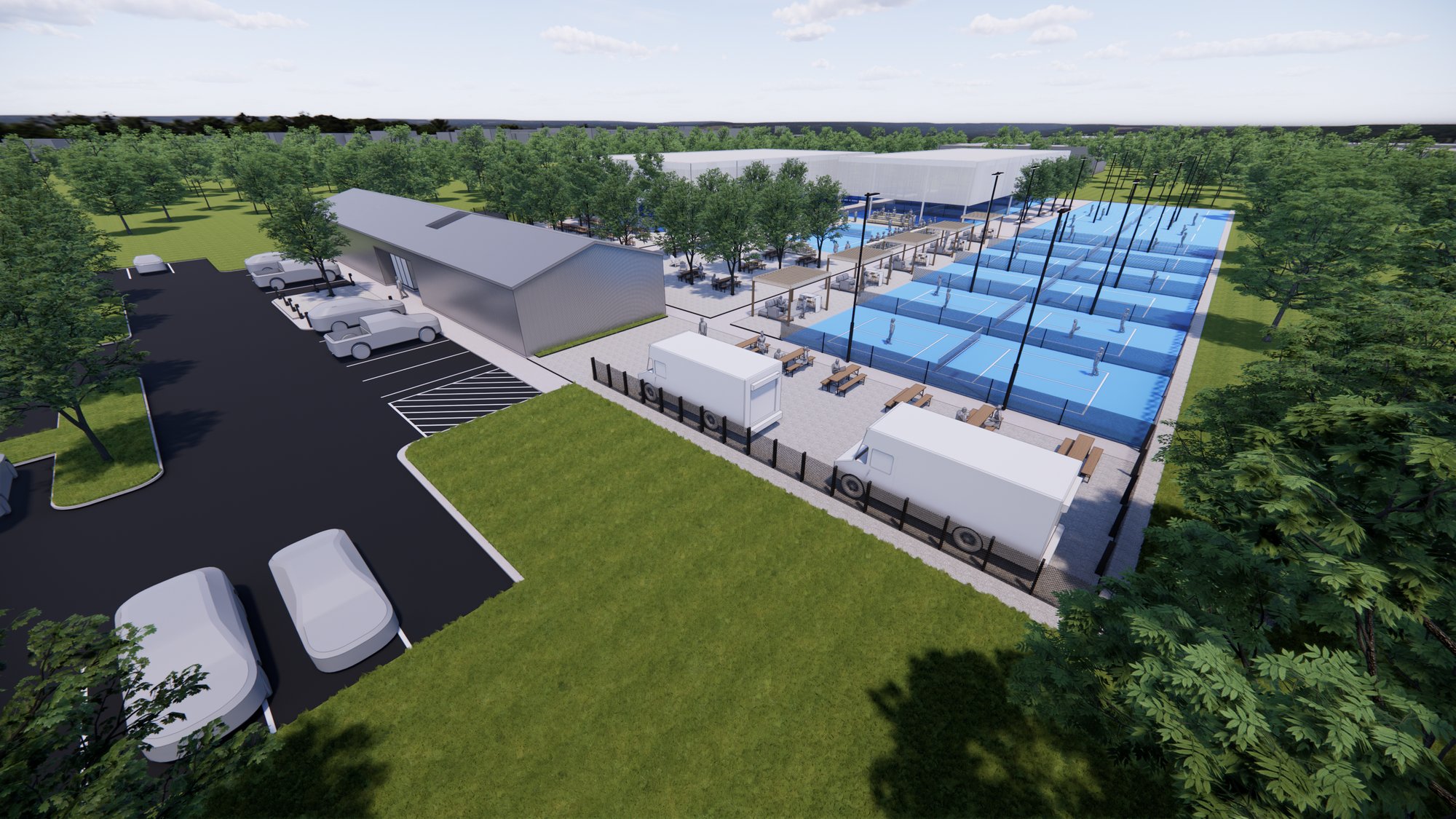
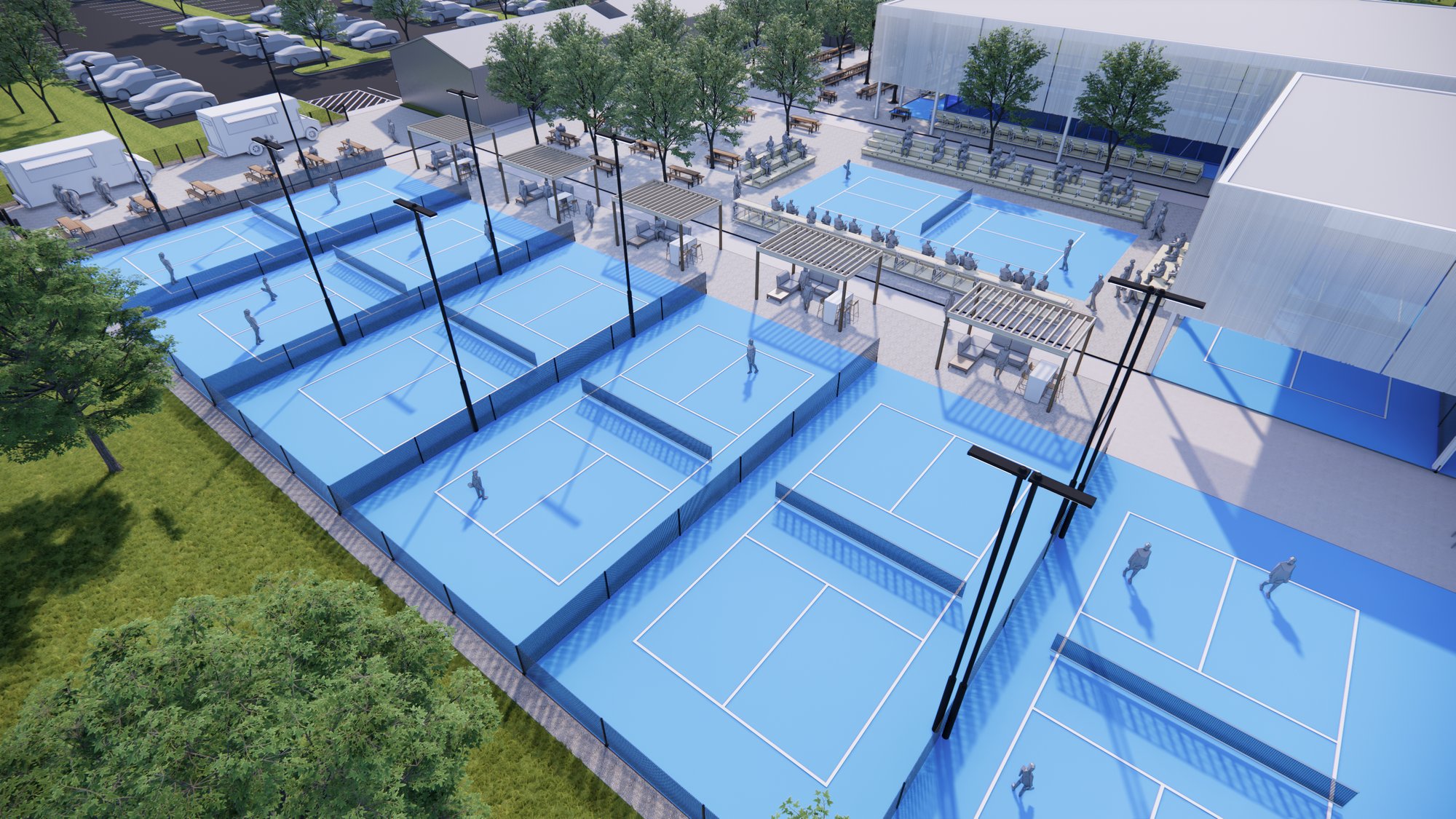
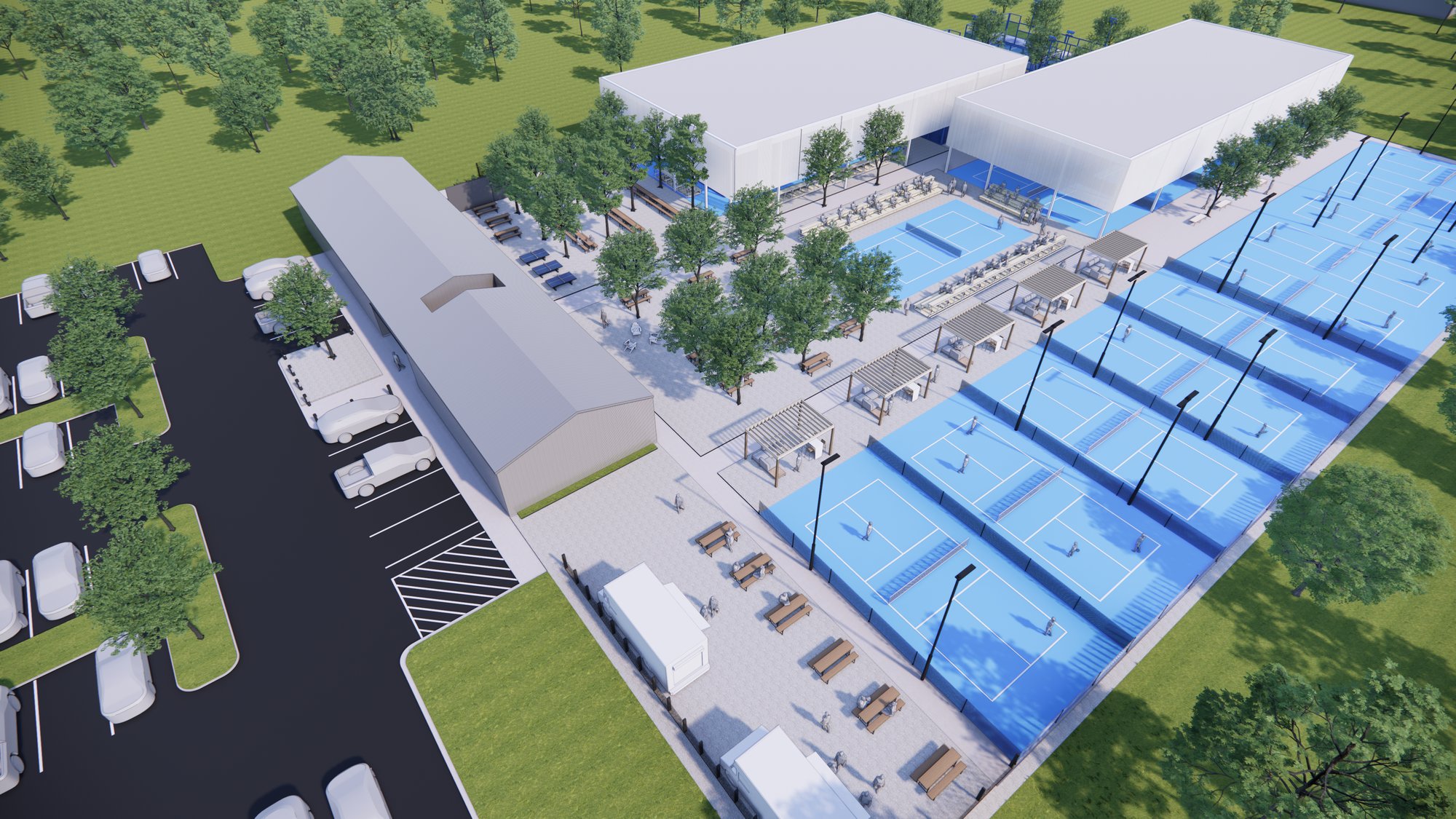
The brief was to design Austin’s most ambitious pickleball venue and to do it on a budget that would let the operator open more locations. Sixteen courts, a clubhouse with bar and pro shop, a beer garden, shaded gathering zones, and a parking strategy that didn’t dominate the site.
Site and constraint
The site is a flat, exposed parcel in a part of Austin that was outpacing its existing recreational infrastructure. The dominant constraint was sun exposure — pickleball is played on a hard, white surface that reflects the Texas summer back into players’ faces — so shade became the primary architectural problem to solve.
Design move
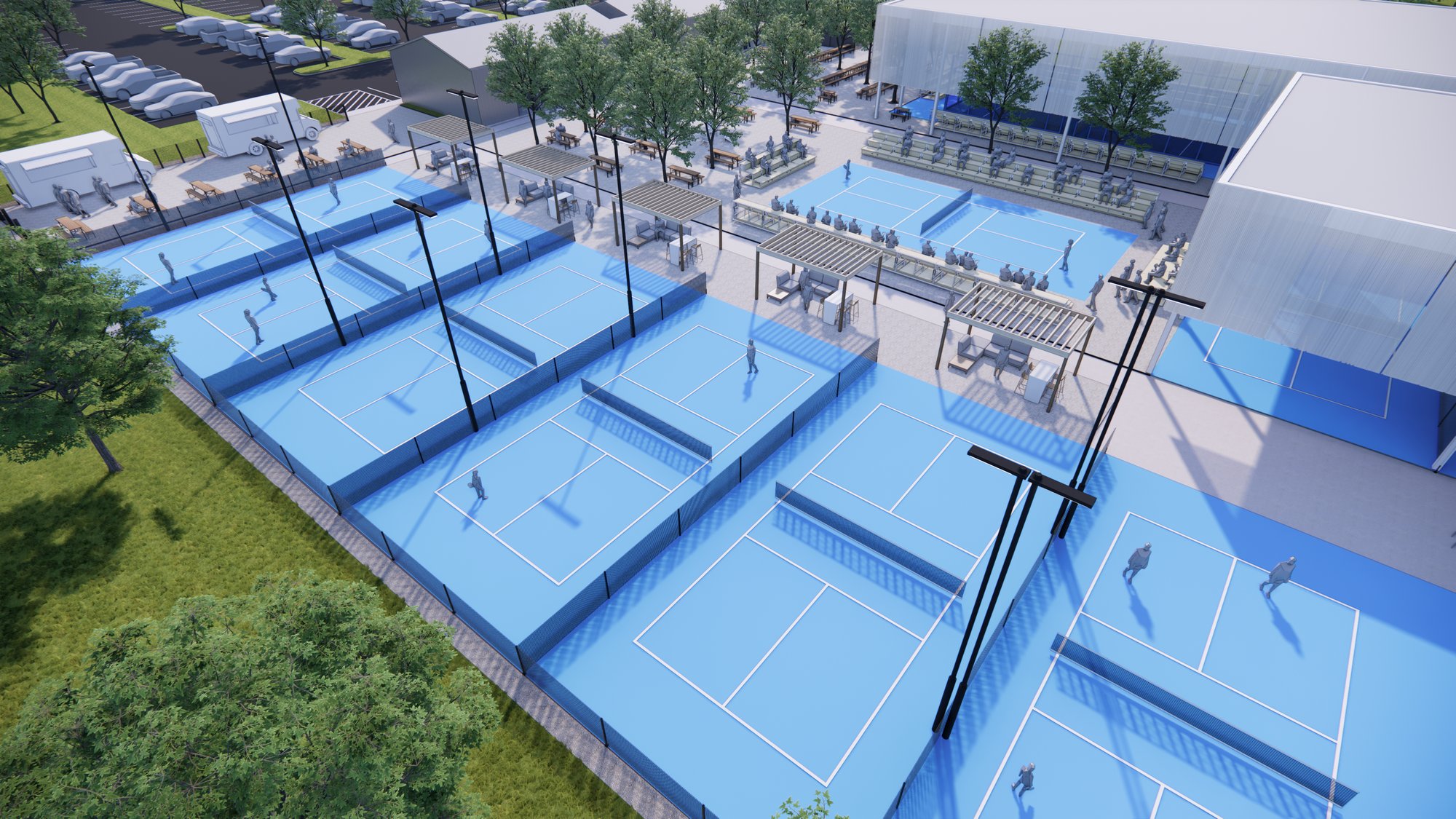
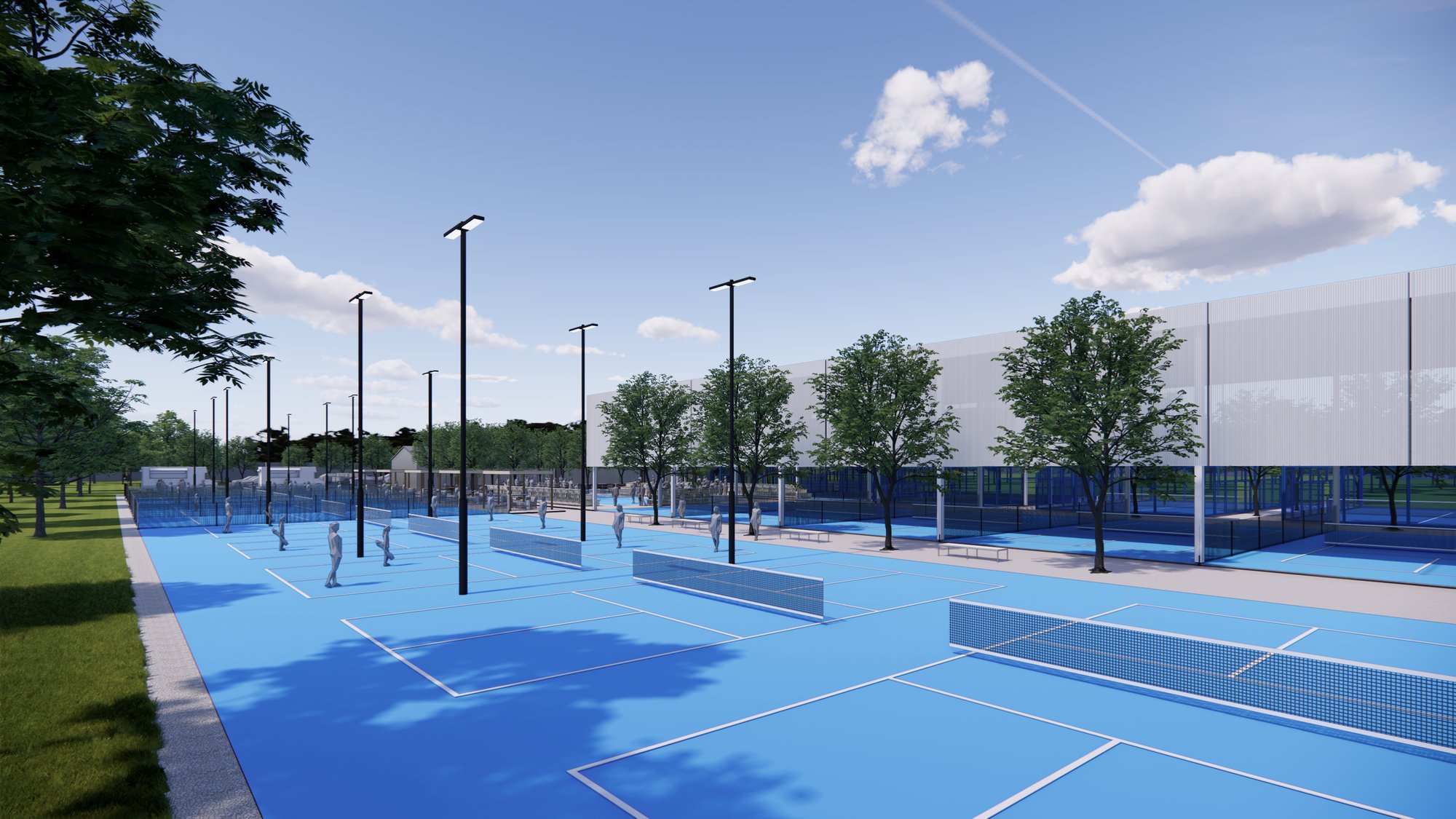
The courts are organized in a grid, but the building program is compressed against one edge so that the courts read as the dominant landscape feature and the clubhouse reads as the porch from which to watch the play. Shade is delivered by a series of light steel canopies between every other court — modular, replaceable, and unmistakably part of the architectural intent rather than added later. A beer garden anchors the third edge of the site, with picnic seating in between.
Construction approach
Like the climbing gyms, this is a Type IIB project that holds its design ambition in the geometry — the canopy rhythm, the relationship of courts to clubhouse, the sequencing of arrival — and lets the materials stay close to commercial vernacular. The canopies are designed for replacement; the clubhouse is designed for expansion.
Outcome
Rush Racquets is the studio’s argument that the experiential-venue typology extends beyond climbing. The same logic — design ambition in the geometry, structural and material honesty in the execution — produces a different building because the program is different, but the operating principles transfer. The project is the first in a small but growing line of racquet-sport work.